Wild Camping Legality Checker
Check if your intended wild camping location is legal based on UK regulations. Select your region, location type, and activity type to see if you're allowed to camp there.
Select options and click 'Check Legality' to see if your camping location is allowed.
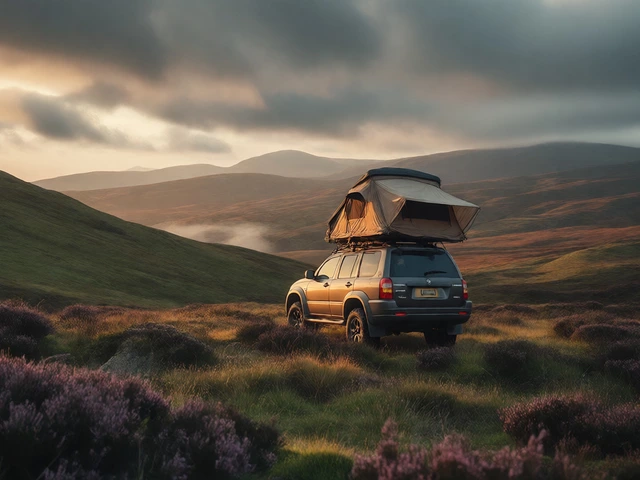
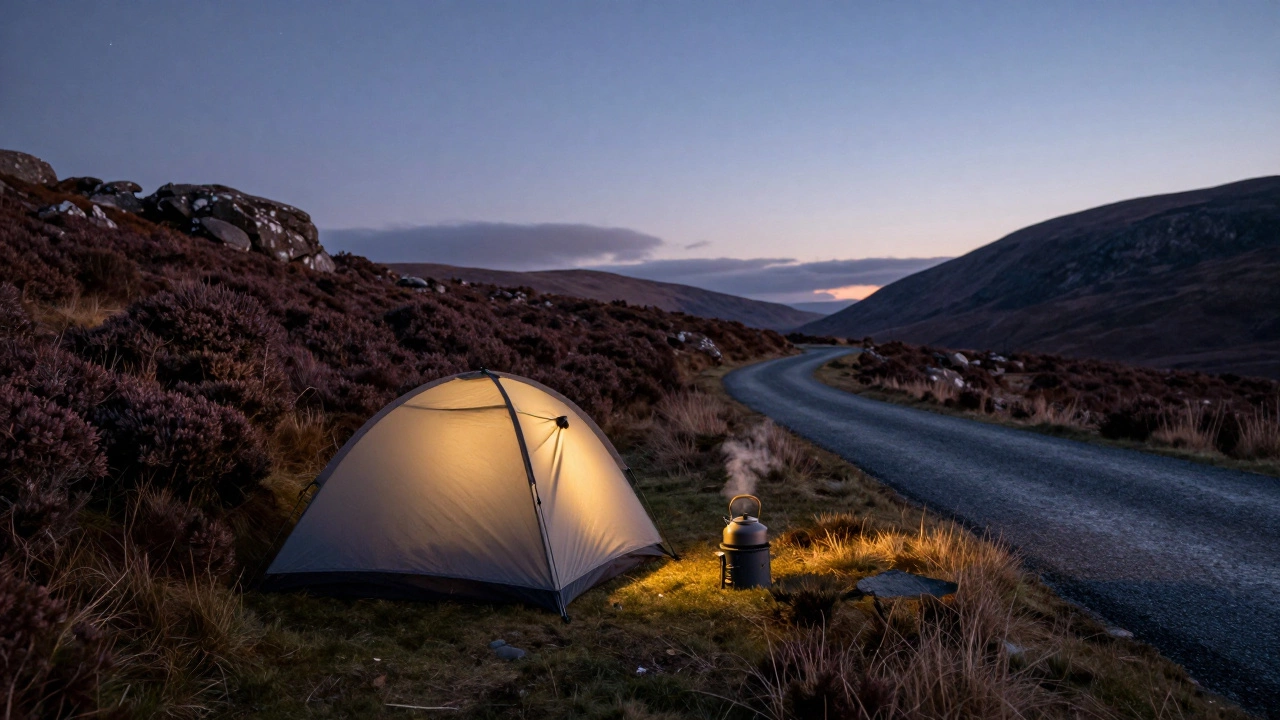
You see it all the time-photos on Instagram of a tent tucked between heather and hills, a kettle steaming beside a quiet road, the sky full of stars. It looks free, easy, peaceful. But if you’ve ever wondered whether you can actually pull over and camp on the side of a UK road, the answer isn’t as simple as a yes or no. It’s tangled in centuries of land rights, local bylaws, and what most people don’t tell you: it’s not about legality, it’s about responsibility.
Wild camping isn’t illegal everywhere in the UK
Here’s the first thing most guides get wrong: wild camping isn’t banned across the whole country. In Scotland, it’s legal under the Land Reform (Scotland) Act 2003. You can pitch a tent on most unenclosed land-mountains, moors, forests-even near roads-as long as you follow the Scottish Outdoor Access Code. That means no fires, no litter, no staying more than two or three nights in one spot, and absolutely no disturbing livestock or crops.
But in England and Wales, it’s different. There’s no legal right to camp on private land, and most roadside areas are either private property, protected land, or under local council control. That means technically, setting up a tent by the A5 in the Lake District or the A47 in the Midlands is trespassing. And while police rarely arrest campers for this, landowners can ask you to leave. Refuse, and you could be charged with criminal trespass.
What counts as ‘roadside’? And why it matters
Not every patch of grass beside a road is the same. A layby on a rural A-road in the Highlands? Often fine. A verge near a National Park visitor center? Not a chance. A parking spot next to a motorway service station? That’s not camping-it’s loitering, and you’ll be moved on fast.
Here’s what you need to look for:
- Public access land: Look for signs saying ‘Open Access’ or check the Ordnance Survey maps (OS Explorer 1:25k). These show areas where the public has a right to walk-and sometimes camp.
- Forestry Commission land: Some forests in England allow informal camping. Check their website for permitted areas.
- Highway authority land: A few councils allow overnight parking for motorhomes, but tents? Almost never.
- Private land: Even if it looks empty, it’s likely owned by a farmer, estate, or utility company. Don’t assume.
Most roadside spots people use-like the shoulder of the A82 near Glencoe-are not public land. They’re part of the road’s drainage system or owned by the National Trust or a private landowner. You’re not breaking the law by sleeping there if you’re quiet and gone by sunrise, but you’re relying on goodwill, not rights.
The unwritten rules of wild camping in the UK
If you’re going to camp off-grid, especially near roads, you need to follow the Leave No Trace principles-not because they’re law, but because they’re what keeps the doors open for everyone else.
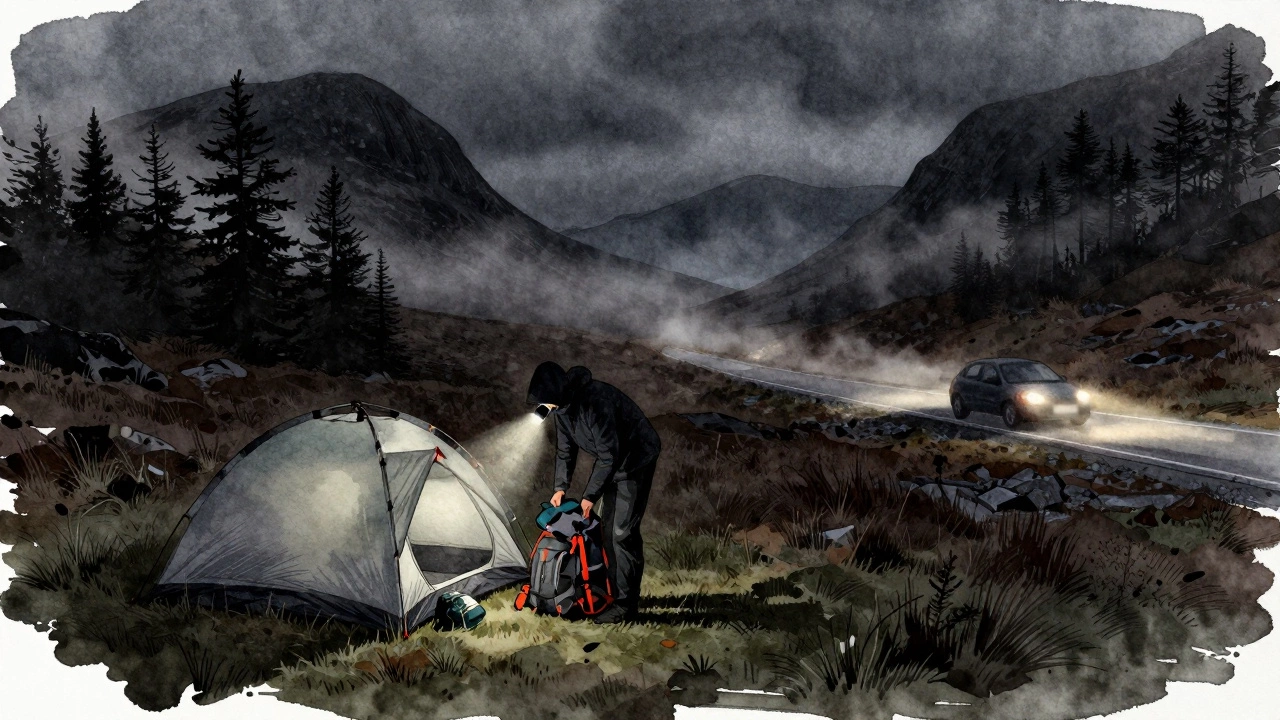
- Arrive late, leave early: Pitch after dark, pack up before sunrise. You’re not there to be seen.
- Stay small: One or two tents max. No group gatherings. No music. No bonfires.
- Go to the bathroom properly: Dig a cathole 6-8 inches deep, at least 70 steps from water. Pack out toilet paper. No exceptions.
- Take everything with you: Even biodegradable stuff like orange peels and apple cores. They’re not native. They attract animals. They ruin the land.
- Don’t camp near water sources: Streams, lakes, ponds-keep 100 meters away. Contamination is real, and it kills wildlife.
These aren’t suggestions. They’re survival tactics. In 2023, the Lake District National Park reported a 40% increase in complaints about wild campers. The result? More signs, more patrols, more bans. If you act like a guest, you’re welcome. Act like a tourist, and you’ll be kicked out-and so will everyone else.
Where roadside camping actually works (and where it doesn’t)
Some places in the UK are quietly tolerant. Others are zero-tolerance.
Where it’s often okay (if done right):
- Northwest Highlands, Scotland: The A835 near Loch Assynt, the A832 around Glen Strathfarrar. Thousands camp here every year. Locals expect it.
- North Wales (Snowdonia fringe): Quiet lanes near Betws-y-Coed or Capel Curig. As long as you’re not blocking gates or driveways, you’ll be fine.
- Northumberland National Park: Some remote B-roads near the Scottish border. Check with the park authority-they have a list of informal spots.
Where it’s a bad idea:
- English Lake District: Especially near popular spots like Grasmere or Ambleside. Rangers actively patrol. Fines start at £100.
- Peak District: Landowners have increased enforcement. Tents found on moorland edges are removed.
- South Downs: Almost entirely private farmland. Even parking on the shoulder can trigger a complaint.
- Anywhere near a village or tourist attraction: You’re not a local. You’re a visitor. And visitors who camp without permission are the reason these places are getting banned.
What happens if you get caught?
Most of the time? Nothing. A landowner might knock on your tent, ask you to move, and you’ll pack up and leave. No police. No fine.
But sometimes, things escalate.
- Local council enforcement: In places like the Cotswolds or Dartmoor, councils can issue Fixed Penalty Notices for littering or unauthorized camping. That’s £100-£200.
- Police involvement: Rare, but possible if you’re causing a nuisance-blocking traffic, leaving trash, or refusing to leave after being asked.
- Landowner action: They can sue for trespass. In extreme cases, they’ve taken campers to court. It’s expensive.
The real cost isn’t the fine. It’s the precedent. Every time someone gets caught and fined, it pushes councils to make the rules tighter. Soon, even the quiet spots become off-limits.
What to do instead
If you want the freedom of wild camping without the risk, here are better options:
- Use a campsite: Even basic ones cost £10-£15 a night. You get toilets, water, and a legal spot. You’re not paying for luxury-you’re paying for the right to be there.
- Book a wild camping permit: Dartmoor and the Lake District now offer official wild camping permits for a small fee. You get a map, rules, and legal cover.
- Try wild camping in Scotland: It’s legal, it’s beautiful, and it’s less crowded than England. Plan ahead, but go.
- Use the Wild Camping UK app: It shows approved spots, recent reports, and landowner contacts. Real-time data beats guesswork.
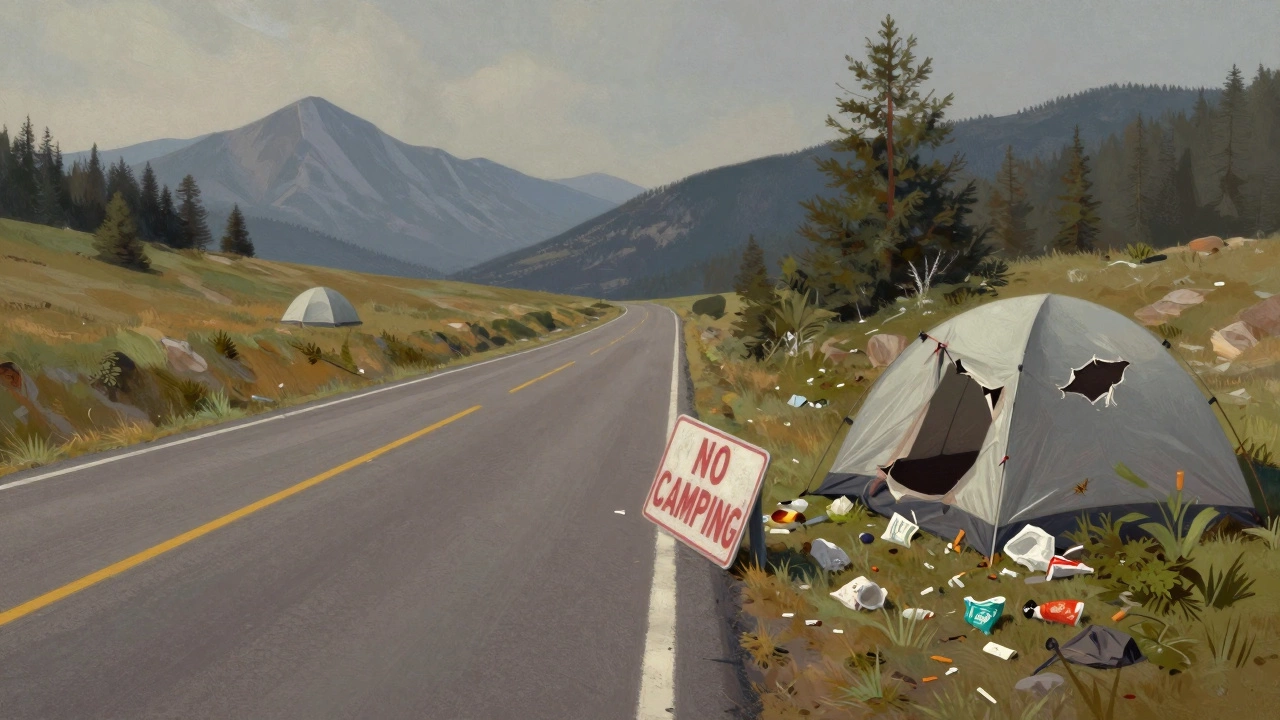
There’s no shame in paying for a spot. The people who say ‘I don’t pay to sleep in nature’ are the same ones who leave broken tents and cigarette butts behind. True freedom means respecting the land-and the people who protect it.
Final thought: It’s not about rights. It’s about respect.
You don’t need a law to tell you it’s wrong to leave your trash on a hillside. You don’t need a sign to know you shouldn’t block a farmer’s gate. The real question isn’t ‘Can I camp here?’ It’s ‘Should I?’
If you’re quiet, clean, gone by dawn, and you treat the land like it’s someone else’s home-you’ll find that most people don’t mind. In fact, they’ll admire you.
But if you treat the countryside like a free campground? You’re not a freedom seeker. You’re a burden. And that’s the only thing that’s really illegal.
Is it legal to sleep in your car on the side of the road in the UK?
Sleeping in your car is not specifically illegal, but it’s not always allowed. Local councils can issue fines if you’re parked in a no-stopping zone, blocking access, or causing a nuisance. In Scotland, you can park overnight on most public roads as long as you’re not camping (no awnings, chairs, or tents). In England and Wales, it’s a gray area-most police won’t bother you if you’re quiet and not causing problems, but landowners or councils can ask you to move.
Can I camp on the beach in the UK?
Most beaches in England and Wales are private property or under local authority control. Camping on the beach is usually not allowed without permission. In Scotland, you can camp on many coastal areas under the access code, but you must stay away from dunes, nesting birds, and private property. Always check local signage and avoid areas marked as protected or with seasonal restrictions.
What’s the difference between wild camping and stealth camping?
Wild camping means camping on unenclosed land with the intention of leaving no trace and respecting the environment. Stealth camping is about hiding-often in urban or restricted areas-to avoid detection. Stealth camping is riskier and often involves trespassing. Wild camping is about responsibility; stealth camping is about avoiding consequences.
Do I need a permit to wild camp in Scotland?
No, you don’t need a permit to wild camp in Scotland under the Land Reform Act. But you must follow the Scottish Outdoor Access Code. Some areas like Loch Lomond have seasonal restrictions or designated camping zones to manage crowds. Always check local notices before you go.
Can I camp near a National Park?
National Parks in England and Wales don’t have special camping rights. You still need permission from landowners. Some parks, like the Lake District and Dartmoor, offer official wild camping permits. Others, like the Peak District, ban it outright. Always check the specific park’s website before you go. In Scotland, National Parks like Loch Lomond & The Trossachs allow wild camping under the access code.
Next steps: Plan smarter, not harder
If you’re planning a trip, don’t just look for a spot to pitch. Look for the right way to be there. Download the OS Maps app. Read the Scottish Outdoor Access Code. Know the difference between a layby and a private driveway. Talk to locals. Ask if camping is okay.
Wild camping isn’t about pushing boundaries. It’s about knowing where the line is-and choosing not to cross it. That’s how you keep the wild places wild-for you, and for everyone who comes after you.