When you’re planning a road trip and considering a Class B motorhome, one of the first questions that comes up is: Do Class B motorhomes have a toilet? The answer isn’t simple - it depends on the model, the year, and how the manufacturer designed it. But here’s the real deal: most modern Class B motorhomes do include a toilet, but not always in the way you might expect.
What Exactly Is a Class B Motorhome?
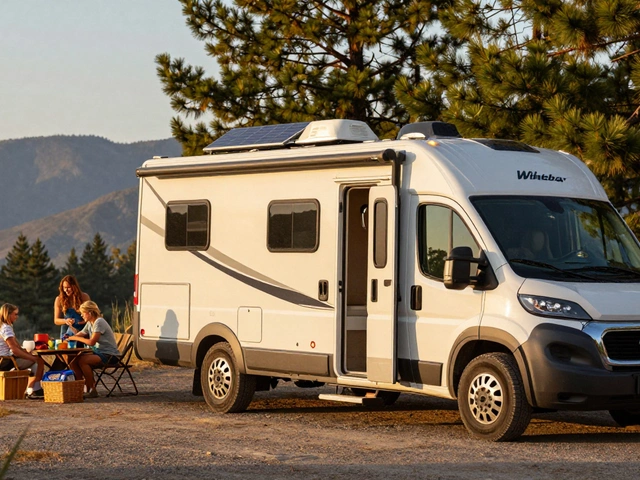
A Class B motorhome, often called a camper van, is built on a standard van chassis - think Ford Transit, Mercedes Sprinter, or Ram ProMaster. These are the smallest type of motorhome you can rent or buy. They’re popular because they’re easy to drive, park, and fuel. You don’t need a special license to drive one in most countries, and they fit in regular parking spots. But because they’re compact, space is tight. That’s why every square inch counts - including the bathroom.
Do All Class B Motorhomes Have Toilets?
No. Not all of them do. Some basic models, especially older ones or those designed for short weekend trips, skip the toilet entirely. These are often marketed as "sleeping vans" or "compact campers" and rely on public restrooms at campsites or portable solutions. But if you’re looking at models made in the last five years - especially those from major manufacturers like Winnebago, Airstream, or Roadtrek - the vast majority include a built-in toilet.
Manufacturers know people want privacy and convenience. If you’re camping in remote areas, near lakes, or in places without public facilities, having a toilet inside saves hours of walking and waiting. So most new Class B models include one - but it’s not a full bathroom like in a house.
How Does the Toilet Work in a Class B Motorhome?
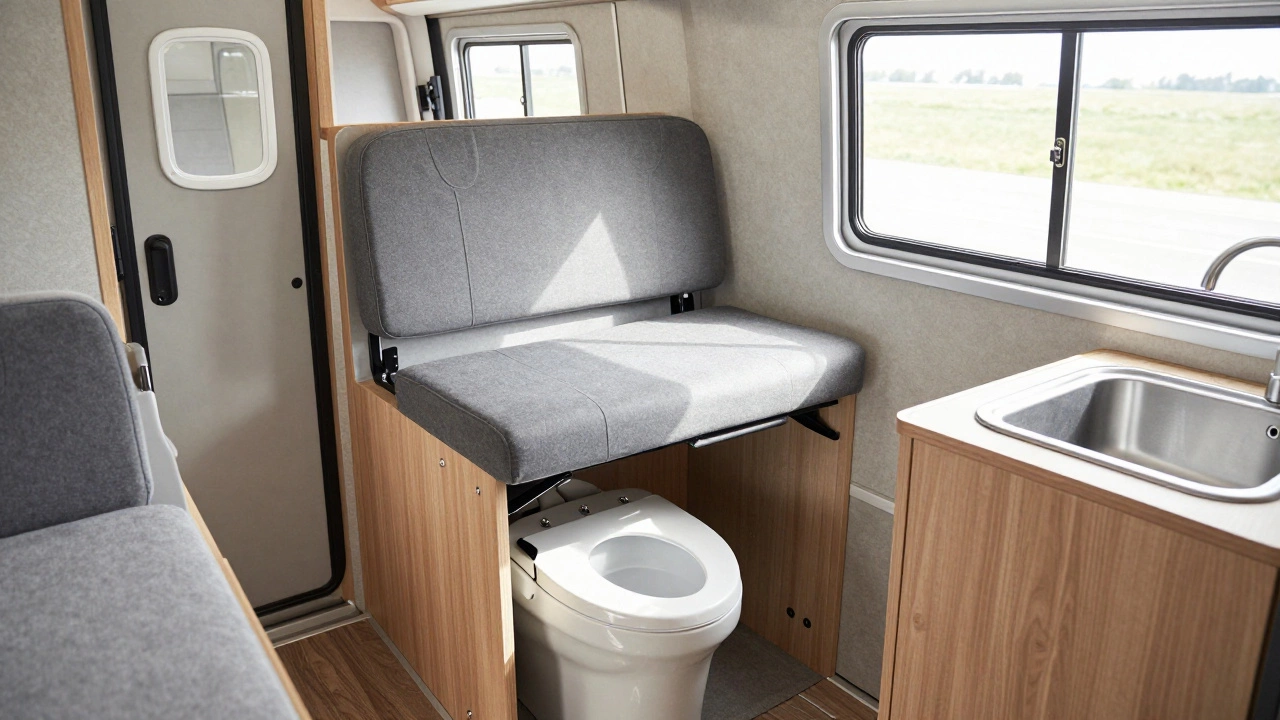
The toilet in a Class B motorhome is almost always a cassette toilet. That means it has a removable waste tank underneath the seat. You sit on a small, compact toilet that flushes with a button or lever, and the waste goes into a plastic tank you can pull out and empty at a designated dump station. These tanks usually hold 5 to 10 gallons - enough for about 3 to 7 days of light use, depending on how many people are using it.
Some models use a composting toilet instead. These don’t use water. Instead, they separate liquid and solid waste and use natural processes to break down solids. They’re odor-free if maintained properly and don’t need to be emptied as often. They’re common in off-grid setups and are growing in popularity among eco-conscious travelers.
There’s no plumbing like in a house. No pipes running to a sewer. No holding tank connected to a blackwater system. That’s because there’s just not enough space. Instead, you get a self-contained system that’s easy to clean and maintain.
What About the Shower?
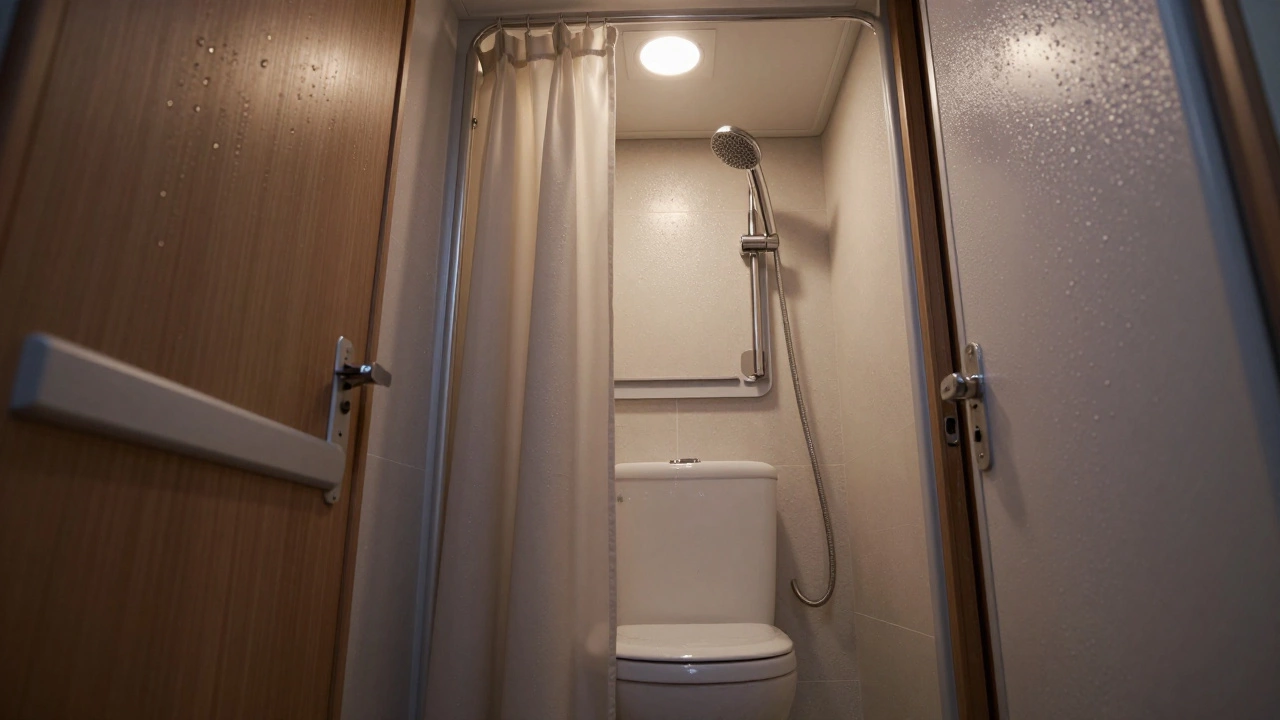
Most Class B motorhomes don’t have a full shower. Some have a wet bath - a combined toilet and shower area that folds down or slides out. These are tiny. You stand in the same space where the toilet is, and a curtain or door seals it off. Water drains into a small gray water tank, which you empty separately from the toilet tank. It works, but you’re not going to take a long, luxurious shower. Most people use campground showers or quick sponge baths.
Some higher-end models have a retractable showerhead that attaches to the sink faucet. You can wash up there, then dump the water into the gray tank. It’s not ideal, but it’s enough for a quick rinse after a day of hiking.
What Are the Trade-Offs?
Having a toilet in a Class B motorhome means giving up space elsewhere. That’s the trade-off. The toilet takes up room that could be used for storage, a bigger bed, or a kitchen counter. In many models, the toilet is hidden under a seat that flips up. When it’s not in use, it disappears - and you get a bench or extra seating. That’s smart design. But if you’re tall or have mobility issues, it can be awkward to use.
Emptying the cassette tank is not glamorous. You have to carry it to a dump station, which might be a 10-minute walk from your campsite. Some people use a portable waste bag system to avoid this, but that’s not for everyone. It’s a chore - but it’s a chore you only do every few days, not every night.
When Should You Skip the Toilet?
If you’re planning a short trip - say, two or three nights - and you’ll be staying at campsites with clean restrooms, you might not need a built-in toilet. You can save money and get a lighter, simpler van. Some people prefer to use portable camping toilets that sit on the floor. These are cheaper, easier to clean, and can be removed when not in use.
But if you’re planning a longer trip, heading into national parks, or traveling in colder weather when public restrooms are closed, having a toilet inside makes a huge difference. One traveler in Yellowstone told me he saved three hours in one day just by not having to walk to the nearest restroom in the snow.

What to Look for When Renting
If you’re renting a Class B motorhome, always ask: "Does this model have a toilet?" Don’t assume. Some rental companies list it as a feature, others don’t. Look for photos of the interior - if you see a small seat that flips up, or a cabinet that looks like a toilet compartment, it’s there. If the listing says "wet bath," that means toilet and shower in one space.
Also ask about:
- How often the tank needs emptying
- Where the nearest dump stations are along your route
- Whether the toilet is a cassette or composting type
- If cleaning supplies are included
Some rental companies charge extra if you don’t empty the tank before returning. Others include it in the price. Know the rules before you go.
Real-Life Experience: A Week in the Australian Outback
Last year, a group of friends rented a 2024 Winnebago Travato in New South Wales. They planned a week-long trip through the Blue Mountains and into the Kosciuszko National Park. No public restrooms for miles. They relied on the built-in cassette toilet. They emptied it once, at a campsite with a dump station. The toilet worked fine. No smells. No leaks. They said it was the best decision they made.
One of them said: "I didn’t think I’d use it much. But by day three, I was grateful. We were hiking in rain, and the thought of walking 20 minutes in wet boots to a cold port-a-potty? No thanks. We kept it clean, and it never failed us."
Final Verdict: Yes, Most Do - But Check Before You Book
Class B motorhomes today are designed for real-life travel. And that means including the basics - even if they’re small. Most new models have a toilet. Most older or budget models don’t. If you want privacy, convenience, and freedom to camp anywhere, choose a model with a built-in toilet. If you’re okay with public facilities and short trips, you can save money and go without.
Don’t guess. Ask. Look at photos. Read reviews. And if you’re renting, confirm in writing that the toilet is included and working. It’s one of those small things that makes a huge difference when you’re 50 miles from the nearest town with no cell service.
Do all Class B motorhomes have a toilet?
No, not all Class B motorhomes have a toilet. Older or budget models often skip it to save space. But most new models from major manufacturers include a cassette or composting toilet. Always check the specs or ask the rental company before booking.
How do you empty the toilet in a Class B motorhome?
The toilet has a removable cassette tank, usually located under a seat or in a storage compartment. You pull it out, carry it to a designated dump station at a campground or RV park, and empty it into the sewer hookup. Always wear gloves and follow local guidelines. Some people use portable waste bags as an alternative.
Can you use the toilet while driving?
It’s not recommended. Most cassette toilets are not designed to flush while moving. The waste can slosh and cause leaks or blockages. Some newer models have locking mechanisms that disable flushing while in motion. Always wait until you’re parked.
Do Class B motorhomes have showers?
Some do, but not all. Many have a "wet bath" - a combined toilet and shower area. The shower is small and uses minimal water. Others have no shower at all and rely on campground facilities or sponge baths. Always check if a shower is included if it’s important to you.
Are composting toilets better than cassette toilets?
It depends. Composting toilets don’t need water and don’t require emptying as often. They’re great for off-grid travel and eco-friendly trips. But they need regular maintenance - adding sawdust, managing moisture, and venting properly. Cassette toilets are simpler to use and empty, but you must find a dump station. Neither is "better" - just different for different needs.