Camping Barking Risk Calculator
How energetic is your dog?
Select the option that best describes your dog's daily activity needs.
What is your dog's training level?
Consider how well your dog responds to commands in distracting environments.
Describe your planned campsite
The environment significantly impacts your dog's stress levels.
Your Risk Score
Score out of 30 points
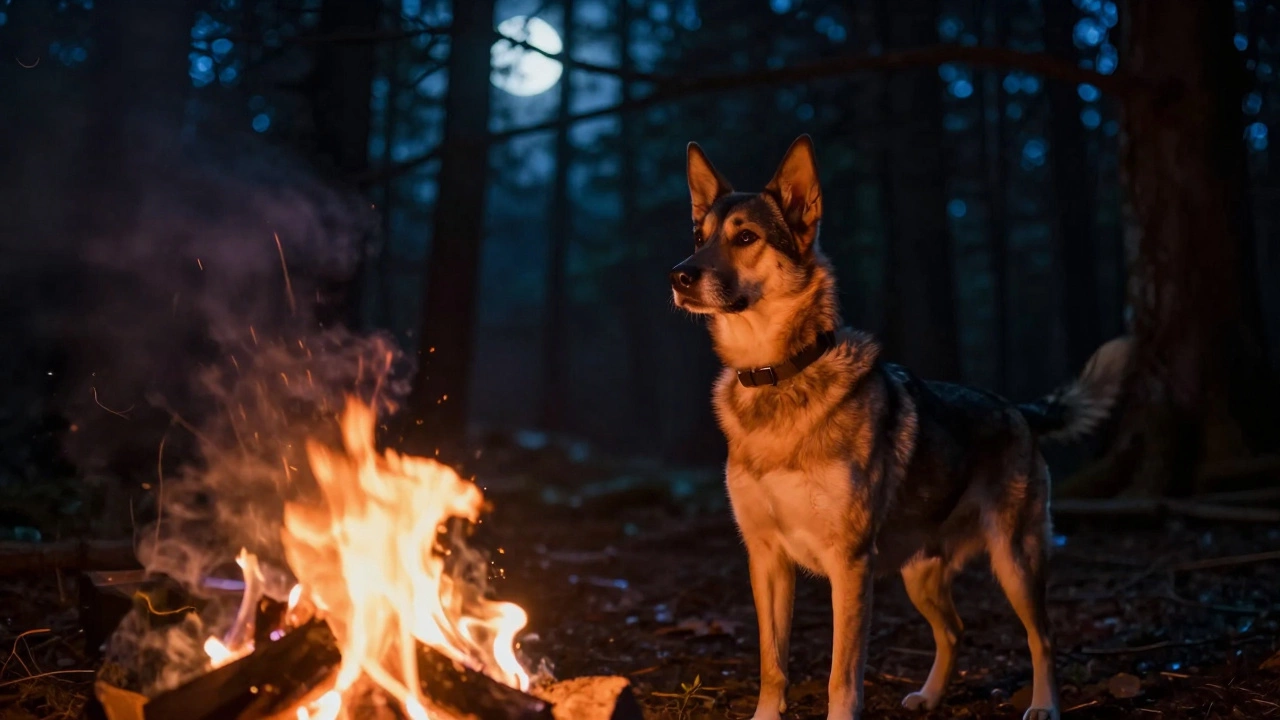
There is nothing worse than the silence of a forest broken by your dog’s frantic barking at 2 AM. You are trying to sleep, your neighbors are definitely not, and that squirrel you didn’t even see is now your enemy. If you love camping with dogs, this problem can feel like a dealbreaker. But it doesn’t have to be. Most owners think their dog is just being noisy, but usually, they are communicating fear, boredom, or alertness. By understanding why your dog barks in the wild and using specific management strategies, you can turn those chaotic nights into peaceful ones.
Why Dogs Bark More in the Wild
Dogs do not bark for no reason. In a home environment, they know the boundaries. The fence is there; the house is secure. At a campsite, those boundaries disappear. Your dog perceives the open space as a territory they need to protect. Every rustling leaf, distant owl, or passing camper triggers their instinctual alarm system. This is known as territorial behavior. It is amplified by the unfamiliar smells and sounds of nature. Your dog isn't trying to annoy you; they are trying to keep you safe from threats they cannot fully identify.
Another major factor is separation anxiety. When you set up camp, you might step away to grab firewood or check in with other campers. For a dog used to constant human contact, even a five-minute absence in an unfamiliar place can trigger panic barking. They feel vulnerable without their pack leader right next to them. Understanding these two drivers-territorial instinct and separation anxiety-is the first step to solving the noise problem.
Pre-Camp Training Essentials
You cannot fix deep-seated behavioral issues in one weekend trip. Preparation starts weeks before you pack your tent. The most effective tool is desensitization. Start by taking your dog on short day hikes to areas near where you plan to camp. Let them experience the sounds of nature without the pressure of sleeping there. Reward calm behavior heavily with high-value treats. This creates a positive association with outdoor noises instead of a defensive one.
Practice the 'quiet' command in low-distraction environments first. Ask your dog to speak, then say 'quiet' and reward them when they stop. Gradually increase the duration they stay quiet. Move this practice to your backyard, then to a park, and finally to a quiet field. If your dog fails to respond in a new environment, you haven't trained enough yet. Go back a step. Consistency is key. A dog that knows 'quiet' means 'stop making noise and look at me' has a much better chance of staying silent when a raccoon wanders by.
- Desensitize to triggers: Play recordings of wildlife sounds while feeding your dog to create positive associations.
- Master the 'Settle': Train your dog to lie down and relax on command for extended periods.
- Build independence: Practice leaving your dog alone in a safe area for short intervals during walks.
Campsite Selection Matters
Not all campsites are created equal when it comes to keeping your dog quiet. Choosing the wrong spot sets you up for failure. Avoid sites located directly next to main roads, popular trails, or other high-traffic zones. These areas bring constant movement and strangers, which keeps your dog on high alert. Instead, look for secluded spots. Sites surrounded by dense trees or natural barriers offer a sense of security for your dog. They feel less exposed and therefore less compelled to guard.
If possible, choose a site that is slightly uphill or elevated. Dogs often feel more confident when they have a vantage point, but paradoxically, being too exposed makes them bark more because they see everything. A tucked-away spot reduces visual stimuli. Check reviews specifically for 'quiet' or 'peaceful.' Many campgrounds have designated quiet hours, and respecting them is part of good camping etiquette. Arriving early allows you to scout the area for potential noise sources like nearby generators or busy families.
Managing the Environment at Night
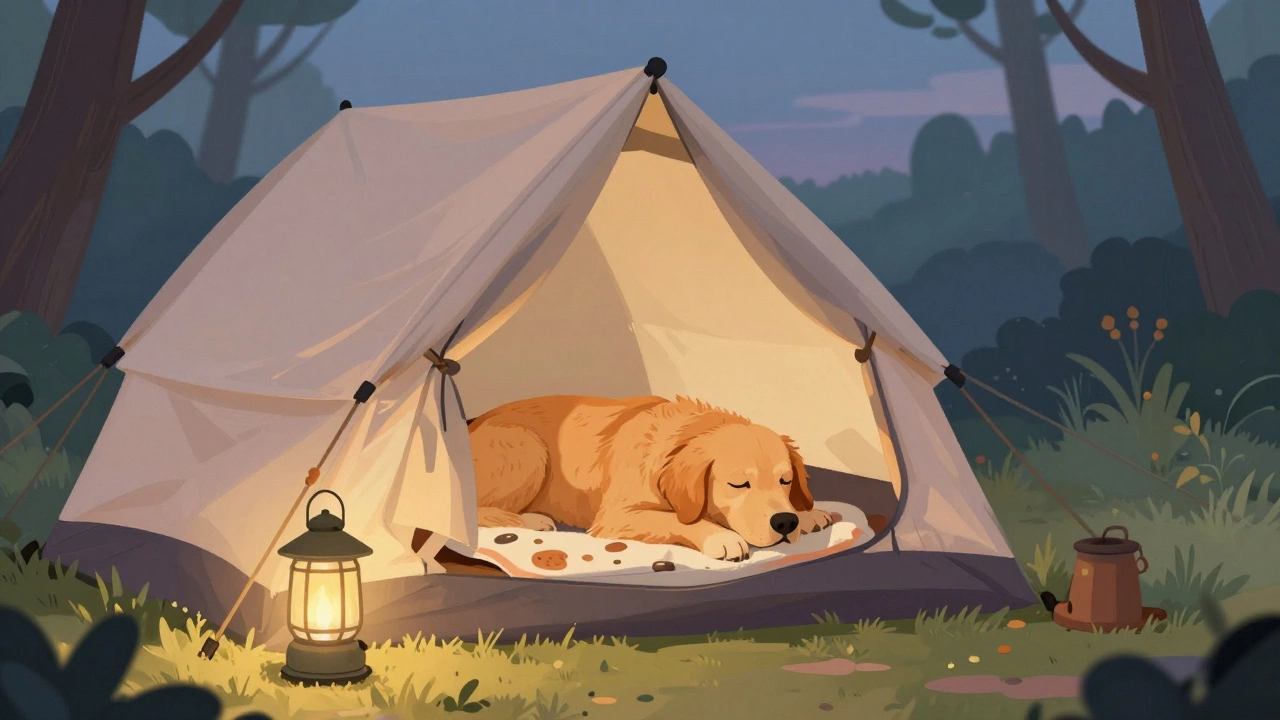
Once you arrive, setup plays a huge role. Keep your dog close to you. Do not tether them far away from your tent. A long leash gives them room to patrol and react to every shadow. Instead, use a short leash attached to your tent or keep them inside if your dog is comfortable in the tent. Being physically connected to you provides reassurance. If they are outside, ensure they are in a crate or a secure pen that blocks their view of the surrounding area. Visual barriers reduce reactivity significantly.
White noise is a powerful tool. Bring a small fan or a portable speaker playing soft rain sounds or brown noise. This masks the sudden, sharp noises of nature that trigger barking. A consistent background sound helps your dog sleep through minor disturbances. Also, dim your lights. Bright lights attract insects and animals, which in turn attract your dog's attention. Use red-filtered headlamps to minimize light pollution and keep the atmosphere calm.
The Role of Exercise and Mental Stimulation
A tired dog is a quiet dog. This is not just a cliché; it is biological fact. If your dog has pent-up energy, they will find ways to release it, often through vocalization. Before sunset, engage in vigorous exercise. A brisk hike, a swim in a lake, or a game of fetch can burn off excess adrenaline. Follow physical exercise with mental stimulation. Puzzle toys, scent work games, or training sessions drain their brain power. Mental fatigue is just as effective as physical exhaustion in promoting restful sleep.
Do not let your dog play with other dogs right before bedtime. Social interaction can be overstimulating. Keep social time earlier in the afternoon. As evening approaches, switch to calm activities. Brushing, gentle petting, and quiet bonding time signal to your dog that the active part of the day is over. Establish a routine. Dogs thrive on predictability. If they know that dinner is followed by a walk, which is followed by cuddles and sleep, they will settle down faster.
| Strategy | Effectiveness | Best For |
|---|---|---|
| Exhaustion via Exercise | High | High-energy breeds (Border Collies, Labs) |
| White Noise Machines | Medium-High | Sensitive hearers, light sleepers |
| Territory Restriction (Crate/Pen) | Very High | Territorial barkers, reactive dogs |
| Treat Distraction | Low-Medium | Mild alerts, temporary silencing |
What to Do When Barking Starts
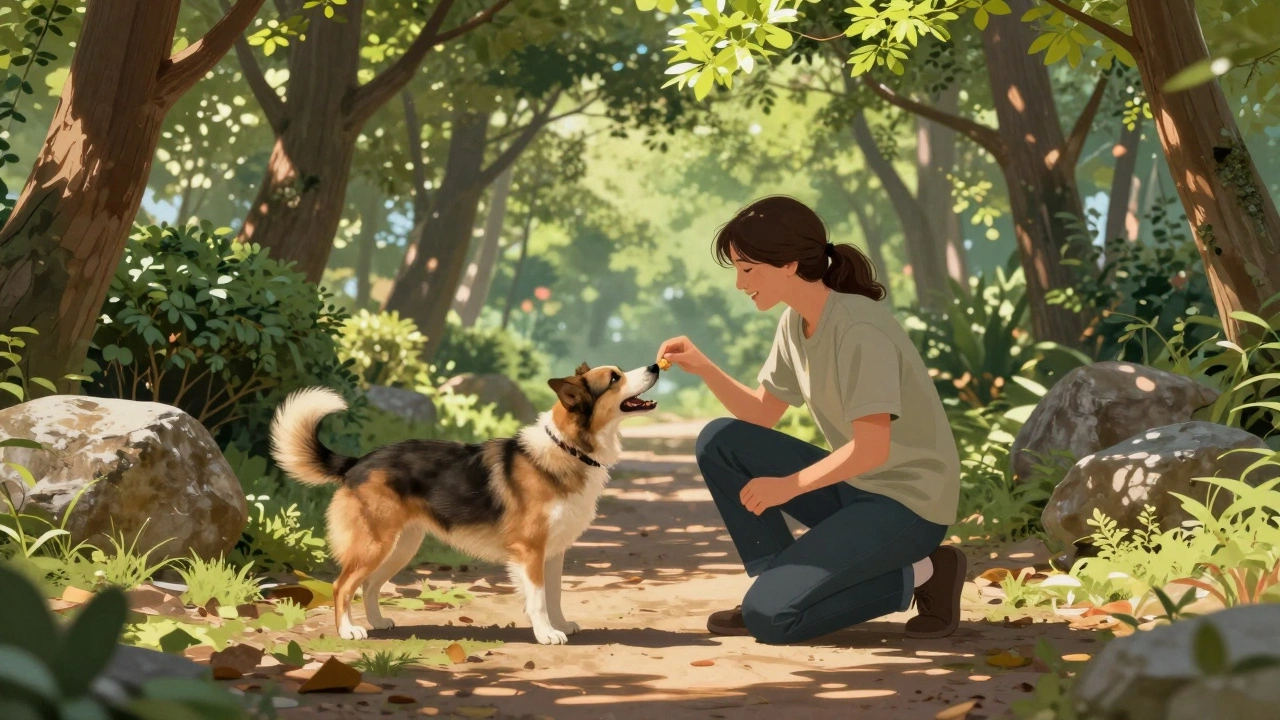
If your dog does start barking, your reaction determines whether it stops or escalates. Never yell at your dog. To them, your yelling sounds like you are joining in the barking chorus. Stay calm and assertive. Approach your dog slowly. Use your 'quiet' command in a firm, neutral tone. Wait for a pause, even if it is only a second, and immediately reward with a treat. Reinforce the silence, not the noise.
If the barking is triggered by a specific stimulus, like another dog walking by, redirect their attention. Call their name, show them a toy, or ask for a trick like 'sit' or 'shake.' This breaks their focus on the threat. If the barking continues despite redirection, remove the stimulus. Close the tent flap, move to a different spot, or block their line of sight. Ignoring the behavior works for attention-seeking barking, but not for alarm barking. Alarm barking requires intervention.
Tools and Gear to Help
Invest in the right gear to support your efforts. A well-fitted muzzle can be useful if your dog becomes aggressive due to fear, though it does not stop barking. However, it signals to others that you are managing your dog safely. Anti-bark collars are controversial and generally discouraged by modern trainers. They can cause pain, fear, and psychological damage. Positive reinforcement tools are safer and more effective long-term.
Consider using a calming aid. Products containing lavender, chamomile, or pheromones (like Adaptil) can help lower your dog's stress levels. Calming chews or supplements given before bed may promote relaxation. Always consult your vet before introducing new supplements. A comfortable bed with familiar scents from home can also provide a sense of security. Bring their favorite blanket or toy. Familiar smells anchor them in a safe zone amidst the unknown wilderness.
Respecting Campsite Etiquette
Finally, remember that you share the space with others. If your dog barks excessively, you risk being asked to leave. Most campgrounds have strict noise policies. Be proactive. If you notice your dog getting agitated, address it immediately. Apologize to neighbors if necessary. Building a good reputation as a responsible dog owner helps everyone. Other campers are more likely to be tolerant if they see you are actively working to manage your dog. Good manners extend beyond humans to our four-legged companions.
Should I put my dog in the tent with me?
If your dog is comfortable in the tent, this is often the best option. It keeps them close to you, reducing separation anxiety, and limits their exposure to external triggers. Ensure the tent is large enough for both of you to move around comfortably without feeling cramped.
Can I use a shock collar to stop my dog from barking?
No, shock collars are not recommended. They can cause physical harm and increase fear and aggression. Positive reinforcement methods, such as treating quiet behavior and redirecting attention, are safer and more effective for long-term behavioral change.
What if my dog barks at other campers?
This is a sign of territorial behavior or fear. Immediately redirect your dog's attention with a command or toy. If necessary, create a physical barrier between your dog and the other campers. Apologize to the other campers and explain that you are working on training your dog.
How much exercise does my dog need before camping?
Aim for at least 30-60 minutes of vigorous exercise depending on your dog's breed and age. High-energy breeds like Border Collies or Huskies need more intense activity. Mental stimulation, such as puzzle toys, should follow physical exercise to ensure your dog is fully relaxed.
Is it okay to leave my dog alone at the campsite?
It depends on your dog's temperament. If your dog suffers from separation anxiety, leaving them alone can trigger barking. If you must leave, ensure they are in a secure, comfortable space with distractions like chew toys. Never leave them unattended for long periods in unfamiliar surroundings.