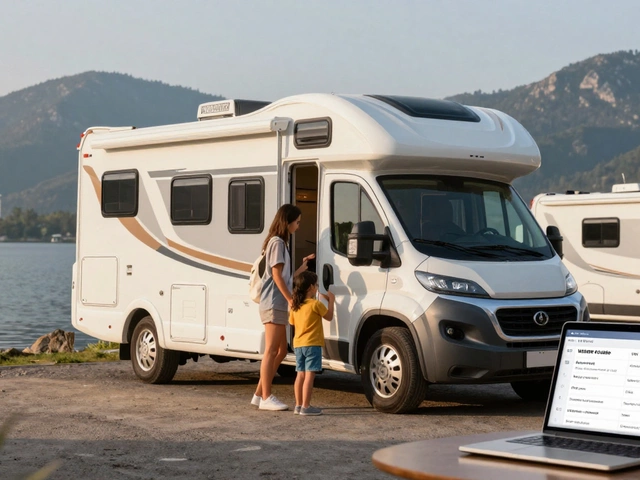
Boondocking Legality Checker
Check Your Boondocking Legality
Determine if boondocking is legal at your desired location based on land management agency and state. This tool provides general guidelines, but always verify with local authorities before you go.
Legality Result
Duration Limits
Key Rules
Important: This is a general guideline only. Always verify with the local ranger station or managing agency website before you go. Rules can change based on fire restrictions, wildlife concerns, and local regulations.
Boondocking isn’t just a buzzword for RV lovers-it’s a way of life for thousands who ditch crowded campgrounds and sleep under open skies. But here’s the real question: is boondocking legal in the US? The answer isn’t a simple yes or no. It depends on where you are, what you’re driving, and how you behave. If you’re planning to park your rig on public land and call it home for a few days, you need to know the rules before you roll out.
What Exactly Is Boondocking?
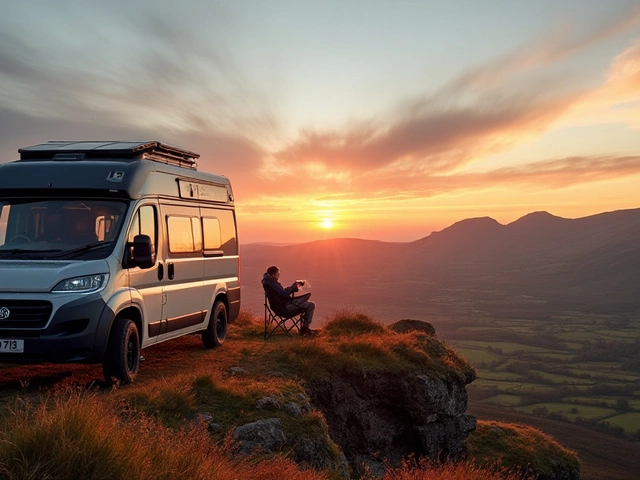
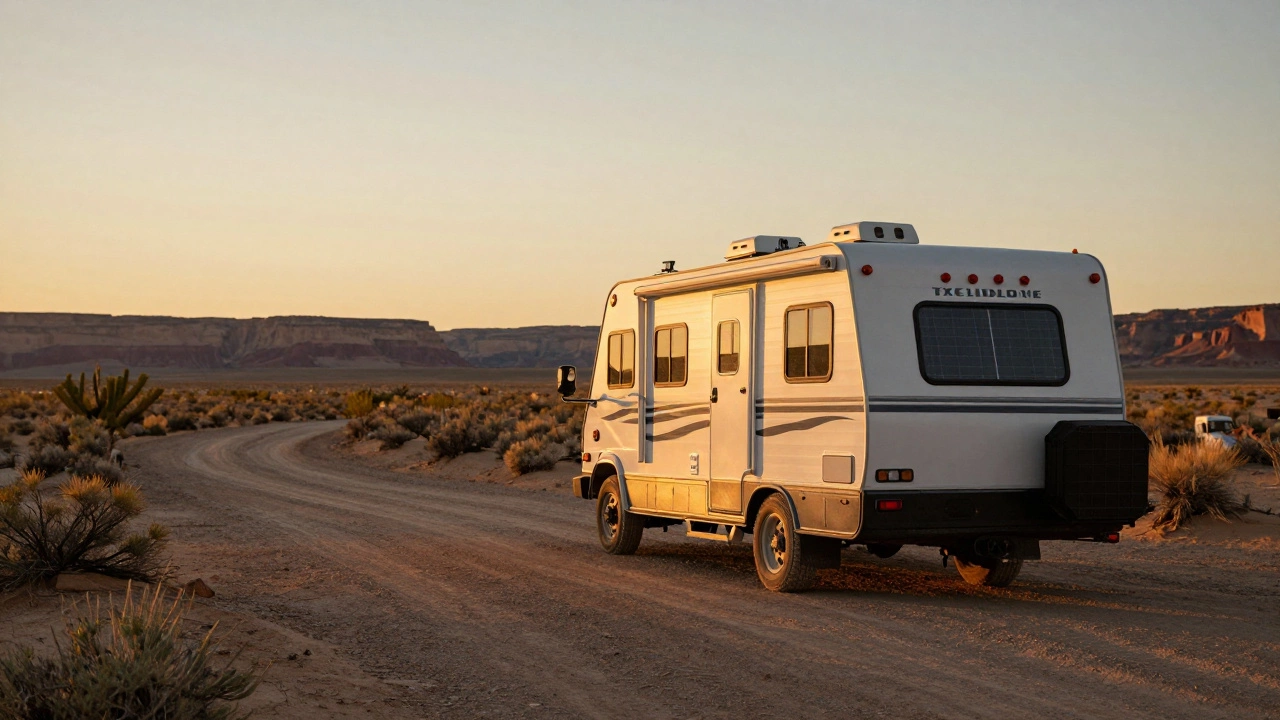
Boondocking means camping without hookups-no electricity, no water, no sewer. You’re completely off-grid. It’s often done on public lands managed by the Bureau of Land Management (BLM), U.S. Forest Service, or even some state parks. You might park beside a dusty trail in Nevada, near a desert canyon in Arizona, or tucked into a pine forest in Oregon. No reservations. No fees. Just you, your rig, and nature.
It’s not the same as wild camping in national parks. Most national parks don’t allow overnight stays outside designated campgrounds. Boondocking happens on lands where the government permits dispersed camping. That’s the key difference.
Where Is Boondocking Allowed?
The U.S. has over 245 million acres of public land. Not all of it lets you camp freely, but a huge chunk does. Here’s where you can legally boondock:
- BLM Land - The Bureau of Land Management manages about 245 million acres across 10 Western states. Most BLM areas allow up to 14 days of camping in one spot, then you must move at least 25 miles away before returning. This rule is widely enforced in places like Arizona, Utah, and Nevada.
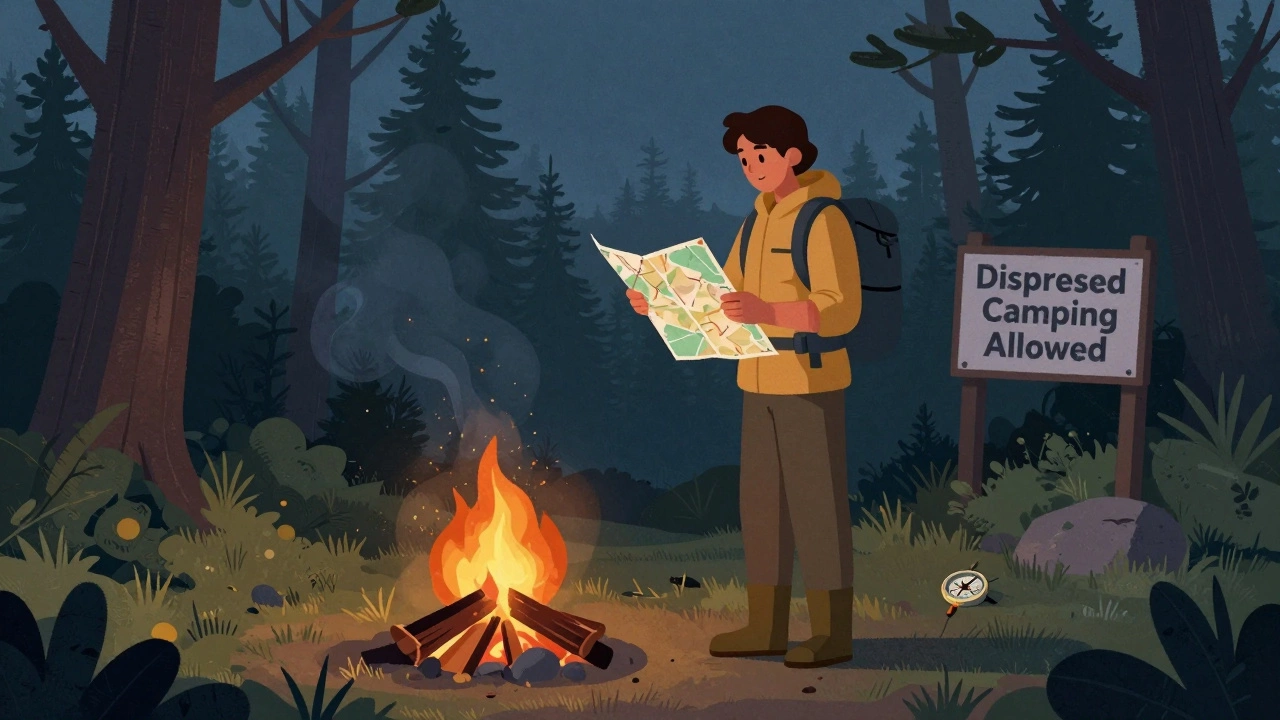
- U.S. Forest Service Land - National forests cover 193 million acres. Dispersed camping is generally allowed unless posted otherwise. Some forests limit stays to 16 days within a 30-day period. Check each forest’s specific rules-some, like the White Mountain National Forest in New Hampshire, require permits.
- Some State Lands - States like Idaho, Montana, and Colorado allow boondocking on state-managed lands, but rules vary. For example, Colorado allows it on state trust lands if you’re more than 150 feet from roads and water sources.
- Wildlife Management Areas - Some states permit overnight stays in these zones. Always verify with the state’s fish and wildlife agency.
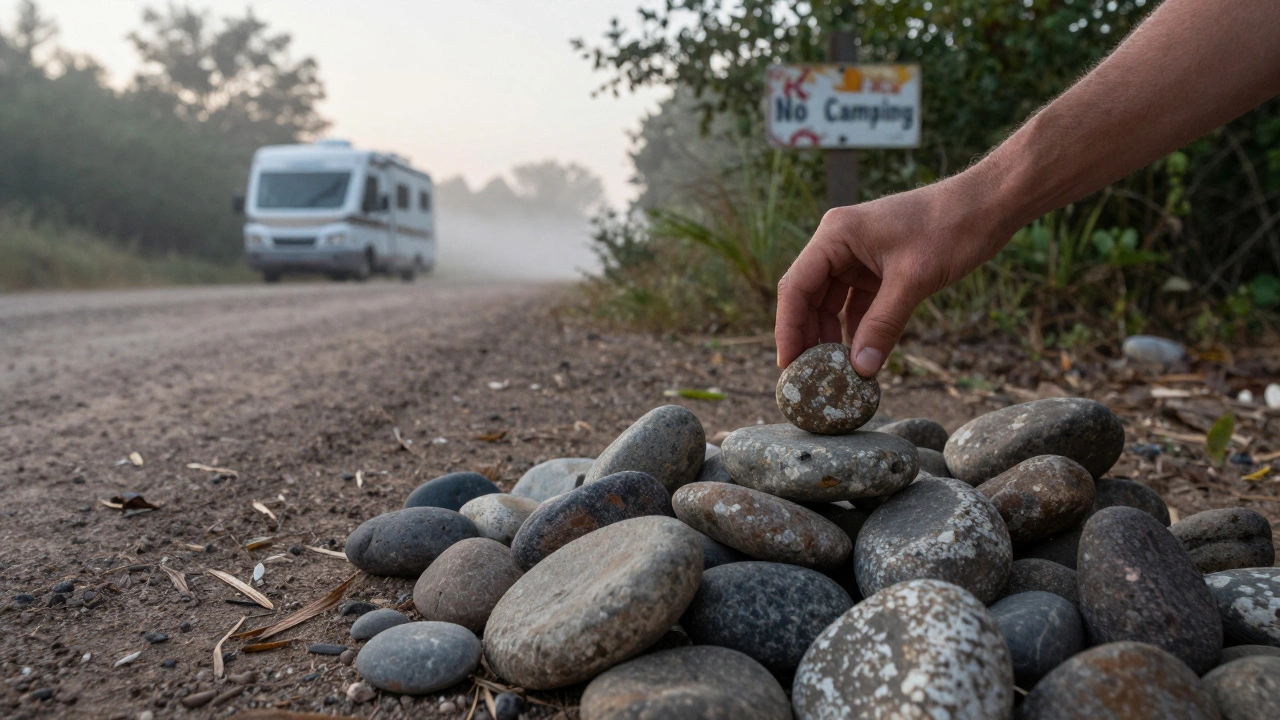
Don’t assume all public land is open. Signs matter. If you see a "No Camping" or "Dispersed Camping Prohibited" sign, obey it. Violating these rules can lead to fines or towing.
Where Is Boondocking Illegal?
Boondocking is banned in many places-even if they look like perfect spots. Here’s where you’ll get in trouble:
- National Parks - Yosemite, Yellowstone, Grand Canyon: no overnight stays outside official campgrounds. Rangers patrol regularly.
- State Parks - Most require reservations. Even if you see an empty pull-off, it’s likely private or restricted.
- Private Property - Trespassing on farmland, ranches, or residential areas is illegal everywhere. Even if the gate is open, assume it’s private.
- Urban Areas - Parking overnight on city streets, shopping centers, or highway rest areas is often prohibited. Some cities like Phoenix and Portland have strict anti-camping ordinances.
- Protected Natural Areas - Wetlands, riparian zones, and endangered species habitats are off-limits. These are often marked with signs or posted online.
One common mistake: people think if it’s "public," it’s fair game. Not true. Public land comes with conditions. Always check the managing agency’s website before you go.
How to Find Legal Boondocking Spots
You don’t need a fancy app to find legal spots, but tools help. Here’s how to do it right:
- BLM.gov - Use the interactive map for each state. Look for "Dispersed Camping" zones.
- Recreation.gov - Shows federal lands with camping rules. Filter for "no reservations required."
- FreeRoam - A popular app that shows legal off-grid spots based on public land boundaries. It’s updated regularly and includes user reviews.
- Google Earth - Zoom into remote areas. Look for dirt roads, pull-offs, and signs of past campers. If it looks like others have parked there, it’s often a good sign.
Pro tip: Call the local ranger station. Most have staff who’ll tell you exactly where you can camp. No email. No website. Just pick up the phone. It’s old-school, but it works.
Rules You Must Follow
Even in legal areas, you’re not free to do whatever you want. Here are the non-negotiable rules:
- Stay under 14-16 days - Most federal lands limit stays to two weeks. Exceed it, and you risk a fine.
- Leave No Trace - Pack out all trash. Use a portable toilet or dig a cathole at least 200 feet from water sources. Don’t cut live trees or dig trenches.
- No fires where prohibited - Many areas ban campfires during dry seasons. Use a camp stove instead.
- No dumping gray water - Dumping on the ground is illegal in most places. Use designated dump stations.
- Don’t block roads or trails - Park in designated pull-offs. If you’re in the way of emergency vehicles, you’ll be asked to leave.
These aren’t suggestions. They’re federal regulations. Rangers have the authority to issue fines up to $5,000 and confiscate vehicles for serious violations.
What Happens If You Get Caught?
Most of the time, you’ll get a warning-especially if you’re clean, quiet, and leave no trace. But if you’re overstaying, littering, or camping in a restricted zone, you could face:
- A $50-$500 fine
- Vehicle towing
- Being banned from public lands for a year
There’s no "boondocking police," but rangers do patrol. They use license plate readers, drones, and reports from other campers. Don’t think you’ll slip under the radar.
Boondocking vs. Dry Camping
People mix up these terms. Dry camping is when you’re at a campground without hookups. You might be next to 20 other rigs, with a trash can and vault toilet nearby. That’s not boondocking.
Boondocking means solitude. No neighbors. No facilities. You’re truly off-grid. If you’re not alone, you’re probably not boondocking.
Is It Safe?
Safety depends on location and preparation. Rural BLM land in Utah is generally safe. Remote forest areas in the Pacific Northwest? Less so. Always:
- Check weather and fire danger before you go
- Tell someone your location and return date
- Carry a satellite communicator (like Garmin inReach)
- Have a full tank of gas and extra water
- Know your vehicle’s limits
Most boondockers report feeling safer than in crowded campgrounds. You’re not a target if you’re quiet, respectful, and hidden.
Final Checklist Before You Go
- Confirm the land is managed by BLM, Forest Service, or state agency that allows dispersed camping
- Check current fire restrictions and water advisories
- Verify your stay duration limit (usually 14 days)
- Bring a portable toilet or know how to dig a cathole
- Pack out every piece of trash-even biodegradable
- Have backup power (solar panels or extra batteries)
- Download offline maps and save ranger contact info
Boondocking isn’t about breaking rules. It’s about knowing them. The best boondockers aren’t the ones who push boundaries-they’re the ones who respect them. If you do, you’ll keep this freedom alive for everyone.
Is boondocking legal on all public lands in the US?
No. Boondocking is only legal on specific public lands managed by agencies like the Bureau of Land Management (BLM) and U.S. Forest Service-and even then, rules vary by location. National parks, state parks, and most private lands prohibit it. Always check with the managing agency before setting up camp.
How long can you boondock in one spot?
Most federal lands allow 14 consecutive days in one location. After that, you must move at least 25 miles away before returning. Some U.S. Forest Service areas allow up to 16 days within a 30-day period. Local rules can differ, so always confirm with the ranger station.
Can you boondock in national forests?
Yes, in most cases. Dispersed camping is generally allowed in national forests unless signs say otherwise. However, some forests have seasonal restrictions, fire bans, or permit requirements. For example, the Apache-Sitgreaves National Forest in Arizona allows it, but the White Mountain National Forest in New Hampshire requires a permit. Always check the specific forest’s website.
Do you need a permit to boondock?
Usually not on BLM land, but sometimes yes on U.S. Forest Service land or state-managed areas. For example, some California national forests require permits during fire season. Always check the rules for the specific area. If you’re unsure, call the local ranger station-they’ll tell you.
Is it safe to boondock alone?
It can be, if you’re prepared. Choose well-traveled areas with other campers nearby. Carry a satellite communicator, tell someone your plans, and avoid isolated spots during extreme weather. Most boondockers report feeling safer than in crowded campgrounds because they’re not targets. But preparation is everything.
What happens if you stay too long in one spot?
You’ll likely get a warning the first time. Repeated violations or ignoring signs can lead to fines up to $500, vehicle towing, or being banned from public lands. Rangers use license plate readers and reports from other campers to track overstays. Don’t risk it-move on when required.
Can you boondock in winter?
Yes, but conditions change. Snow, ice, and closed roads can make access impossible. Some areas like Arizona and Southern California are ideal for winter boondocking. Others, like the Rockies, may have snowdrifts or no cell service. Always check road conditions and weather forecasts before heading out.