UK Bushcraft Legality Checker
Select your location and activity to check legal status. This tool simplifies complex UK property and conservation laws.
You’ve seen the videos. The guy in a waxed jacket carving a spoon from a birch branch while rain hammers his tarp. It looks peaceful. It looks free. But then you look at your phone and wonder: if I pitch my tent here, will a ranger fine me? Will the police show up? Is bushcraft actually legal in the United Kingdom, or is it just a polite fiction?
Here’s the blunt truth: there is no single "Bushcraft Law" in the UK. You won’t find a statute that says "Thou shalt carve sticks." Instead, bushcraft exists in a messy, confusing patchwork of property rights, conservation rules, and ancient customs. Whether you can legally practice bushcraft depends entirely on three things: where you are standing, what you are doing, and how long you stay.
The Core Problem: Access vs. Activity
Most people confuse two different legal concepts when they ask about bushcraft: Right to Roam and the right to engage in specific activities like lighting fires or cutting wood. They are not the same thing.
In England and Wales, the Countryside and Rights of Way Act 2000 (CRoW) gives you the right to walk on certain mapped areas of open country and mountain land. This is often called "access land." However, this act does not give you an automatic right to camp, light a fire, or cut down trees. It mostly covers walking, climbing, and caving. If you step off the path to chop a stick for a shelter, you might be trespassing depending on who owns the land underneath your feet.
Scotland is different. The Land Reform (Scotland) Act 2003 created a statutory right to roam across most unenclosed land. This makes Scotland significantly more bushcraft-friendly than its southern neighbors. But even in Scotland, you have to follow the Scottish Outdoor Access Code. You can’t just do whatever you want because the law says you can enter the land.
England and Wales: The Permission Game
If you’re practicing bushcraft in England or Wales, assume you need permission unless you are on common land with specific local bylaws allowing it. Most forests are owned by the Forestry Commission, private estates, or farmers.
The Forestry Commission manages many popular bushcraft spots. Their stance has shifted over the years. Historically, they were strict. Now, they recognize the value of outdoor education and recreation. Many of their woods allow wild camping and basic bushcraft, but usually only in designated zones or during specific seasons. Always check the specific site’s signage or website before you unpack your axe.
Private land is simpler but harder to navigate. Technically, every inch of non-public land belongs to someone. Trespass is a civil wrong, not a criminal offense (with some exceptions), which means you usually get asked to leave rather than arrested. But if you’re chopping wood without asking, you’re damaging property. That’s criminal damage. And nobody wants a court date for breaking a £50 sapling.
- Common Land: Often allows grazing and walking. Camping rights vary wildly by location. Check local bylaws.
- SSSIs (Sites of Special Scientific Interest): Strict protections apply. No fires, no digging, no cutting. Period.
- Local Nature Reserves: Usually require explicit written permission for any activity beyond walking.
Scotland: The Golden Standard for Bushcrafters
If you want true freedom, go north. The Scottish Outdoor Access Code is the bible for bushcrafters in Scotland. It doesn’t just say you can be there; it outlines how you should behave.
The code emphasizes "responsible access." You can camp anywhere reasonable, provided you avoid buildings, roads, and busy fields. You can gather deadwood for fires. You can use existing trails. But you must minimize impact. This means using a stove instead of a big bonfire when possible, packing out all trash, and leaving the site as you found it.
However, even Scotland has limits. Some areas have seasonal restrictions to protect wildlife, particularly ground-nesting birds between March and August. During these times, you might be asked to keep your dog on a lead or avoid disturbing sensitive habitats. Ignoring these signs isn’t just rude; it can lead to fines under nature conservation regulations.
The Fire Question: Can You Light a Campfire?
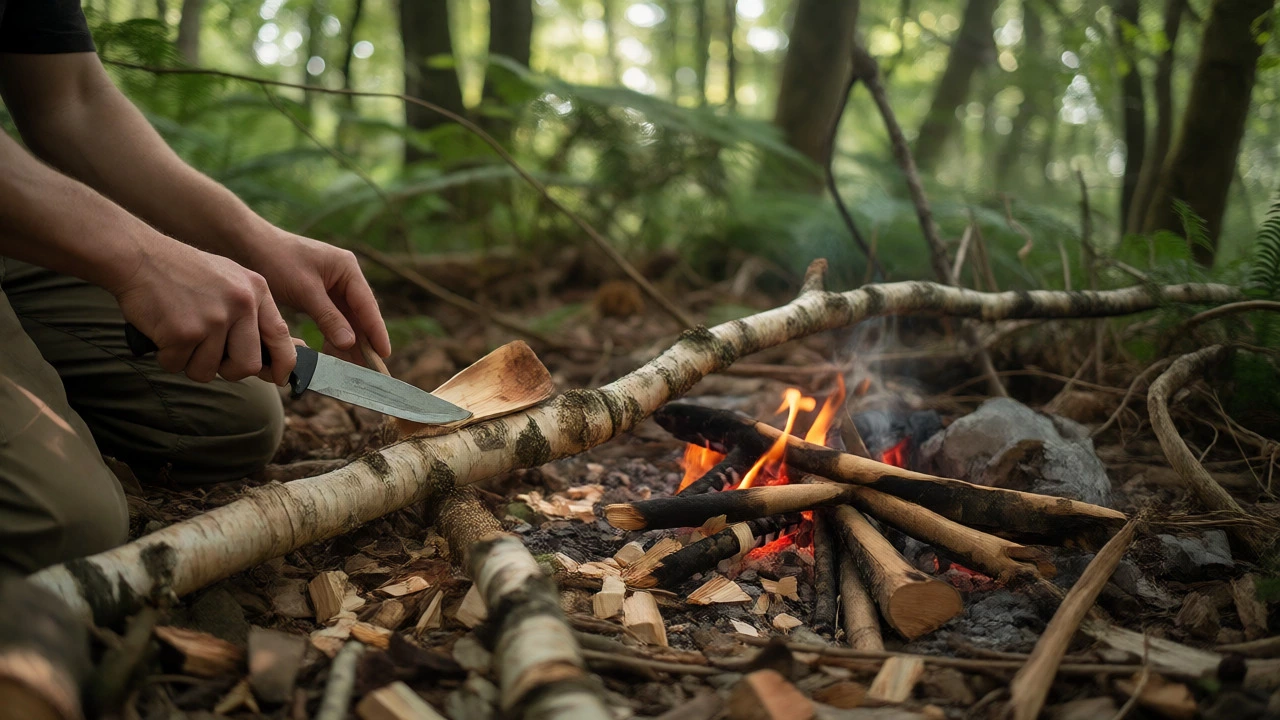
This is where most bushcraft plans fall apart. Lighting a fire is central to traditional bushcraft-cooking, warmth, morale. But is it legal?
In England and Wales, you generally cannot light a fire on open access land without permission. Why? Because fire risk is high, especially in summer. Drought conditions can turn a small spark into a wildfire disaster. Many landowners ban fires outright to protect their insurance policies and the landscape.
In Scotland, the Access Code permits lighting fires, but with caveats. Use established fire pits if available. Keep fires small. Never leave them unattended. And crucially, ensure they are fully extinguished before you leave. In dry weather, consider using a portable gas stove instead. It’s faster, cleaner, and less likely to get you in trouble with a concerned farmer watching from the next field.
| Region | Access Right | Wild Camping | Campfires | Wood Gathering |
|---|---|---|---|---|
| England & Wales | Limited (CRoW Act) | Permission usually required | Rarely allowed without consent | Deadwood only; often restricted |
| Scotland | Broad (Land Reform Act) | Allowed (Responsible Access) | Allowed (Small, controlled) | Deadwood allowed |
| Northern Ireland | No general right to roam | Permission required | Strictly regulated | Permission required |
Gathering Resources: Wood, Water, and Plants
Bushcraft isn’t just about sitting around; it’s about interacting with the environment. You might want to cut a hazel rod for a bow drill or collect water from a stream. Here’s how the law views resource extraction.
Wood: The golden rule is "dead and down." You can usually gather fallen branches that are already on the ground. Cutting live wood is almost always prohibited without permission because it damages the tree and the ecosystem. In Scotland, the Access Code explicitly states you should take only what you need and prefer dead wood. In England, even taking dead wood can be contested on private land if it’s considered part of the estate’s resources.
Water: Collecting water from natural sources is generally fine for personal consumption. Just don’t pollute the source. Don’t wash dishes directly in the stream; carry water away from it. This protects aquatic life and keeps the water safe for the next camper.
Plants: Be careful here. Some plants are protected under the Wildlife and Countryside Act 1981. Picking bluebells, orchids, or other rare species can result in heavy fines. If you don’t know what you’re picking, don’t pick it. Stick to well-known edibles like blackberries or nettle tips, and even then, respect local abundance.
Practical Tips to Stay Out of Trouble
Legality is one thing; social acceptance is another. You can be technically within your rights and still get glared at by locals. Here’s how to practice bushcraft respectfully and legally.
- Ask First: If you see a farmer or landowner, stop and chat. Explain what you’re doing. Most people are happy to let you camp if you’re tidy and respectful. Building rapport prevents misunderstandings.
- Leave No Trace: This isn’t just a slogan; it’s your best legal defense. If you leave no sign you were there, complaints drop dramatically. Pack out all waste, including biodegradable food scraps.
- Use Existing Trails: Don’t blaze new paths through fragile vegetation. Stick to worn tracks to minimize erosion.
- Keep Groups Small: Large groups attract attention and cause more environmental impact. Solo or pairs are easier to manage and less disruptive.
- Check Local Bylaws: National Parks and Areas of Outstanding Natural Beauty often have specific rules. For example, some parks prohibit campfires year-round regardless of season.
What Happens If You Break the Rules?
Consequences vary. In most cases, a ranger or warden will simply ask you to move along. This is the best-case scenario. If you refuse, or if you’ve caused significant damage (like starting a forest fire or cutting down a mature tree), things escalate.
Fines can range from £50 to several hundred pounds depending on the severity and location. In extreme cases involving repeated offenses or significant environmental damage, prosecution is possible. Remember, the goal isn’t to fear the law, but to understand it so you can enjoy the outdoors sustainably.
Can I sleep in my car on public land in the UK?
Sleeping in your vehicle is generally treated differently than pitching a tent. On laybys and some public lands, it is often tolerated as long as you don't set up chairs, tables, or awnings. However, overnight parking bans exist in many tourist hotspots. Always check local signage.
Do I need a license for bushcraft in the UK?
No, you do not need a personal license to practice bushcraft skills like carving or knot-tying. However, if you are running a commercial bushcraft course, you may need business licenses, insurance, and potentially planning permissions depending on the frequency and scale of your operations.
Is it illegal to cut down a tree for bushcraft?
Yes, cutting down a living tree without permission is generally illegal and constitutes criminal damage. You should only gather dead, fallen wood. Even gathering dead wood can be restricted on private land, so always verify local rules or ask the owner.
Can I light a fire in a national park?
It depends on the specific park. Many UK national parks restrict or ban campfires to prevent wildfires and protect soil health. Some allow stoves but not open fires. Always check the specific park's visitor guidelines before bringing a fire pit or matches.
What is the difference between wild camping and bushcraft?
Wild camping refers specifically to staying overnight in a tent or bivvy bag outside of a designated campsite. Bushcraft is a broader skillset involving survival techniques, tool use, and crafting from natural materials. You can do bushcraft without camping (day trips), and you can wild camp without doing bushcraft (just sleeping).