Toddler Camping Sleep Bag Calculator
Find the perfect sleeping bag rating for your toddler's camping trip. Based on the expected temperature and your child's sleep style, this calculator will recommend the ideal sleeping bag temperature rating.
Getting a toddler to sleep well at home is hard enough. Now imagine trying to do it in a tent, with unfamiliar sounds, cold nights, and no crib. If you’ve ever stared at the ceiling at 2 a.m. while your toddler cries because the ground feels too hard or the sleeping bag keeps slipping off, you know this isn’t just about comfort-it’s about survival. The good news? With the right setup, toddlers can sleep soundly while camping. It’s not magic. It’s just smart planning.
Forget the crib. Think portable and familiar.
Most parents assume they need to bring a full-size crib or bassinet. You don’t. A crib is bulky, heavy, and unnecessary. Toddlers don’t need a rigid frame to sleep safely. What they need is consistency. Their brain associates certain textures, sounds, and spaces with sleep. Your job is to recreate that in the outdoors.
A travel crib is the most common solution, but it’s not the only one. Many families swear by a portable toddler bed-those low, foam-padded cots with side rails. They fold up small, weigh under 10 pounds, and give your toddler just enough structure to feel secure. Others use a thin foam mattress (like a yoga mat or camping pad) inside a pop-up tent or enclosed sleeping area. The key? Keep it low to the ground. Toddlers who roll out of a high crib at home will do the same in a tent if you don’t plan for it.
Sleeping bags aren’t just for adults
Adult sleeping bags are too big, too hot, and too loose for toddlers. A toddler-specific sleeping bag is a game-changer. Look for one with a snug fit around the torso, a hood to keep their head warm, and a zipper guard so they don’t snag their skin. Brands like Coleman, TETON Sports, and REI Co-op make toddler bags rated for 30-50°F, which covers most spring and fall camping trips.
Here’s what actually works: Put your toddler in their regular pajamas, then slide them into the sleeping bag. No extra blankets. Blankets get kicked off. Sleeping bags stay put. If it’s chilly, add a sleep sack over the sleeping bag. Or better yet-use a layered system: cotton onesie, fleece sleeper, then sleeping bag. That way, you can peel off layers if they get too warm.
Pro tip: Let your toddler pick the sleeping bag. If it has dinosaurs, stars, or their favorite character, they’ll be more excited to use it. Familiarity reduces anxiety.
The tent setup that actually works
Not all tents are made for toddlers. A standard family tent with a high ceiling and open floor space is a toddler’s nightmare. They need boundaries. Here’s how to fix it:
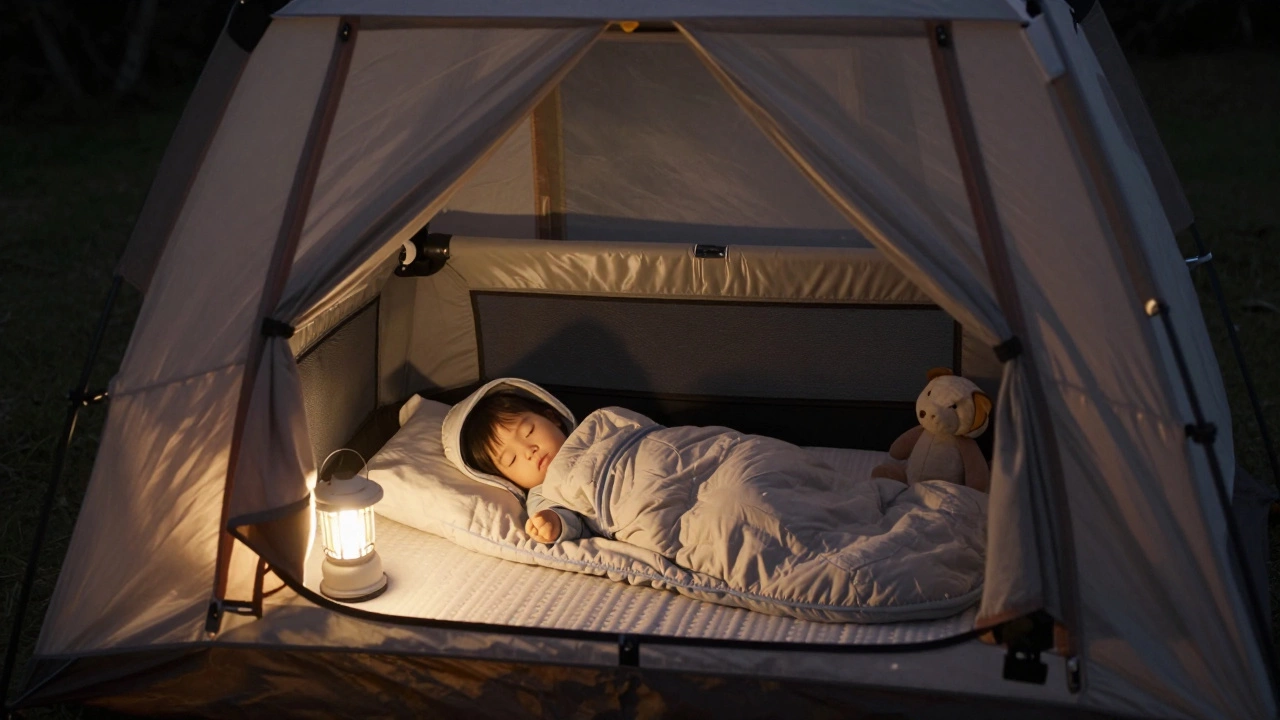
- Use a pop-up playpen or travel crib as a sleep zone inside the tent. It creates a safe, defined space.
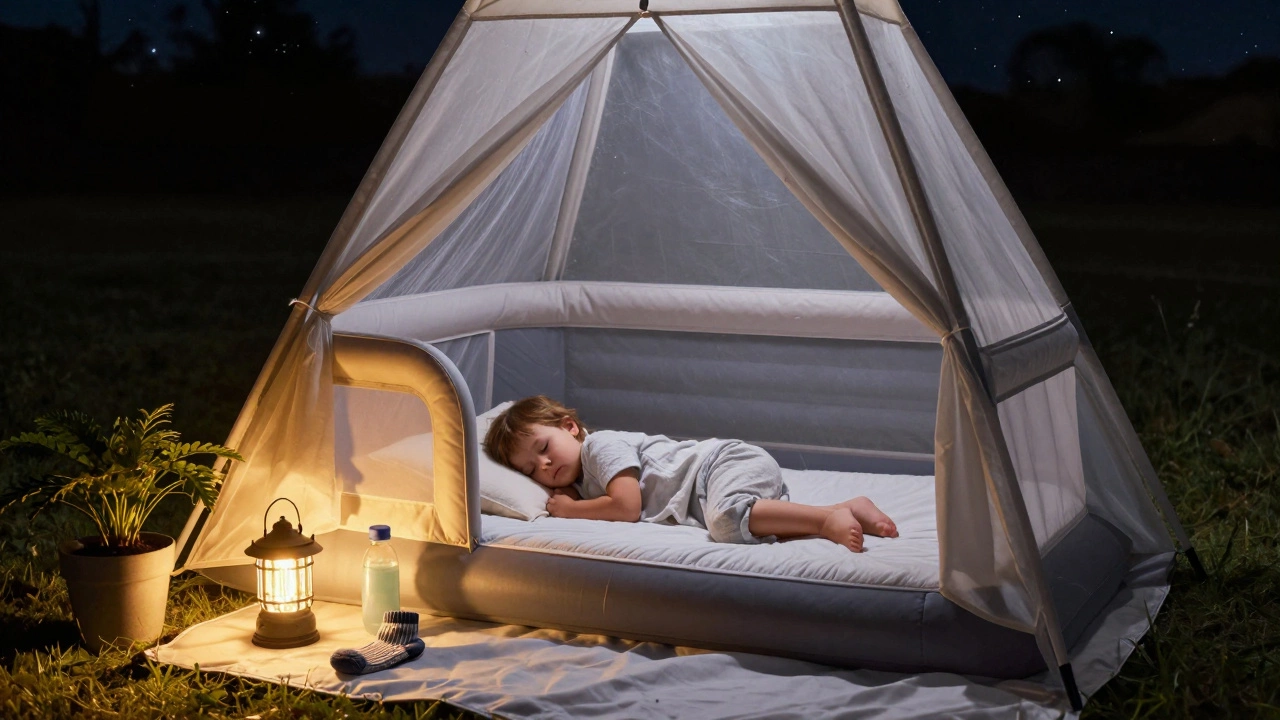
- Place it on a foam pad or inflatable mattress (even a thin one). The ground is cold and bumpy-even if you think it’s flat.
- Hang a small battery-powered lantern near the sleep zone. A dim, warm light helps toddlers feel safe. Avoid bright white lights-they mess with melatonin.
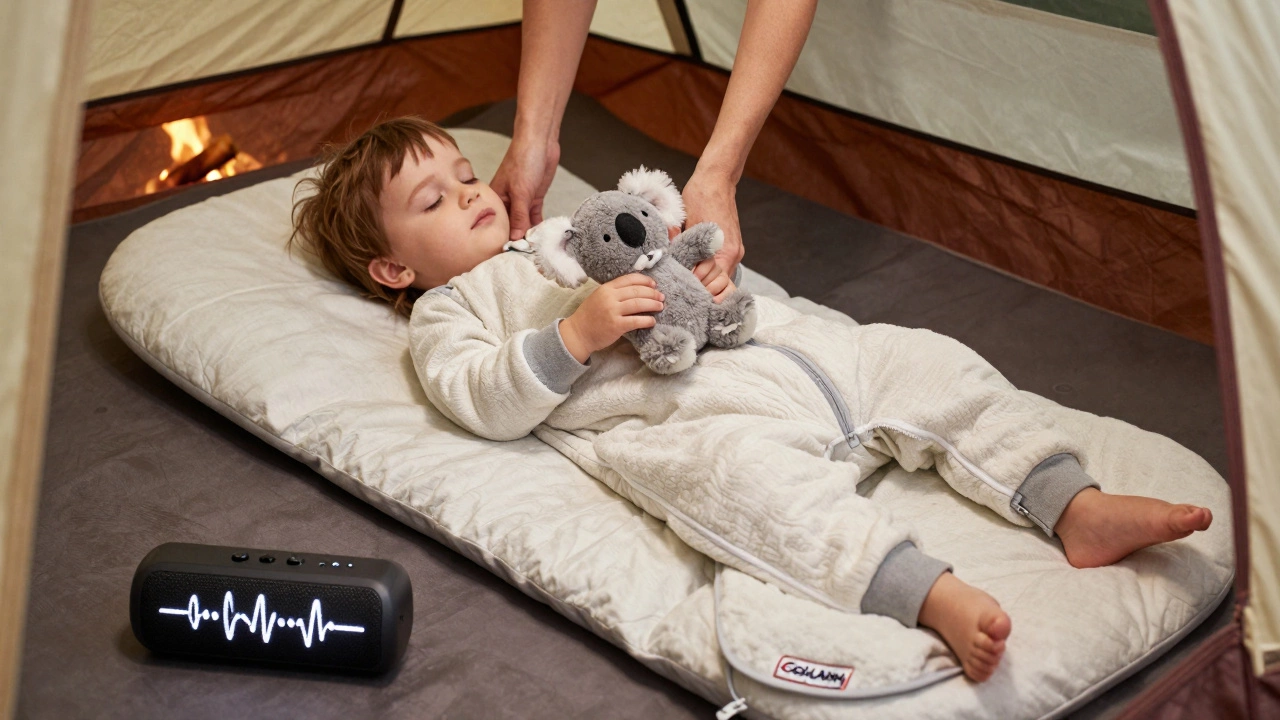
- Use a white noise app on your phone, played quietly through a Bluetooth speaker. The sound of rain, ocean waves, or a fan mimics what they hear at home.
Some parents swear by a tent-within-a-tent-a small, enclosed mesh canopy that fits inside the main tent. It blocks bugs, adds privacy, and makes the space feel cozier. You can buy these online or make one with a pop-up laundry hamper and a light sheet.
Temperature control: Don’t overdo it
Parents often bundle toddlers up like snowmen. That’s a mistake. Toddlers overheat faster than adults. A sleeping bag rated for 40°F is plenty for most nights. If it dips below that, add a fleece liner inside the bag-not extra blankets.
Check their neck and back of the head. If it’s sweaty, they’re too hot. If it’s cold and clammy, add one layer. The rule of thumb: Dress them in one more layer than you’re wearing. But don’t pile on. A child who wakes up drenched in sweat will cry harder than one who’s a little chilly.
Also, avoid cotton pajamas in cold weather. They hold moisture. Go for merino wool or synthetic fleece. They wick sweat, keep warmth, and dry fast. Even in summer, a light merino onesie works better than cotton.
Pre-camp routine: The secret weapon
It’s not the gear that makes them sleep. It’s the ritual. Toddlers thrive on predictability. Even in the middle of nowhere, they need the same wind-down sequence they have at home.
- Put on pajamas inside the tent-same as bedtime at home.
- Read one short book by lantern light.
- Give them their favorite stuffed animal (wash it before you go-it’ll smell like home).
- Hum or sing the same lullaby you always do.
- Turn off the light. Say goodnight. Leave the tent.
Don’t stay in there until they fall asleep. That creates dependency. If they cry, wait five minutes. Then go in, pat their back, say, “I’m right outside,” and leave again. Most toddlers settle within 15-20 minutes if the routine is consistent.
What not to bring
- Full-size pillows-too bulky, unnecessary.
- Heavy quilts or duvets-they’ll be kicked off and lost.
- Electronic tablets or screens-blue light delays sleep.
- Too many toys-clutter creates overstimulation.
- A full crib-unless you’re car camping and have space. Even then, it’s rarely worth the weight.
One parent in Sydney told me she brought her toddler’s entire bedtime routine: a tiny nightlight, a worn-out blanket, and a stuffed koala. “It wasn’t fancy,” she said. “But when he hugged that koala, he knew he was safe. That’s all he needed.”
What if they won’t sleep?
Some nights, nothing works. That’s normal. Toddlers are sensitive to change. If they’re crying for more than 30 minutes, ask yourself:
- Are they too hot or too cold?
- Did they nap too long during the day?
- Is there a bug, noise, or smell bothering them?
- Are they scared of the dark? (Even if they’ve never been before.)
If it’s a one-off night, don’t panic. Sleep deprivation is temporary. Pack a backup plan: a portable bassinet or even a car seat (with a safe, flat base) can work in a pinch. Some families use a stroller with a bassinet attachment parked inside the tent. It’s not ideal, but it gets you through the night.
And if all else fails? Sleep next to them. Just for one night. Let them feel your presence. It’s not a failure-it’s parenting.
Final checklist: What to pack
- Toddler-specific sleeping bag (rated for expected temps)
- Travel crib or portable toddler bed
- Foam pad or inflatable mattress (even a thin one)
- Merino wool or fleece pajamas
- Favorite stuffed animal
- Small battery-powered lantern (warm white LED)
- White noise app or small speaker
- Extra socks and a light hat (for chilly nights)
- Wet wipes and a small towel (for quick cleanups)
- Diapers or pull-ups (even if they’re potty-trained)
You don’t need fancy gear. You need repetition, safety, and warmth. Toddlers aren’t asking for luxury. They’re asking for the same feeling they get at home: “I’m safe. I’m loved. I can rest.”
That’s what camping with toddlers is really about-not the firepit or the s’mores. It’s about helping them feel at peace, even when the world outside is loud, strange, and full of stars.
Can toddlers sleep in a regular sleeping bag?
Not safely. Adult sleeping bags are too large and don’t retain heat well around a toddler’s small body. They can slip around, get tangled, or leave parts exposed to cold. Always use a toddler-specific sleeping bag designed for their size and temperature needs.
Should I bring a crib to camp with a toddler?
Only if you have plenty of space and the weight won’t be an issue. Most families skip the crib and use a travel crib, portable toddler bed, or even a foam pad with side rails. These are lighter, easier to set up, and just as safe.
What’s the best temperature for toddlers sleeping while camping?
Between 50°F and 70°F is ideal. Use a sleeping bag rated for 40°F-50°F to cover most nights. Dress them in one more layer than you’re wearing, but avoid over-bundling. Check their neck-if it’s sweaty, they’re too hot.
How do I keep my toddler warm without blankets?
Use a layered clothing system: cotton onesie, fleece sleeper, then a toddler sleeping bag. Add a fleece liner inside the sleeping bag if it’s cold. Avoid blankets-they get kicked off. A wool hat and socks can help retain heat at night.
My toddler wakes up crying every night. What should I do?
First, check for temperature, bugs, or noise. Then, stick to your bedtime routine-same pajamas, same book, same stuffed animal. If they’re scared, sit quietly beside them for a few minutes. Don’t pick them up unless necessary. Most toddlers settle after a few nights once they realize the campsite isn’t scary.
Can I use a car seat as a toddler bed while camping?
Yes, but only temporarily. Place a car seat on a flat, stable surface inside the tent, with a thin foam pad underneath. Make sure the harness is unbuckled and the seat is lying flat. It’s not ideal for long-term use, but it works for one night if your toddler refuses to sleep anywhere else.