UK Camping Layering Calculator
Get your perfect layering system for UK camping. Input season, temperature, and activity level to see what to pack.
Your Recommended Layers
Base Layer
Loading...
Mid Layer
Loading...
Outer Layer
Loading...
Critical Reminders
Cotton traps moisture, causing hypothermia in UK conditions. Use merino wool or synthetics instead.
Gore-Tex or eVent membranes are non-negotiable for UK rain. Regular raincoats don't breathe properly.
When you’re packing for a camping trip in the UK, the biggest mistake isn’t forgetting the tent or the torch-it’s packing the wrong clothes. The weather doesn’t care if you bought the flashiest outdoor gear. One minute it’s sunny and warm, the next it’s pouring rain, wind howling, and the temperature’s dropped ten degrees. If you show up in cotton t-shirts and jeans, you’ll be cold, wet, and miserable by dinner time.
Why UK Weather Is a Nightmare for Campers
The UK doesn’t have seasons so much as it has moods. A day in the Lake District can start with sunshine, turn to sleet by noon, and end with fog rolling in at dusk. Even in summer, temperatures rarely climb above 22°C, and nighttime lows can dip below 8°C. Winter? Forget snow boots and thermal layers-you need to plan for rain, wind, and damp that gets into your bones.
According to the UK Met Office, average rainfall across the country ranges from 800mm in eastern England to over 4,000mm in parts of the Scottish Highlands. That’s not just a bit of drizzle-it’s a constant threat. Your clothes need to handle wet, not just cold.
The Golden Rule: Layer Up
Forget one big jacket. The secret to staying dry and warm in the UK is layering. Three layers do the job: base, mid, outer.
- Base layer: This goes next to your skin. Skip cotton-it holds moisture like a sponge. Instead, pick synthetic fabrics like polyester or merino wool. Merino wool is expensive but worth it: it wicks sweat, resists odor, and keeps you warm even when damp. Brands like Icebreaker and Smartwool make lightweight base layers that fit snugly without chafing.
- Mid layer: This is your warmth layer. A fleece jacket or insulated vest works best. Look for one with a zippered pocket for snacks or gloves. Down is warm but useless if it gets wet. Synthetic insulation like PrimaLoft or Thinsulate is better for UK conditions. It keeps you cozy even after a downpour.
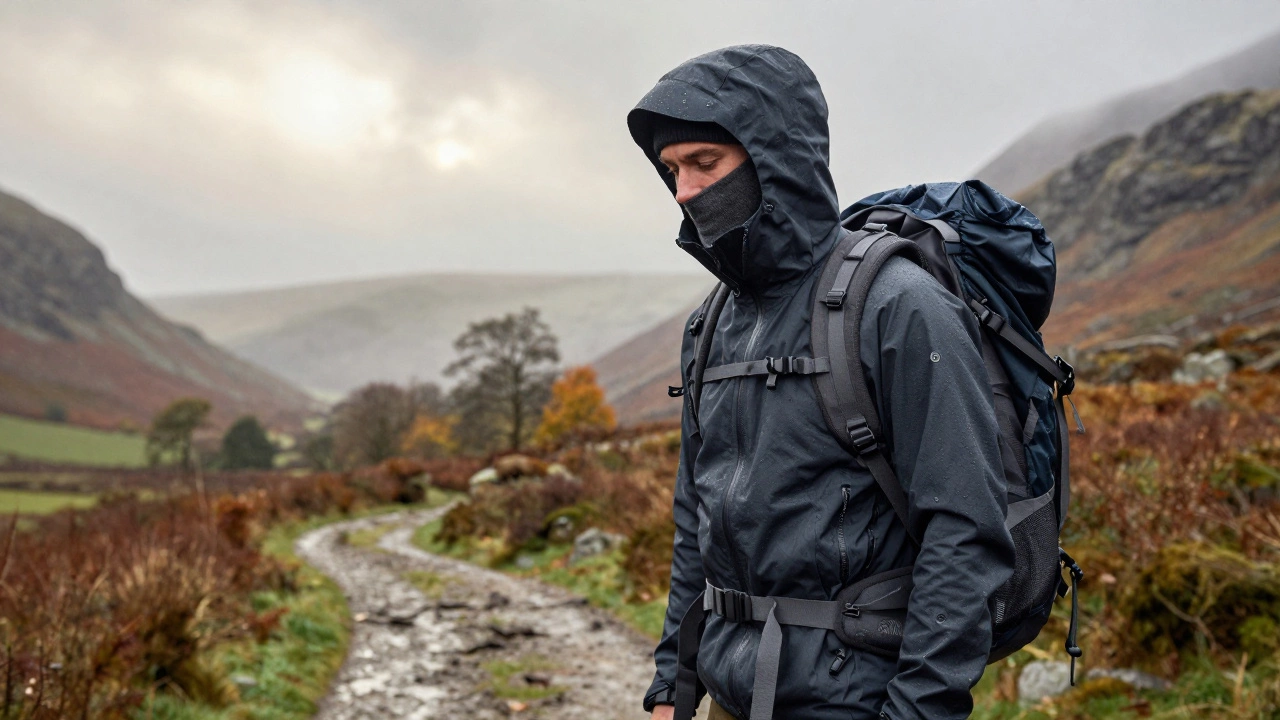
- Outer layer: This is your shield. A waterproof and breathable jacket is non-negotiable. Look for Gore-Tex or eVent membranes-they let sweat out while keeping rain out. A hood that fits over a beanie is a must. Pair it with waterproof pants. You’ll thank yourself when you’re hiking to the loo in a storm.
What to Wear on Your Legs
Legs get overlooked. Most people think jeans are fine. They’re not. Cotton jeans soaked in rain take 24 hours to dry. You’ll be shivering in them all night.
- For hiking or walking: Quick-dry hiking pants or convertible pants (that turn into shorts) are ideal. They’re tough, lightweight, and dry fast. Brands like Columbia and Decathlon make affordable options.
- For camp lounging: Bring a pair of soft, lightweight leggings or thermal tights under your hiking pants. They add warmth without bulk.
- Never wear jeans. Seriously. Even if you think you’ll be "just at the campsite."
Feet: Your Most Important Body Part
Wet feet ruin camping trips. Period.
- Shoes: Waterproof hiking boots with good ankle support are essential. Look for ones with Vibram soles-they grip wet rocks and muddy trails. Break them in before your trip. New boots cause blisters.
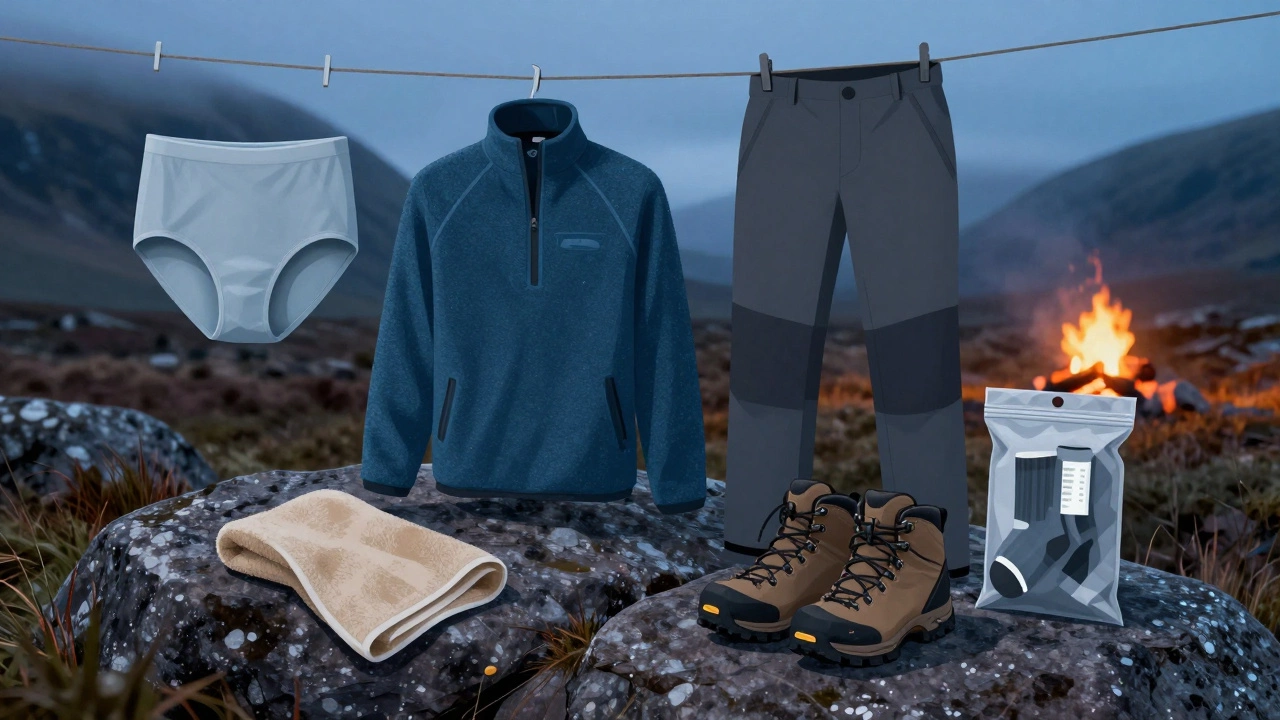
- Socks: Pack at least three pairs. Wool blend socks (70% wool, 30% synthetic) are best. Avoid cotton socks. They hold moisture and cause blisters. Bring a pair of thin liner socks to wear under your main pair-it reduces friction.
- At night: Slip on a pair of dry, warm camp socks. Keep them in a sealed plastic bag so they stay dry. Change them every night. Your feet will thank you.
Head, Hands, and Extras
Heat escapes through your head. Your hands get cold fast. Don’t skip these.
- Head: A wool beanie or fleece hat is enough for summer nights. In autumn or spring, add a buff or neck gaiter-it can pull up over your nose if it gets windy. A wide-brimmed hat helps in sunny spots.
- Hands: Lightweight waterproof gloves work for most days. For colder weather, bring insulated mittens. Touchscreen-compatible fingertips are a game-changer for checking your phone or GPS.
- Underwear: Moisture-wicking underwear. Cotton is a trap. Merino wool or synthetic blends keep you dry and reduce chafing.
- Extras: A lightweight packable rain poncho is a good backup. A small towel (microfiber) dries you off after a swim or a shower. And always, always bring a spare set of dry clothes in a waterproof bag.
Seasonal Adjustments
What you wear in June isn’t what you wear in November.
- Spring (March-May): Think damp and chilly. Layer up. Bring a warm mid-layer and waterproof outer. Rain is almost guaranteed.
- Summer (June-August): Warmer, but still unpredictable. Pack a light fleece and a rain jacket. Nights are cool. Don’t assume it’ll be hot.
- Autumn (September-November): Cold and wet. Upgrade your insulation. Thermal base layers, insulated jacket, and waterproof pants become essential. Fog and mist are common.
- Winter (December-February): If you’re camping in winter, you need serious gear. Thermal base layers, heavy synthetic insulation, windproof outer shell, insulated boots, and a warm hat that covers your ears. Temperatures regularly drop below freezing. Snow isn’t rare in the Highlands or Pennines.
What Not to Bring
Here’s what to leave at home:
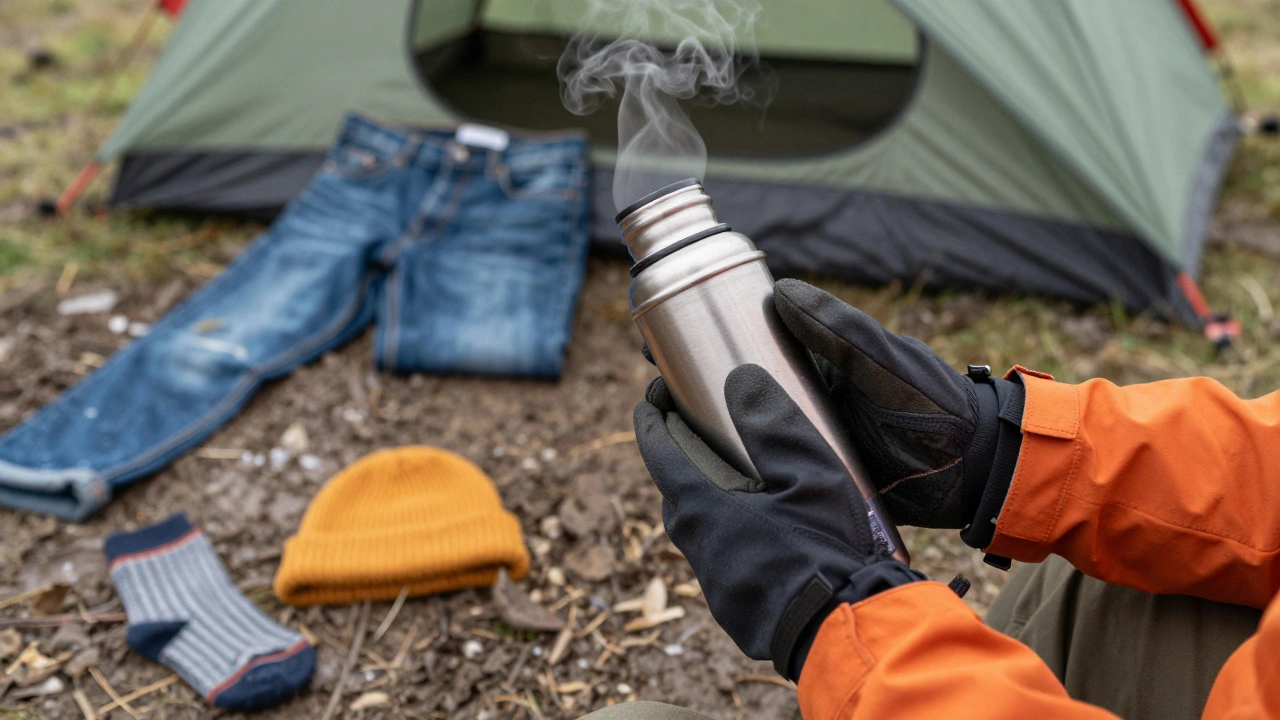
- Cotton t-shirts and jeans
- Canvas shoes or sneakers
- Regular cotton socks
- Umbrellas (they’re useless in wind)
- Heavy, bulky coats you can’t pack
Every item you carry should earn its place. If it doesn’t keep you dry, warm, or comfortable in wet conditions, it’s dead weight.
Real-World Tip: The Dry Bag Hack
Before you leave, pack a small dry bag with your overnight outfit: clean base layer, socks, underwear, and a warm hat. Seal it tight. Even if your tent leaks or your bag gets soaked, your night clothes stay dry. This isn’t luxury-it’s survival.
Final Thought: It’s Not About Style, It’s About Survival
You don’t need branded gear. You don’t need the latest tech. You just need clothes that work when it’s wet, cold, and windy. The UK doesn’t reward fashion. It rewards preparation.
When you’re sitting by the fire, dry and warm, with a hot drink in hand, you won’t be thinking about your jacket. You’ll just be glad you didn’t guess.
Can I wear jeans when camping in the UK?
No. Jeans are made of cotton, which holds onto moisture and takes ages to dry. In the UK’s damp climate, wearing jeans can lead to chills, discomfort, and even hypothermia if you’re out in the rain for hours. Stick to quick-dry hiking pants or thermal leggings instead.
Is a waterproof jacket really necessary in summer?
Yes. Summer in the UK means sudden downpours, even on sunny days. A lightweight waterproof jacket is small, packs into a pocket, and can be the difference between a great day and a soaked, shivering mess. Don’t leave home without one.
What’s the best material for camping socks?
Merino wool blended with synthetic fibers (like nylon or polyester) is the best. It wicks moisture, resists odor, and stays warm even when wet. Avoid 100% cotton socks-they trap sweat and cause blisters.
Do I need thermal underwear for summer camping?
Not always, but it’s smart to pack a lightweight one. UK summer nights can drop to 8°C or lower, especially in the hills or near water. A thin merino wool base layer adds warmth without bulk and can double as sleepwear.
Should I bring separate clothes for camp and hiking?
Yes. Keep a dry set of clothes-socks, underwear, top, and hat-in a sealed dry bag. Wear your hiking gear during the day and change into dry clothes at night. This keeps you warmer, drier, and more comfortable, and prevents damp clothes from ruining your sleeping bag.
Can I use a regular raincoat instead of a hiking jacket?
A regular raincoat might keep you dry in light rain, but it won’t breathe. That means sweat builds up inside, leaving you damp from the inside out. Hiking jackets use breathable membranes like Gore-Tex to let moisture escape while blocking rain. For camping, you need that technology.