Camping Power Needs Calculator
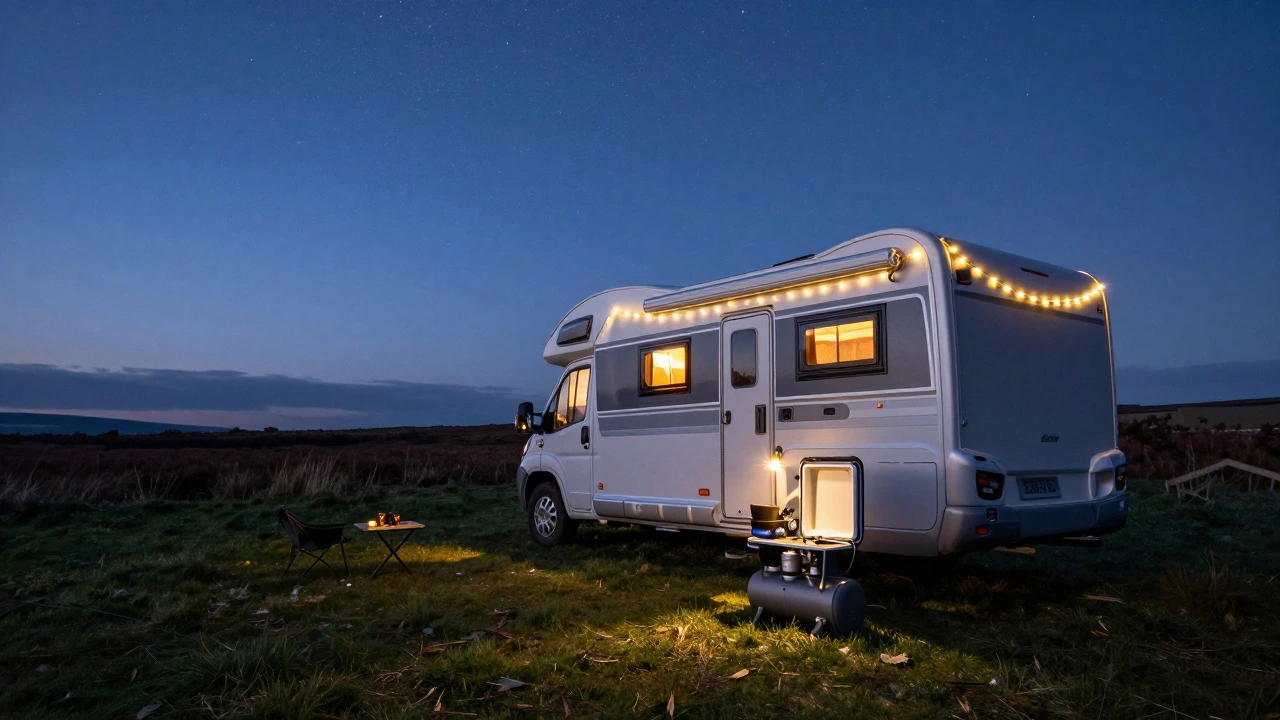
You pull into the perfect spot under the stars, but there’s no electric hook-up. Just silence, birdsong, and your dead fridge. This is the reality for many campers who want comfort without being tethered to a mains supply. The good news? You have more options than just sitting in the dark or boiling water on a gas stove. camping power alternatives have evolved rapidly, giving you reliable ways to charge devices, run appliances, and keep things cool without a plug-in.
Whether you’re in a tent, a motorhome, or a campervan, understanding how to generate and store energy is key to a stress-free trip. Let’s break down the practical solutions that actually work in the field.
Key Takeaways
- Solar panels are the best long-term solution for consistent power during multi-day stays.
- Portable power stations offer the quickest setup for short trips where you need high-power bursts.
- Your vehicle battery can be a backup, but it requires careful management to avoid draining it completely.
- Matching your power source to your actual energy consumption prevents disappointment.
- Combining methods (e.g., solar + generator) provides the most flexibility for different weather conditions.
Understanding Your Power Needs
Before buying gear, you need to know what you’re powering. A common mistake is guessing wattage. Instead, calculate your daily usage. For example, an LED light uses about 5-10 watts. If you run it for 4 hours, that’s 20-40 watt-hours (Wh). A phone charger draws roughly 10 watts; charging two phones takes about 30 Wh. A 12V fan might use 15 watts per hour. Add these up, and you’ll see that a typical night of basic lighting, phone charging, and a small fan requires around 100-200 Wh.
If you plan to run a laptop, a mini-fridge, or a coffee maker, your needs jump significantly. A standard 12V compressor fridge consumes about 40-60 watts on average, cycling on and off. Over 24 hours, that could mean 500-1,000 Wh. Knowing these numbers helps you choose between a small solar kit and a large power station.
Solar Panels: The Sustainable Workhorse
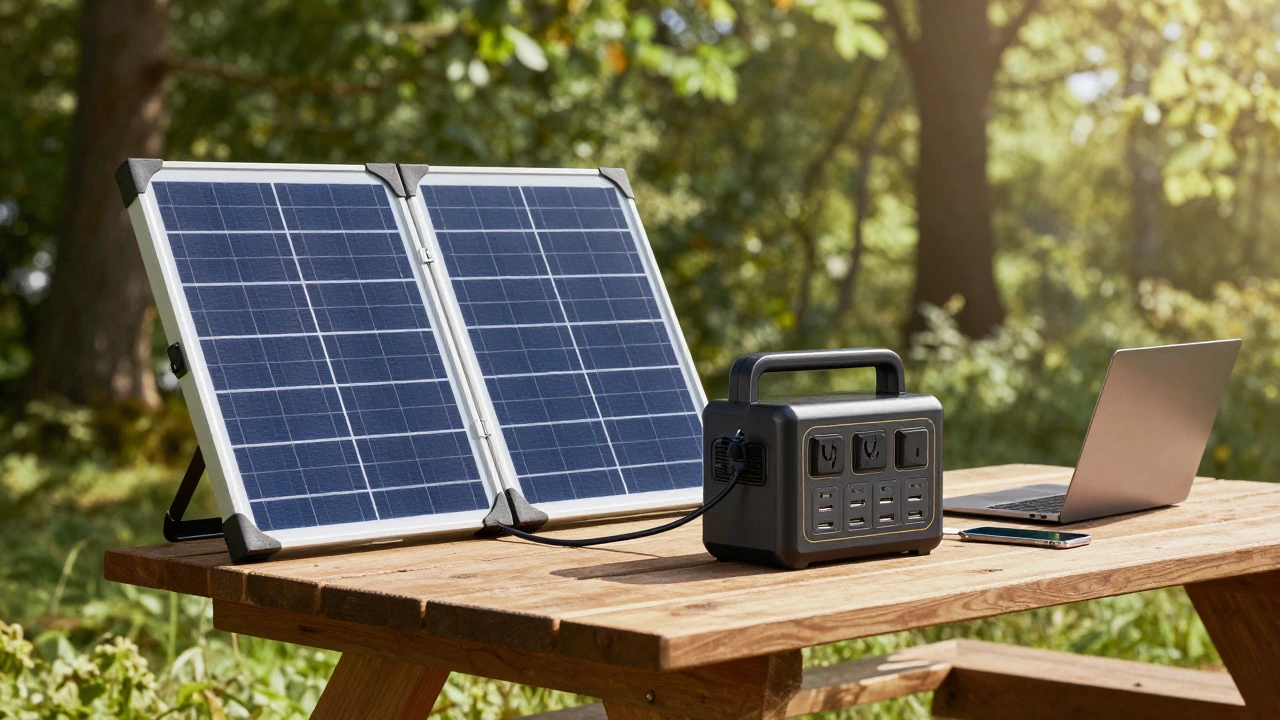
Solar panels are photovoltaic devices that convert sunlight into electrical energy, serving as a renewable power source for off-grid camping. They are the backbone of modern off-grid setups. Unlike batteries, which only store energy, solar panels generate it continuously as long as the sun shines.
For most campers, a 100W or 200W foldable panel is the sweet spot. These panels weigh between 5 and 10 kg and can be set up in minutes. In full sun, a 200W panel produces about 200 watts of power. If you get 5 hours of direct sunlight, that’s 1,000 Wh of energy generated-enough to charge multiple devices and run a small fridge for a day.
The downside? Weather. Cloudy days reduce output by 50% or more. Rainy spells can drop production to near zero. That’s why solar is rarely used alone for critical loads like refrigeration. It works best when paired with a battery bank that stores excess energy from sunny days for cloudy ones.
Portable Power Stations: Instant Backup
Portable power stations are battery-based energy storage units designed to provide AC and DC power for appliances and electronics in remote locations. Think of them as giant, sophisticated power banks. Brands like Jackery, EcoFlow, and Bluetti dominate this space. These units come pre-charged or can be recharged via solar, wall outlet, or car cigarette lighter.
They excel in situations where you need immediate, high-power access. Need to boil water, run a blender, or power a TV for a movie night? A power station with a 500W+ inverter handles it easily. Setup is instant-just plug in. No waiting for the sun, no complex wiring.
However, they are heavy. A unit capable of storing 1,000 Wh typically weighs over 15 kg. Plus, if you don’t recharge it properly, you’re stuck. They are ideal for short trips (1-3 days) or as a backup for when solar fails. For longer stays, the weight and limited capacity make them less efficient than a dedicated solar-battery system.
Vehicle Batteries and Alternators
Your campervan or motorhome already has a powerful energy source: the engine. When the engine runs, the alternator charges the starter battery. Many vehicles also have a separate leisure battery for appliances. This dual-battery setup allows you to run lights, fans, and pumps while driving or idling.
But here’s the catch: running the engine for hours to charge batteries is noisy, fuel-intensive, and often prohibited in campsites. A better approach is using a DC-DC charger is a device that transfers power from the vehicle's starter battery to a secondary leisure battery while driving. This keeps your leisure battery topped up during travel without needing to idle the engine at the campsite.
Another option is a inverter is a device that converts DC power from batteries into AC power for standard household appliances. This lets you plug in 230V/110V devices directly from your vehicle’s battery bank. Just remember, inverters consume power even when idle, so switch them off when not in use.
Generators: The Loud but Reliable Option
Let’s talk about generators. They are the old-school alternative. Small inverter generators are quiet enough for many campsites and provide unlimited power as long as you have fuel. They are perfect for high-demand scenarios, like running a large fridge or air conditioner.
However, they require maintenance, produce noise, and depend on fuel availability. Gasoline prices fluctuate, and carrying extra cans adds weight. If you’re in a strict silent zone or a forest campsite, a generator might not be allowed. Check local rules before packing one.

Comparing Power Solutions
Choosing the right mix depends on your trip length, weather expectations, and equipment needs. Here’s a quick comparison to help you decide:
| Method | Pros | Cons | Best For |
|---|---|---|---|
| Solar Panels | Rentable, silent, low maintenance | Weather-dependent, slow recharge | Multi-day sunny trips |
| Power Station | Instant power, versatile outputs | Heavy, limited capacity | Short trips, high-power bursts |
| Vehicle Battery | Already installed, free while driving | Limited capacity, drain risk | Driving trips, basic lighting |
| Generator | Unlimited runtime, high power | Noisy, fuel costs, maintenance | High-demand, remote sites |
Building Your Hybrid System
The most resilient campers don’t rely on a single method. They build a hybrid system. For example, you might use solar panels as your primary source during the day. At night, if you need extra power for a heater or larger appliance, you tap into your vehicle’s leisure battery. If both are low, you fire up a small inverter generator for 30 minutes to top everything off.
This redundancy ensures you’re never left in the dark. Start small: buy a 100W solar panel and a modest power station. Test your setup on a weekend trip. Note what worked and what didn’t. Adjust based on real-world data, not just manufacturer specs.
Frequently Asked Questions
Can I run a fridge without an electric hookup?
Yes. Use a 12V compressor fridge powered by your vehicle’s leisure battery or a portable power station. Ensure your battery capacity is sufficient for the fridge’s cycle time. A 100Ah lithium battery can typically power a small fridge for 24-48 hours depending on ambient temperature.
How much do solar panels cost for camping?
A basic 100W foldable solar panel kit costs between $150 and $300. Higher-capacity 200W kits range from $300 to $600. Prices vary by brand and included accessories like controllers and cables.
Is it safe to leave solar panels out overnight?
Generally, yes, but secure them well to prevent theft or wind damage. Most panels are weather-resistant, but extreme cold or heat can affect efficiency. Store them in a dry place if possible, or cover them with a tarp if left outside.
What size power station do I need for a weekend trip?
For a typical couple using phones, lights, and a laptop, a 500Wh power station is usually sufficient. If you plan to run a mini-fridge or coffee maker, consider a 1,000Wh unit to ensure you have enough reserve.
Do I need a special inverter for my campervan?
You need an inverter rated for your peak load. If you’re plugging in a microwave or hairdryer, you’ll need a pure sine wave inverter with at least 1,000W continuous output. For smaller devices like laptops and chargers, a modified sine wave inverter may suffice and is cheaper.