 Feb 8, 2026
RV Loan vs Mortgage Calculator
Key Differences
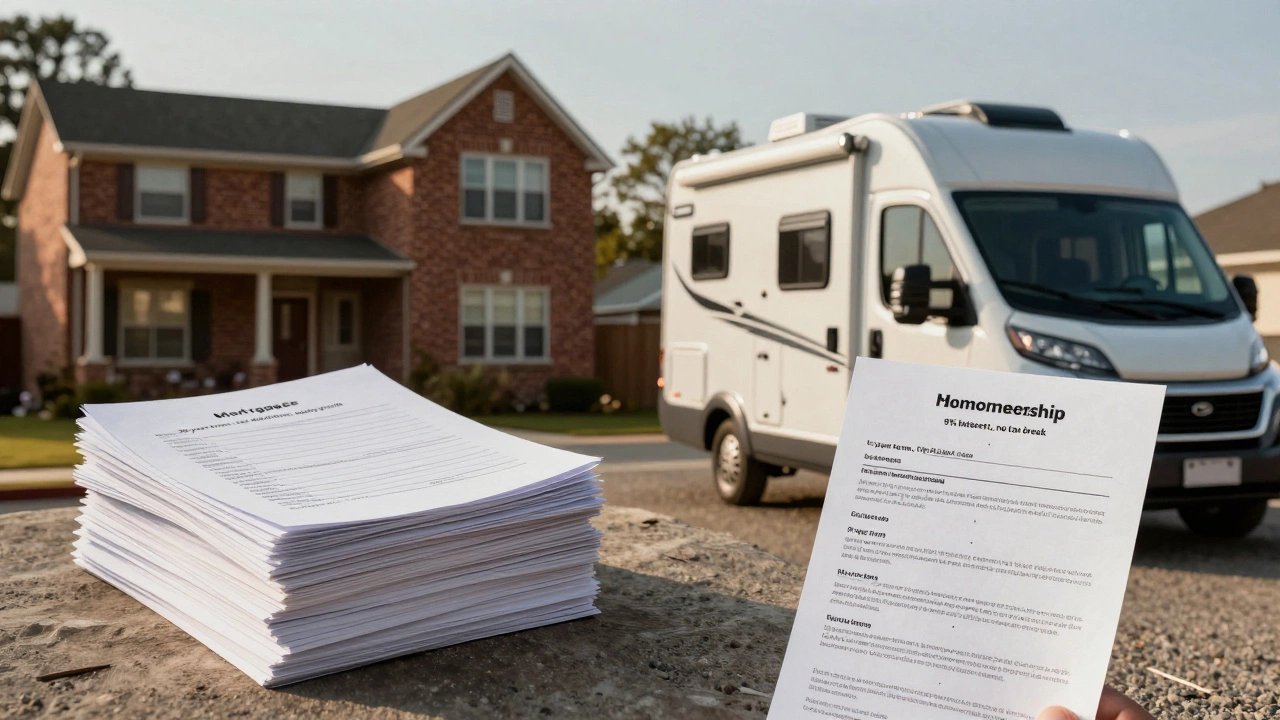
Term Length: RV loans max out at 20 years vs 30 years for mortgages
Interest Rates: RV loans typically 5-12% vs mortgages at 6.5% avg
Down Payment: RV loans require 10-20% vs mortgages as low as 3%
Depreciation: RVs lose 20% value immediately after purchase
When you're thinking about buying an RV, one of the first questions that pops up is: Are RV loans like mortgages? It’s a smart question - after all, both involve big-ticket items and long-term payments. But the truth is, they’re not nearly as similar as you might think. If you’re planning to finance a motorhome or campervan, understanding how RV loans really work could save you thousands and keep you from making costly mistakes.
RV loans aren’t home loans - even if they feel like it
People often assume that because an RV is a big purchase, it must be financed like a house. But a mortgage is built for stability: 15 to 30 years, low interest, tax deductions, and equity that grows over time. An RV loan? It’s more like a car loan with extra bells and whistles.
Most RV loans last between 10 and 20 years. You won’t find a 30-year term anywhere. Interest rates are higher too - typically between 5% and 12%, depending on your credit and the lender. Compare that to today’s average mortgage rate of around 6.5%, and you can see why the cost of borrowing is noticeably different.
And here’s the kicker: you can’t deduct RV loan interest on your taxes like you can with a mortgage. The IRS only allows mortgage interest deductions on your primary residence and one secondary home. Most RVs don’t qualify as either unless they have permanent fixtures like a kitchen, bathroom, and sleeping area - and even then, you’d need to prove it’s your legal residence. For most people, that’s not the case.
Down payments and credit requirements are stricter
Mortgages often require as little as 3% down, especially for first-time buyers. RV loans? Lenders usually want 10% to 20% upfront. Some even require 25% for used models or if your credit score is below 700. Why? Because RVs depreciate fast. A brand-new motorhome can lose 20% of its value the moment you drive it off the lot. Five years later? It’s worth half what you paid.
That’s why lenders get nervous. If you default, they can’t just repossess and sell the RV for what you owe. The resale market is thin. There are fewer buyers, and prices swing wildly based on season, condition, and mileage. A $120,000 RV might only fetch $65,000 after three years. Lenders need a big cushion to protect themselves.
Credit scores matter more too. While a mortgage might approve you with a 620 score, most RV lenders require at least 680. Some top-tier lenders won’t even consider you under 720. If you’ve got a history of late payments or high credit utilization, you’ll likely be turned down - or stuck with a rate over 10%.
Loan terms and structures are totally different
Mortgages come in predictable flavors: fixed-rate, adjustable-rate, FHA, VA. RV loans? They’re messier. Most are simple interest, fixed-term loans with no prepayment penalties - which sounds good, right? But here’s what you won’t find:
- No equity lines tied to your RV
- No refinancing options for better rates (unless you refinance into a personal loan - which rarely helps)
- No government-backed programs like FHA or USDA
Also, RV loans often have balloon payments built into the structure. You might see a 15-year term with a 5-year balloon - meaning you pay only interest for the first five years, then owe the full balance. If you’re not ready to sell or refinance then, you’re in trouble.
Some lenders even use a “precomputed interest” method. That means the total interest is calculated upfront and added to the principal. Even if you pay early, you still owe the full interest amount. Always ask: “Is this a simple interest loan?” If they hesitate, walk away.
Insurance and registration add hidden costs
With a mortgage, you pay property taxes and homeowner’s insurance - straightforward. With an RV, you’ve got extra layers:
- Vehicle registration fees (annual, varies by state)
- Specialized RV insurance (liability, collision, comprehensive, full-timer coverage)
- Storage fees if you don’t have space at home
- Warranty extensions or roadside assistance packages
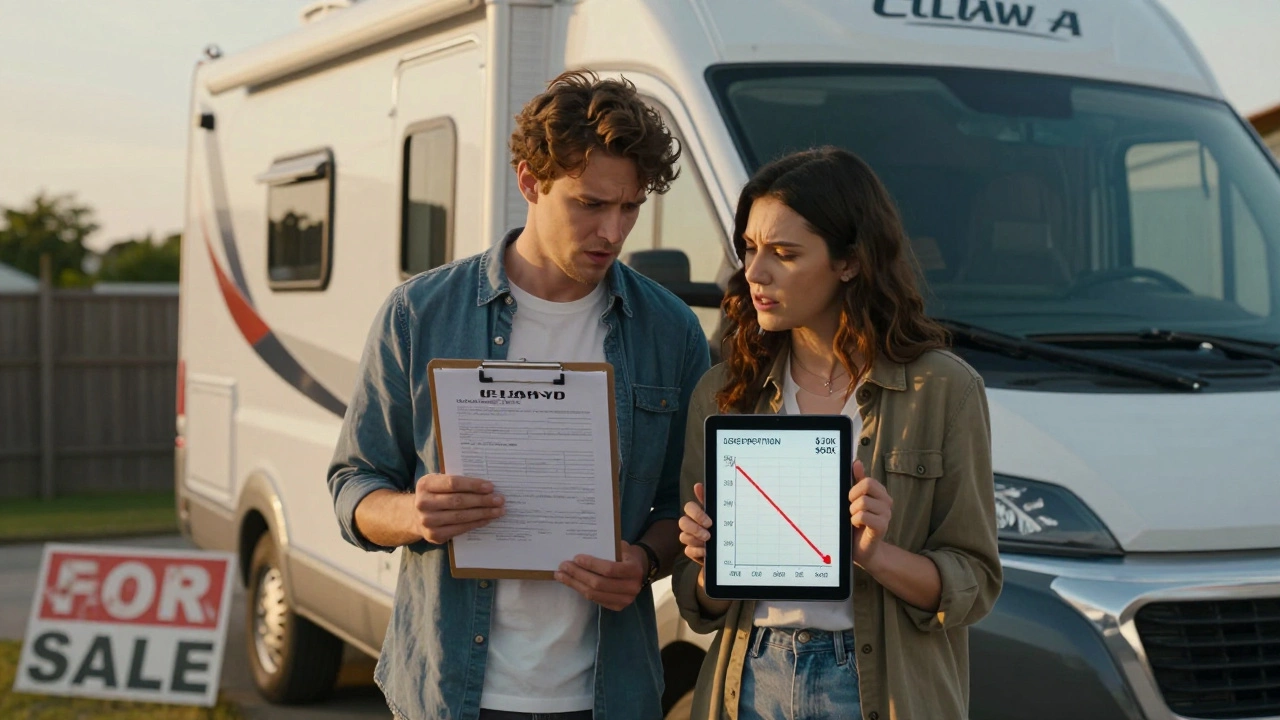
RV insurance alone can cost $800 to $2,000 a year, depending on the model. That’s more than most car insurance policies. And unlike a house, which usually holds value or appreciates, your RV is a depreciating asset that needs constant upkeep - tires, seals, appliances, roof coatings. Maintenance isn’t optional. It’s mandatory just to keep it roadworthy.
Resale value and market volatility
Houses in good neighborhoods tend to hold their value. RVs? Not even close. The market for used motorhomes is seasonal, unpredictable, and crowded. You’ll find dozens of similar models for sale online, often priced lower than yours because the seller needs cash fast.
According to NADA Guides, a 2023 Class A motorhome with 20,000 miles might be worth $110,000 new. Two years later? $85,000. Five years? $60,000. That’s a 45% drop in value - far faster than any car. And unlike a home, where renovations can boost value, you can’t really “upgrade” an RV to make it worth more. Replacing the fridge or reupholstering the couch won’t move the needle.
That’s why smart buyers avoid financing more than 70% of the RV’s value. If you put down 30%, you’re less likely to be underwater if you need to sell early.

What about living full-time in an RV?
Some people think: “I’m going to live in my RV full-time - so shouldn’t it be treated like a home?” Technically, maybe. But lenders don’t care. Even if you use your RV as your primary residence, banks still classify it as recreational. That means no mortgage benefits, no tax breaks, and no special loan programs.
There are a few lenders who offer “full-time RV loans,” but they’re rare. They usually require proof of residency (like a mail-forwarding service or PO box), proof of income, and sometimes even a land lease agreement. These loans still have higher rates than mortgages and shorter terms.
Bottom line: If you’re planning to live in your RV permanently, treat it like a mobile home - not a house. You’ll need to budget for campground fees, utilities, and maintenance. And you won’t get any help from the mortgage industry.
When an RV loan makes sense
There are good reasons to finance an RV. If you’re buying a high-end model that costs $150,000 or more, paying cash isn’t realistic for most people. A 10-year loan at 6.5% means monthly payments around $1,700 - manageable if you’ve got steady income.
Also, if you’re using the RV for business (like a mobile workshop or rental), you might be able to deduct depreciation and operating costs. Talk to a tax professional. That’s the only real financial upside.
But if you’re thinking of buying just because you want to “live the dream,” be honest with yourself. The dream comes with a $1,200 monthly payment, $1,500 in insurance, and a $30,000 loss in value over five years.
What to do instead
If you’re not ready for the long-term commitment of an RV loan, consider renting first. Many companies in Australia and the US offer monthly rentals for $1,500 to $3,000. That lets you test-drive different models, sizes, and lifestyles without locking yourself into debt.
Or, save up and buy used. A 2018-2020 model with under 40,000 miles can save you 40% off new prices. And since the steepest depreciation happens in the first two years, you’re buying after the biggest drop.
And always, always read the fine print. Ask for the loan agreement in writing. Check for prepayment penalties. Ask about the interest calculation method. Don’t sign anything until you understand exactly what you’re committing to.
Can you get a 30-year loan on an RV?
No, you can’t get a 30-year RV loan. Most lenders cap terms at 20 years, and even that’s rare. The average term is 10 to 15 years. Longer terms don’t exist because RVs depreciate too quickly. Lenders won’t risk lending money for three decades on an asset that could be worth half its value in five years.
Is an RV loan considered a mortgage?
No, an RV loan is not a mortgage. It’s classified as a personal property loan - similar to an auto loan. Mortgages are secured by real estate, while RV loans are secured by a vehicle. That means different rules, different interest rates, and no tax deductions under current U.S. and Australian tax laws.
Do RV loans have lower interest rates than car loans?
Sometimes, but not always. RV loan rates are usually between 5% and 12%, while new car loans run 5% to 8%. Used car loans can be higher - 8% to 15%. So an RV loan might be slightly higher than a new car loan, but often lower than a used car loan. It depends on your credit, the lender, and the age of the RV.
Can you refinance an RV loan?
Yes, but it’s not easy. Refinancing an RV loan requires strong credit, low mileage, and a high current value. Many lenders don’t even offer it. If you do find a lender, you’re often better off taking out a personal loan instead - which may have a lower rate but isn’t secured by the RV. That means higher risk for the lender, and possibly higher rates for you.
Are there government-backed RV loans?
No. There are no FHA, VA, USDA, or other government-backed loans for RVs. These programs only apply to real estate. Even if you live in your RV full-time, you won’t qualify for special programs. Your only options are private lenders, credit unions, or dealer financing.