Car Camping Gear & Budget Calculator
Select your vehicle type and the essential gear you plan to bring. The tool will calculate your estimated total cost and provide specific tips based on your setup.
Essential Gear Checklist
Check items you own or plan to buy to estimate your budget.
Estimated Total Cost
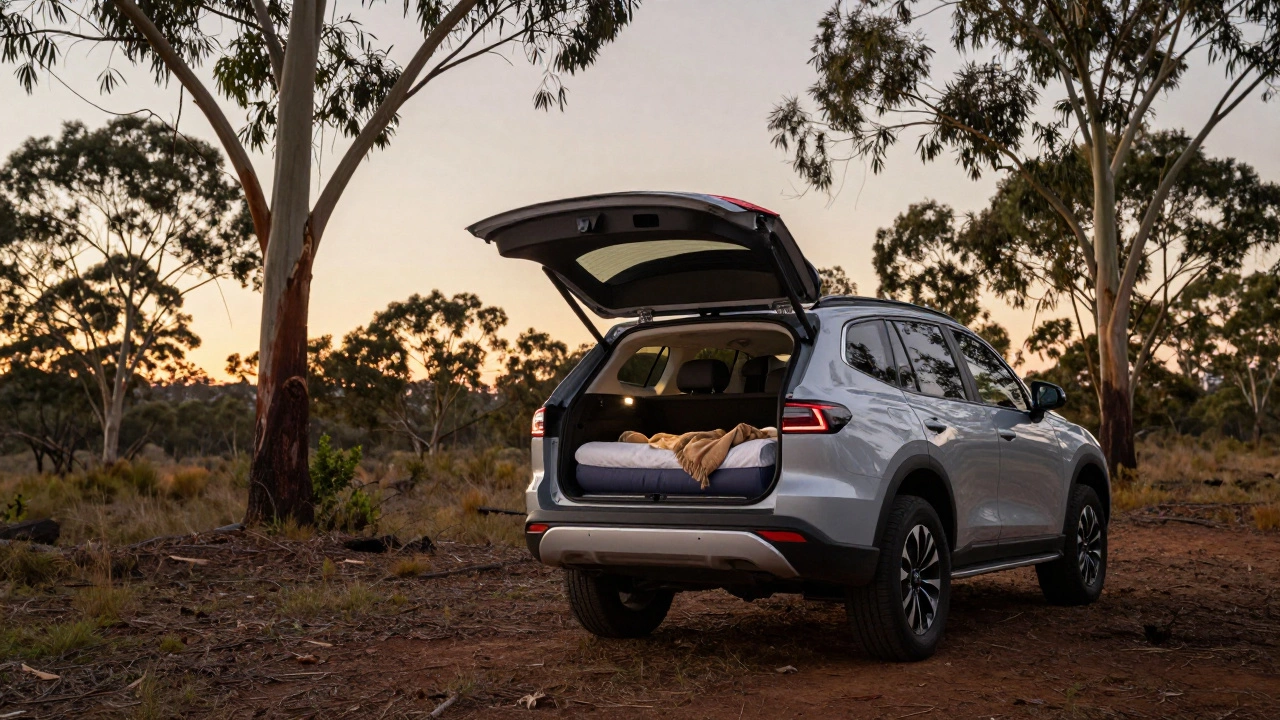
There is a specific kind of magic that happens when you pull into a secluded spot in the Australian bush, kill the engine, and realize you have just created a bedroom. For many travelers, the question isn't whether they *can* sleep in their vehicle, but how to do it without waking up stiff, cold, or worried about safety. The short answer is yes, you absolutely can sleep in your car for camping. In fact, it is one of the most accessible ways to experience nature, especially if you are heading to forest campsites where traditional tents might struggle with damp ground or uneven terrain.
However, "sleeping in a car" covers a wide spectrum. It ranges from folding down the back seats of a sedan to create a flat platform, to driving a dedicated campervan across the continent. This guide focuses on the everyday driver: using a standard SUV, hatchback, or station wagon to get a night’s rest while camping. We will break down the legalities, the essential gear, and the practical tricks that turn a cramped metal box into a cozy sanctuary.
Is It Legal to Sleep in Your Car at Forest Campsites?
Before you buy a mattress pad, you need to know where you are allowed to park. This is the biggest hurdle for new car campers. In Australia, and specifically here in New South Wales where I spend my weekends, the rules vary significantly depending on who manages the land.
National Parks generally require you to book a designated campsite. While some parks allow "free camping" in specific overflow areas, these spots often lack facilities like toilets or water. Sleeping in your car in a non-designated area within a national park is usually considered illegal overnight parking and can result in hefty fines. Always check the NSW National Parks website before you go.
State forests offer more flexibility. Many state forests allow free camping for up to three nights in designated zones. These are often rougher than national parks-think dirt tracks and no amenities-but they are perfect for car camping because you can park right next to a picnic table or a fire pit. Look for signs that say "Free Camping Allowed." If there is no sign, assume it is prohibited.
Private property and commercial campgrounds are straightforward. If you pay for a site, you can almost always sleep in your car. Some luxury sites even offer powered hookups, though you likely won’t need them for a simple car setup. The key is to never assume public land is free for the taking. A quick call to the local council or a check on a reliable camping app can save you from an awkward conversation with a ranger at sunrise.
Choosing the Right Vehicle for Overnight Stays
Not all cars are created equal when it comes to sleeping. The geometry of your vehicle determines your comfort level. Here is how different vehicle types stack up:
- SUVs and Crossovers: These are the gold standard for car camping. Models like the Toyota RAV4 or Mitsubishi Outlander have rear seats that fold completely flat, creating a long, continuous surface from the trunk to the dashboard. This allows you to lie fully stretched out, which is crucial for a good night's sleep.
- Hatchbacks and Wagons: Smaller cars like the Mazda 3 or Subaru Impreza wagon can work, but you often have to angle your body diagonally. This works fine for shorter trips or if you don’t mind curling up slightly. You may need to remove the rear headrests to make the floor flatter.
- Sedans: Sedans are challenging. The trunk is separated from the cabin by a solid wall. Unless you are comfortable sleeping in the trunk itself (which requires significant insulation and ventilation planning), sedans are not recommended for regular car camping.
- Utes and Pickups: With a canopy installed, these become excellent campers. Without a canopy, you’re limited to the cab, which is tight but viable for solo travelers.
If you are renting a car for this purpose, look for "camping-friendly" options or simply choose the largest vehicle available. Every inch of length counts when you are trying to fit a six-foot frame into a compact space.
Essential Gear for a Comfortable Night
You don’t need to convert your entire vehicle to make it habitable. A few strategic purchases can transform your car into a sleeping pod. Here is the core kit every car camper should own:
| Item | Purpose | Pro Tip |
|---|---|---|
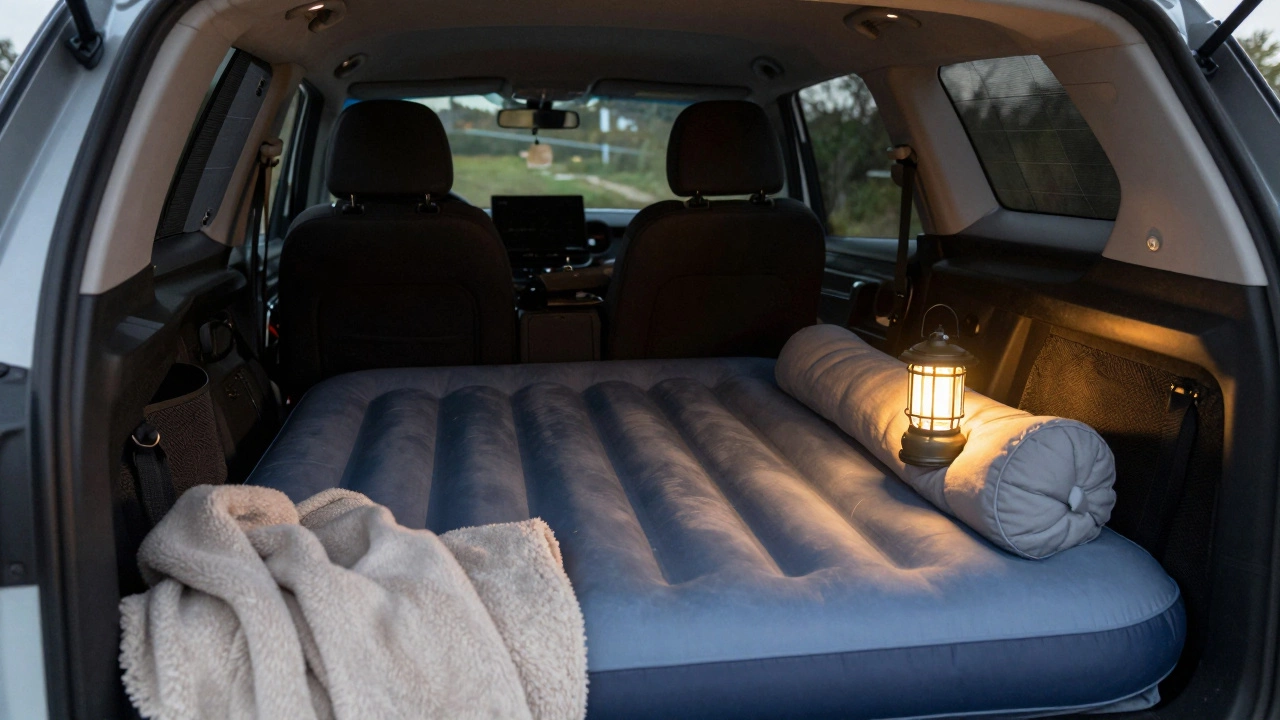
| Inflatable Mattress Pad | Creates a flat, cushioned surface | Choose a self-inflating mat for better insulation against the cold metal floor. |
| Privacy Window Covers | Blocks light and prying eyes | Magnetic covers are easier to install than tape-on ones and leave no residue. |
| Insulated Blankets or Sleeping Bag | Temperature regulation | A wool blanket retains heat even when damp; synthetic bags dry faster. |
| Headlamp | Hands-free lighting | Red light mode preserves your night vision and doesn't disturb others. |
| Power Bank | Keeps devices charged | Get a high-capacity bank (20,000mAh+) to last through the night. |
The mattress is your most important investment. Do not rely on car seat cushions alone; they are lumpy and provide poor support. An inflatable air mattress designed for cars fits snugly between the front seats and the rear window, maximizing space. Pair this with a quality sleeping bag rated for temperatures lower than you expect. Cars lose heat rapidly once the engine stops, so underestimating the chill is a common mistake.
Privacy is another major factor. Waking up to people staring into your vehicle is unsettling. Magnetic window covers are incredibly effective. They attach to the metal frames of your windows and block out both light and visibility. If you don’t want to buy covers, black garbage bags and duct tape work in a pinch, but be careful not to damage your seals.
Ventilation and Safety: Keeping Fresh Air Flowing
This is the part that keeps new car campers awake at night: "Will I run out of oxygen?" The short answer is no. You will not suffocate in a sealed car. However, carbon dioxide levels can rise, and condensation will build up, making the air stale and humid. Proper ventilation is key to comfort and safety.
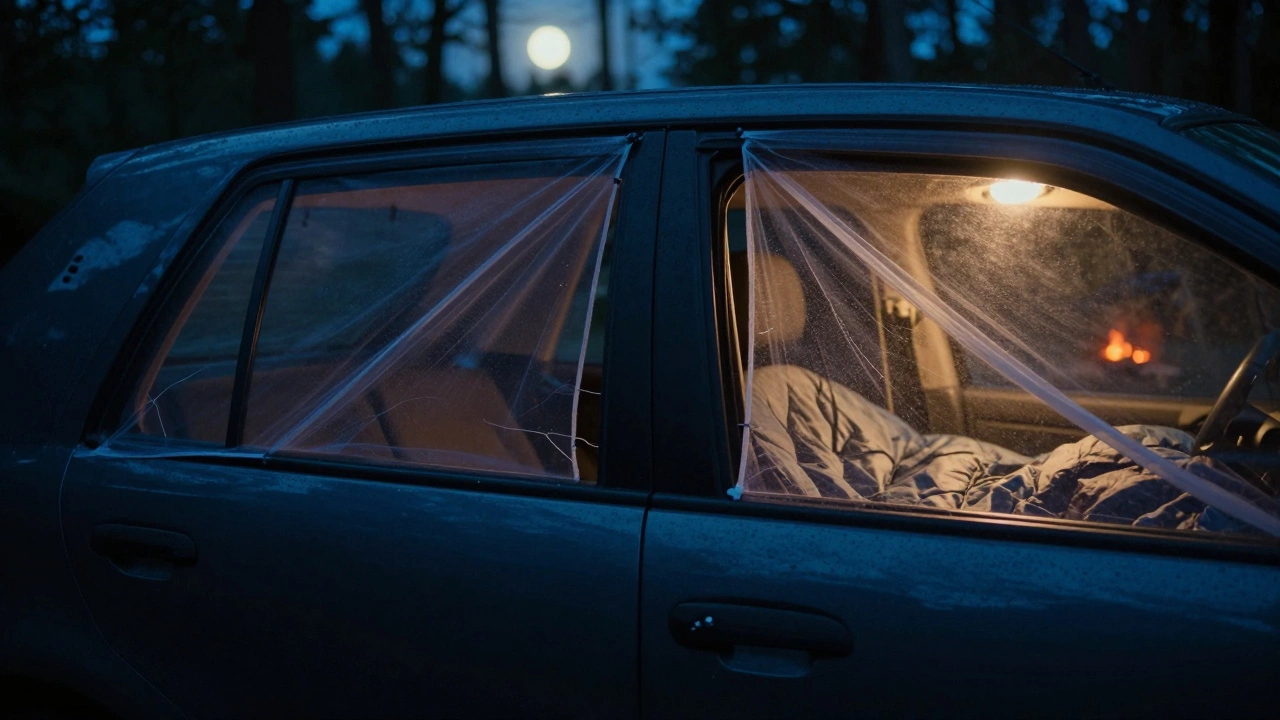
The best method is the "crack and cross" technique. Crack open two windows on opposite sides of the vehicle-usually the driver’s side front window and the passenger’s side rear window. This creates a cross-breeze that circulates air without letting in rain or large insects. Use window screens or mosquito nets if you are in an area with bugs. These mesh screens clip onto the window frame and allow airflow while keeping pests out.
Never run the engine or use the air conditioning for heating or cooling while you sleep. Carbon monoxide poisoning is a real risk if exhaust fumes enter the cabin through leaks or cracks. Even with modern vehicles, it is not worth the danger. Instead, dress in layers. Wear thermal underwear, a warm hat, and socks. Your body generates heat, and trapping it with the right clothing is safer and more efficient than running the heater.
Safety also extends to personal security. Park in well-lit areas whenever possible. At forest campsites, choose spots near other campers rather than isolated clearings. Keep your valuables out of sight. When you wake up, do a quick scan of your surroundings. Trust your instincts; if a location feels off, pack up and move. Most car camping incidents are related to petty theft or feeling vulnerable, so situational awareness is your best defense.
Mastering the Setup: Step-by-Step
Efficiency matters when you arrive at a campsite after a long drive. You want to set up your bed quickly so you can relax. Here is a streamlined process:
- Clear the Space: Remove all loose items from the back seat and trunk. Move heavy gear to the footwells or under the front seats if necessary. You want a flat, unobstructed surface.
- Create a Flat Platform: Fold down the rear seats. If there is a gap between the seat back and the trunk floor, fill it with soft bags or pillows to prevent your mattress from sagging.
- Install Insulation: Lay down a foam sleeping pad or a reflective insulation sheet before inflating your mattress. This adds a layer of protection against the cold metal floor.
- Inflate the Mattress: Pump up your mattress. Leave it slightly soft if you prefer contouring, or firm if you need back support. Seal any leaks immediately.
- Secure Privacy: Attach your window covers. Start with the rear window, then move to the sides. Ensure they are secure so wind doesn’t rip them off.
- Arrange Bedding: Unroll your sleeping bag or lay out blankets. Place a pillow at the head end. If space is tight, consider a small travel pillow that doubles as a lumbar support.
- Set Up Lighting:** Hang a battery-powered LED light or clip your headlamp to a handle. Avoid bright white lights directly above your face.
Practice this setup at home first. Time yourself. The goal is to get from "parked" to "ready to sleep" in under ten minutes. This reduces stress and lets you enjoy the evening atmosphere instead of wrestling with gear.
Troubleshooting Common Car Camping Issues
Even with the best preparation, things can go wrong. Here is how to handle the most frequent problems:
Condensation on Windows: If you wake up to foggy windows, it means there is too much moisture in the air. Breathe into a pillowcase, not directly into the cabin. Increase ventilation by cracking windows wider. Wipe down wet surfaces with a towel before bed.
Noise from Rain: Hail or heavy rain on a car roof sounds like thunder. Earplugs are essential. White noise apps on your phone can also mask the sound. Park under tree cover if possible, but beware of falling branches.
Limited Storage: With the back seats folded, you have less room for gear. Use the space under the front seats for shoes and small items. Hang clothes on the back of the front seats using hooks. Keep your daily essentials in a small backpack within reach.
Difficulty Getting In and Out: Entering a low car with a mattress can be tricky. Climb in feet first, then scoot back. To exit, reverse the process. Practice this motion until it becomes second nature.
Is it safe to sleep in my car overnight?
Yes, it is generally safe if you take precautions. Park in well-lit, populated areas like designated campsites. Lock your doors, keep valuables hidden, and ensure proper ventilation to avoid carbon dioxide buildup. Never run the engine while sleeping due to carbon monoxide risks.
What is the best mattress for car camping?
An inflatable car-specific mattress is ideal because it fits the contours of your vehicle. Self-inflating foam pads are also excellent for durability and insulation. Avoid thin yoga mats as they offer little comfort or warmth.
Can I sleep in my car in a national park?
Only in designated campsites or free-camping zones explicitly marked for overnight stays. Sleeping in non-designated areas is illegal and can result in fines. Always check local regulations before arriving.
How do I keep my car warm at night?
Dress in warm layers, including a hat and socks. Use a sleeping bag rated for below-freezing temperatures. Insulate the floor with a foam pad. Crack windows slightly for ventilation but minimize drafts. Never use the engine heater.
Do I need window covers for car camping?
While not strictly necessary, they are highly recommended for privacy and blocking morning sunlight. Magnetic covers are easy to use and reusable. Alternatives include blackout curtains or even dark trash bags taped securely.