UK Wild Camping Legality Checker
Enter Your Plan
Check Results
Risk Level: -
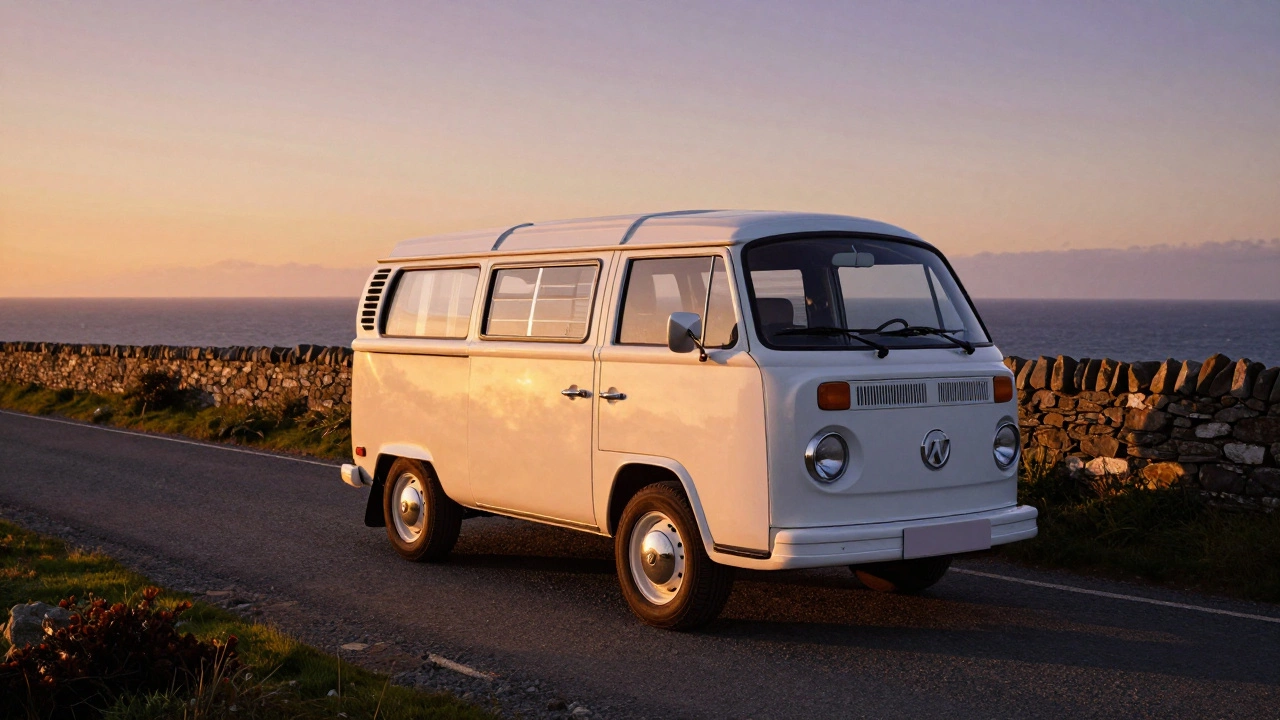
You have probably seen Instagram photos of pristine campervans parked on a seaside promenade or a tent pitched near a historic castle. It looks magical until you check the location settings. Here is the brutal truth: sleep on the streets in the UK is rarely legal for tourists, and doing so can get you fined, towed, or worse. While the idea of free travel appeals to many budget-conscious adventurers, the reality of UK property laws makes public street sleeping a high-risk game.
Wild Camping UK is a practice involving sleeping outdoors without permission on land that does not belong to a designated campsite. Also known as Freedom Camping, it operates under very different rules compared to places like the US or parts of Europe. In the UK, land ownership is heavily regulated, and most land you see in towns and cities belongs to private owners, local councils, or government bodies. You cannot simply decide to rest your head wherever the road takes you.
The Difference Between Rough Sleeping and Tourism
When authorities talk about sleeping rough, they often distinguish between homeless individuals seeking shelter and tourists attempting to avoid campsite fees. However, the enforcement mechanisms overlap significantly in urban areas. If you pitch a tent on a patch of grass in a London park, you aren't just breaking camping norms; you are potentially violating anti-social behaviour legislation. Police and council officers tend to view unpermitted overnight stays as a nuisance rather than a legitimate travel style.
There is a significant legal grey area regarding vehicles. A person standing on a sidewalk is clearly trespassing if asked to leave. A vehicle parked on a designated bay might not trigger the same immediate response, provided the driver isn't "camping" while parked. But how do they define camping? Usually, the moment you put a chair out, light a fire, or set up a permanent-looking structure, you are crossing the line from "parking" to "living."
Regional Laws: Scotland vs. England
Geography dictates your fate here. The laws governing outdoor access differ wildly depending on which part of the island you are visiting. This is perhaps the most critical piece of information for anyone planning an overland trip through the British Isles.
| Regional Regulations Comparison | |||
|---|---|---|---|
| Scotland A country known for progressive outdoor access rights | England Strict land ownership laws apply here | Tent Camping | Vehicle Camping |
| Allowed with permission or remote areas | Technically allowed under the Right to Roam | Yes, if remote | Very Limited |
| No, requires consent | Strictly Enforced | ||
| Note: Public Spaces Protection Orders override national codes in cities. | |||
Scotland: The Exception to the Rule
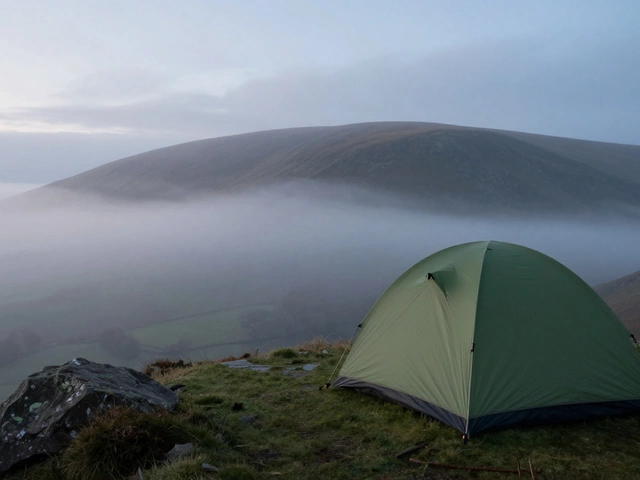
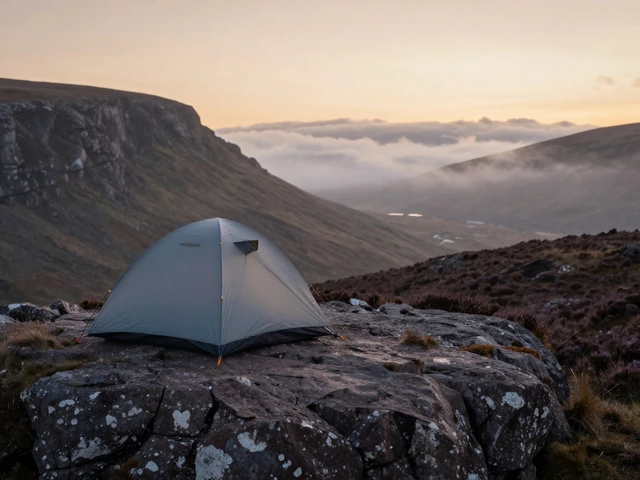
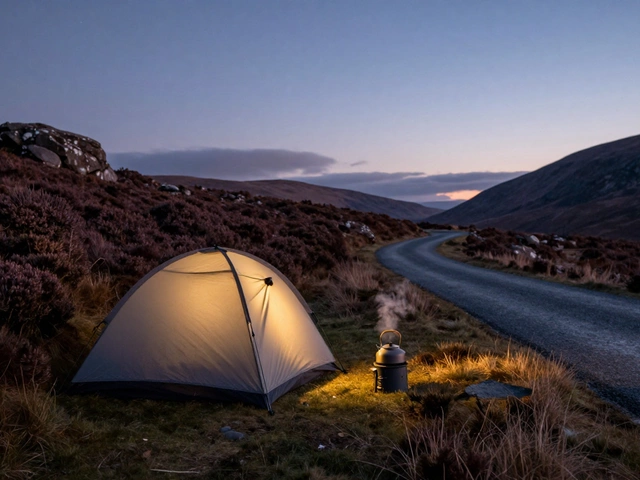
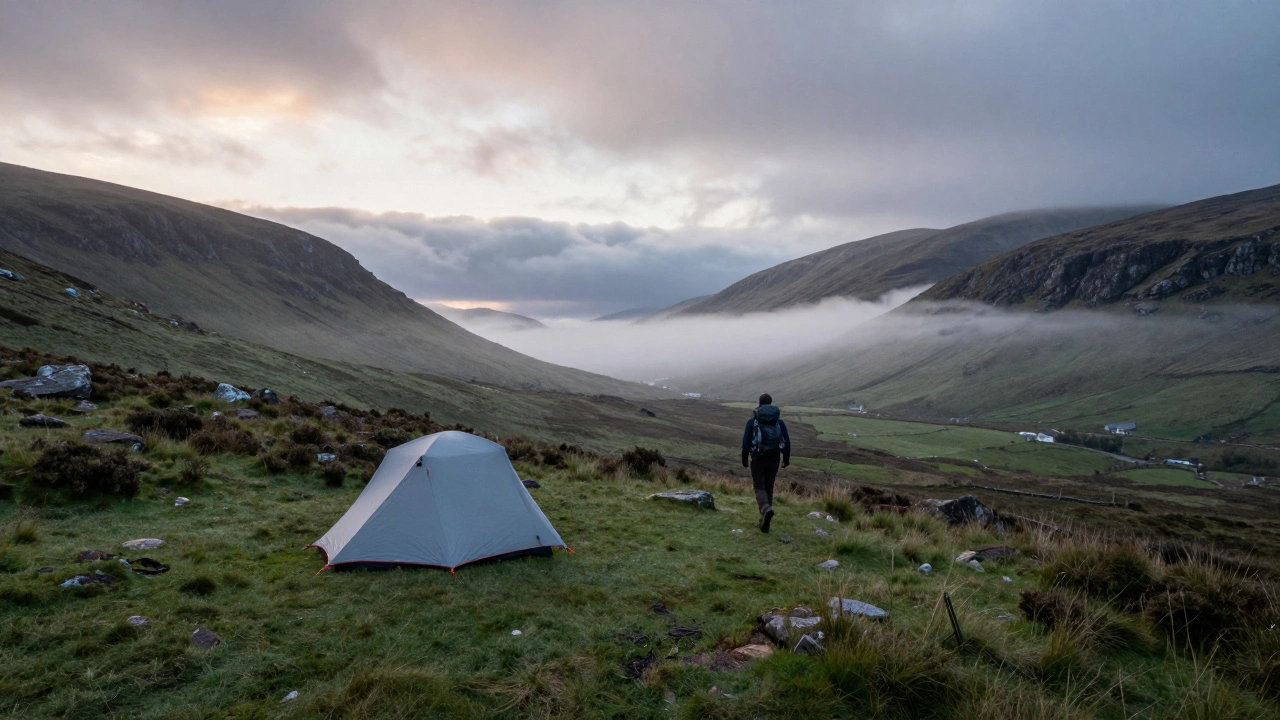
If you take your route north, things look up. The Scottish Outdoor Access Code a legal document granting access to land for recreational purposes is unique in its generosity. It grants everyone the right to roam freely across uncultivated land. You can technically sleep in a wild location overnight, provided you are self-contained. This means no fires larger than necessary, no rubbish, and moving on the next morning. However, this does not give you carte blanche to pitch a tent in a crowded city center. The code applies to open countryside, hills, and moors. If you drive into Edinburgh or Glasgow, those local bylaws snap back into place with a vengeance.
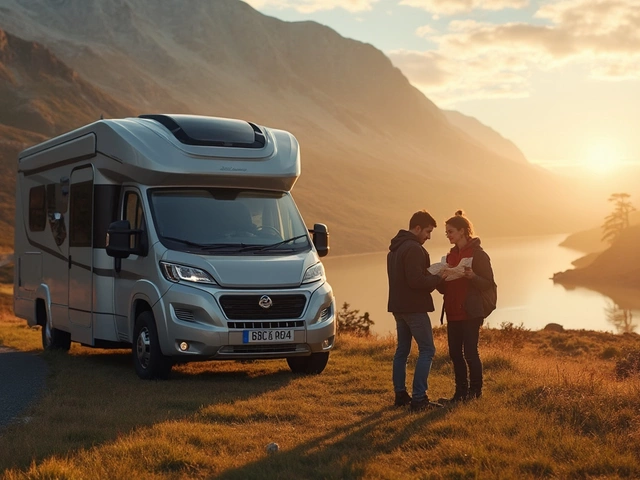
For van lifers, the nuance is tight. Scotland is great for wild stopping in remote spots away from settlements. But even there, you cannot cause congestion or damage the environment. If you block a track used by farmers or disturb livestock, the landowner has the right to ask you to move, and if you refuse, you are trespassing despite the access code.
England and Wales: A Different Story
Down south, the situation is much tighter. There is no statutory right to roam for camping in England. Almost every scrap of land in a town or near a popular tourist attraction is either privately owned or managed by a parish council. This means that pitching a tent on the ground without explicit permission is illegal. It is technically trespass. While police don't usually arrest people for simple trespass, they will intervene if you complain or cause a disturbance.
Many visitors mistakenly believe public footpaths allow overnight stays. They do not. You have the right to walk, not to sleep. The legal landscape relies heavily on the concept of implied consent. Just because no one says "no" while you are setting up doesn't mean you have legal protection. Once the landowner discovers you, you have no defense.
Public Spaces Protection Orders (PSPO)
Even if you think you found a safe spot in a car park, beware of the PSPO. A Public Spaces Protection Order a regulation enacted by local councils to restrict anti-social behavior is a tool local governments use to ban specific activities in designated zones. Hundreds of towns across England have enacted these orders to stop street drinking, dog fouling, and yes, sleeping in vehicles.
In major cities like Brighton or Bristol, PSPOs explicitly ban "stationary vehicles" from being used for sleeping purposes during certain hours. If you are caught, a fixed penalty notice of £100 is common, escalating quickly if you ignore it. Enforcement officers have the power to confiscate equipment and tow vehicles that pose an obstruction or violate the terms of the order.
Risks Beyond the Law
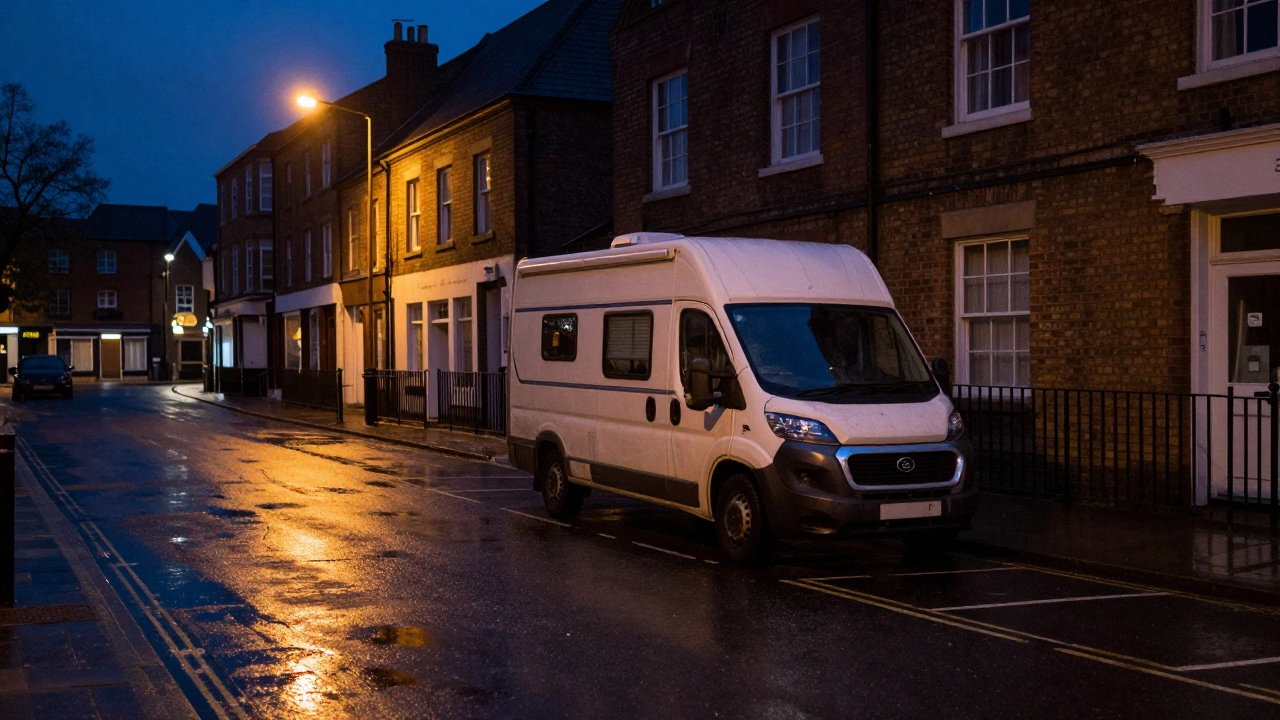
Legalities aside, there is the practical matter of safety. Urban street sleeping exposes you to theft, vandalism, and health hazards. Without proper sanitation facilities, hygiene becomes a nightmare, drawing attention from neighbors who call the police for noise or smell complaints. When you wake up, your vehicle might be blocked in by other cars, leaving you trapped until traffic clears. Some drivers report waking up to find their windows smashed or gear stolen, having no insurance coverage for losses incurred while breaking local bylaws.
The social stigma is also real. Neighbors often equate tourists trying to save money on hotel bills with the vulnerable homeless population. They may feel sympathy for the latter, but annoyance for the former. Being reported by residents accelerates the process of being moved on. One call to the council can result in rapid removal.
Alternative Options for Budget Travellers
If you are looking to cut costs, there are legal ways to camp that keep you out of trouble. Utilizing official campsites provides electricity, water, and security. Many smaller, independent sites charge less than glamping operations. Another strategy is using dedicated motorhome service areas or "lay-bys" marked on maps. Apps exist that crowdsource data on safe overnight stops for vehicles, showing which pubs or farms allow a night's stay.
Another viable option is the network of "Touring Car Parks." These are specifically designed for transit vehicles to stop for a meal, but rarely allow extended sleep. Always check signage before settling in. Look for signs indicating "24-hour parking" rather than "Parking permitted 8am-6pm." Even then, sleeping inside the vehicle is the risky part, not just the parking itself.
Summary of Fines and Penalties
What happens if you get caught? In the worst-case scenario, you face a formal warning first. Repeat offenses lead to fines ranging from £100 to thousands of pounds for aggravated offences like causing obstruction. Towing fees are separate from fines, costing upwards of £50 plus hourly rates for storage. In extreme cases, particularly if you refuse to leave when ordered, you could face criminal charges for breaching a PSPO or harassment laws. It creates a messy legal situation that impacts your ability to travel further within the region.
So, is it worth the risk? For the vast majority of travelers, the answer is no. The cost of saving £30 on a campsite fee is not balanced against the potential stress of a police visit or losing your keys to a tow truck operator. Stick to designated grounds, respect the locals, and enjoy the scenery from the right side of the law.
Can I sleep in my van in the UK?
It depends on where you are. In remote rural areas in Scotland, it is often permitted under the Outdoor Access Code. In England, Wales, and Northern Ireland, you generally cannot sleep in vehicles on public streets or unauthorised land due to bylaws and PSPOs. Always check specific local restrictions.
Where can I legally wild camp in the UK?
True wild camping is mostly restricted to Dartmoor National Park and specific areas in the Lake District or Scottish Highlands. In Scotland, any uncultivated land allows wild camping if you follow the code of conduct. Elsewhere, you should seek explicit permission from landowners.
Is sleeping in a car park legal overnight?
Usually no, unless it is a paid facility specifically designed for motorhomes. Standard shopping centers or public car parks prohibit overnight stays and living conditions. Signs displaying time limits often serve as legal deterrents against sleeping.
What is a PSPO?
A Public Spaces Protection Order is a legislative tool used by local councils to control anti-social behavior. It can explicitly forbid sleeping in vehicles, lighting fires, or camping in designated public spaces within a specific zone.
How do I avoid getting fined for camping?
Stick to registered campsites or ask for written permission from landowners. Never set up chairs or tables in a car park. Be prepared to move if asked. Using apps that map safe spots helps identify areas where previous travelers have reported success.