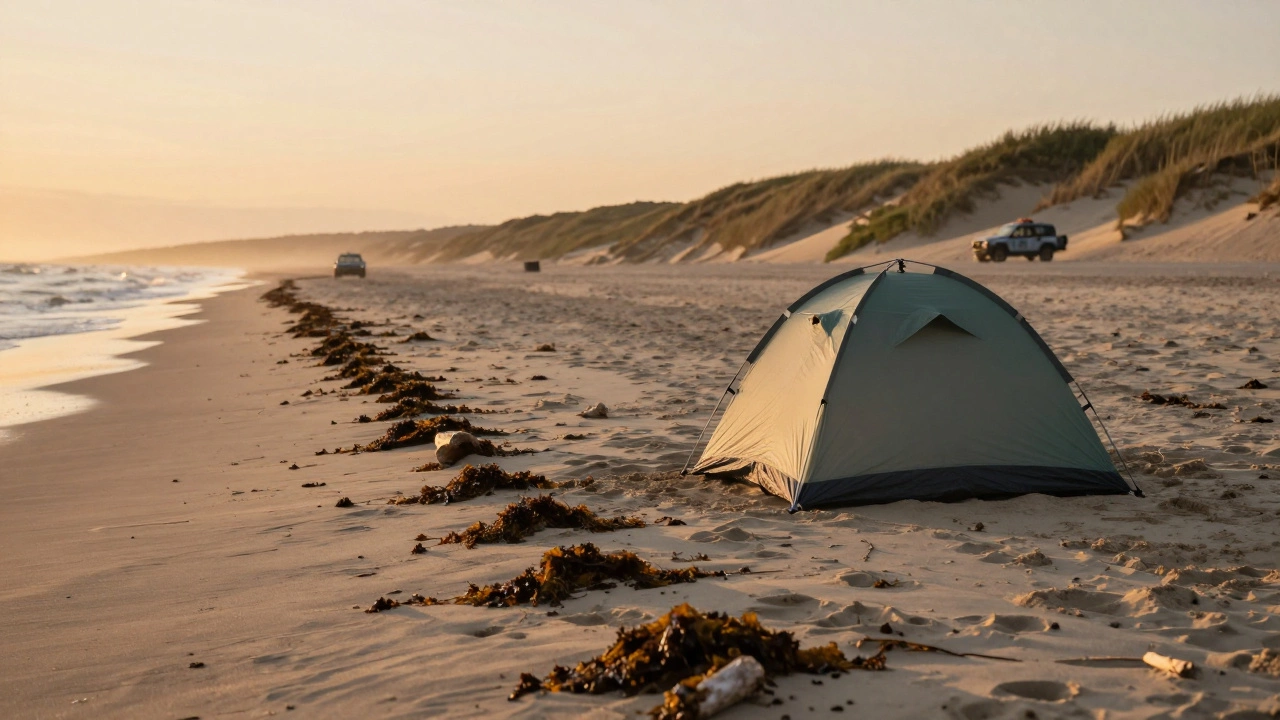
Beach Camping Legality Checker
Check Your Camping Location
Determine if your intended beach camping spot is legally allowed
Legal Status
Check your location to see if camping is allowed
Important Warning
Rangers use drones and cameras to monitor popular beaches. Even if it seems empty, you can still be fined.
Essential Tips
- Always check official park/council websites before camping
- Look for posted signs at parking lots or trailheads
- Never rely on Instagram photos - they're often misleading
- Call the local ranger station for confirmation
Ever set up your tent right on the edge of an ocean lake, waves lapping at your feet, and wondered-do I own this land? You’re not alone. Thousands of campers ask this every year, especially in places like Australia’s Great Ocean Road, the Outer Banks in North Carolina, or the shores of Lake Michigan. The short answer? Almost always, no. But the real story is messier-and far more important-if you want to camp without getting fined, evicted, or sued.
What You’re Actually Camping On
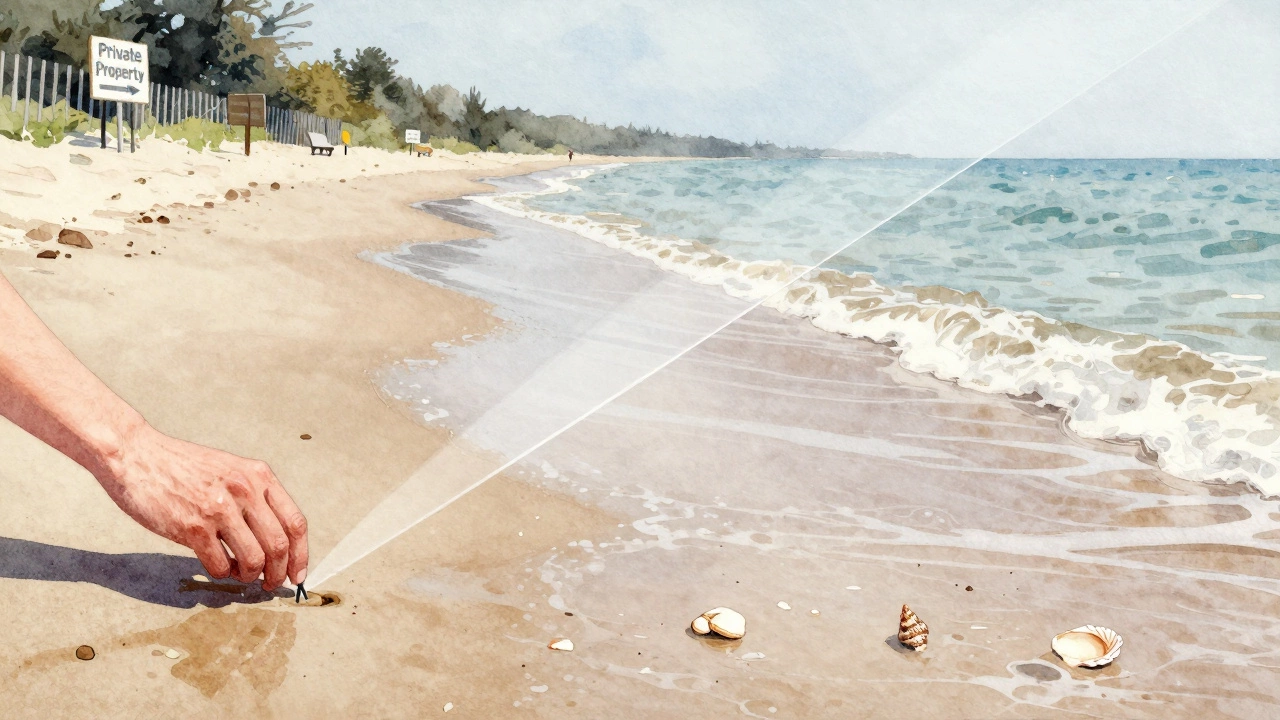
When you pitch a tent near the water’s edge, you’re not on private property you rented. You’re likely on land owned by the state, the federal government, or a local council. In most countries, the area between the high-tide mark and the low-tide mark is called the intertidal zone. This strip, often sandy or rocky, is legally considered public land. That’s why you can walk barefoot along the beach at sunrise without anyone stopping you. But here’s where people get confused: the land above the high-tide line? That’s a different story. If you’ve ever seen a sign that says “Private Property-No Trespassing” just beyond the dunes or behind the last row of seaweed, that’s not just a warning. That’s a legal boundary. Many coastal properties extend right up to the high-water mark. In places like Florida, California, and parts of Australia, courts have ruled that the public has a right to use the beach for recreation-but not to camp, build fires, or set up structures on private land.Who Owns the Water? No One-and Everyone
You can’t own the water. Not the ocean, not a lake connected to it. Water rights are governed by complex laws that vary by country and even by state. In Australia, under the Crown Land Act, all tidal waters and the seabed below the high-water mark belong to the Crown (meaning the government). The same is true in the U.S. under the Public Trust Doctrine. This means no one can fence off the ocean or charge you for swimming in it. But ownership doesn’t mean free access. Just because you can walk on the beach doesn’t mean you can stay overnight. Many coastal towns have strict bylaws that ban camping within 100 meters of the waterline. Some places, like parts of Big Sur in California, allow backcountry camping only with a permit. Others, like certain stretches of the Victorian coast in Australia, have designated beach camping zones that are free to use-but you still don’t own the land. You’re just borrowing it for a night.Beach Campsites: Legal vs. Practical
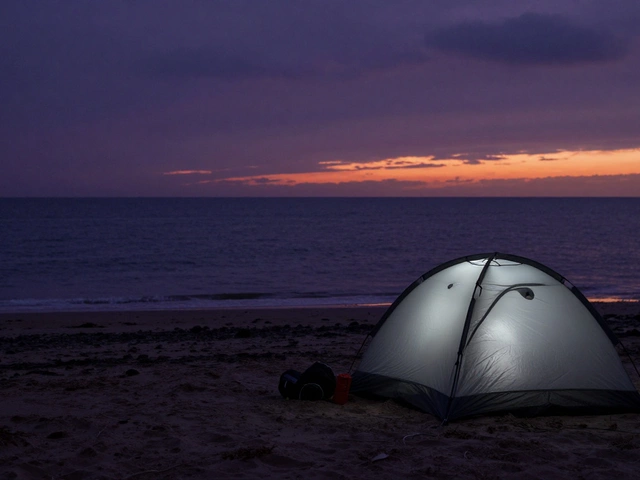
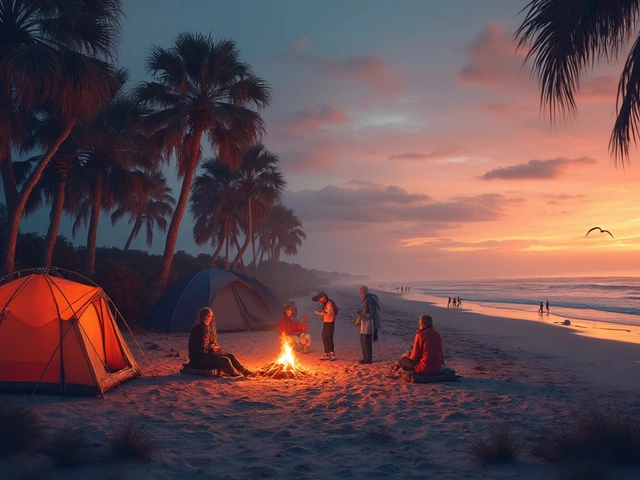
You’ve probably seen photos of tents lining the shore at sunset. Those aren’t random. They’re in places where local councils have officially designated camping areas. Think of them like parking spots for your tent. These spots exist because someone-usually a government agency-decided that allowing camping there was better than having people illegally pitch tents everywhere. In Australia, places like Warrnambool’s Beachside Camping Area or Wollongong’s North Beach are managed by local councils. You pay a small fee, get a numbered site, and follow rules about fire pits and noise. You’re not buying anything. You’re renting a spot on public land. In the U.S., national parks like Cape Cod or state parks like New Jersey’s Island Beach State Park offer similar setups. You’ll find signs saying “Camping Permitted Here Only.” That’s your legal zone. Step outside it, even by a few meters, and you’re trespassing. The problem? Many people don’t know the difference. They see an empty stretch of sand, assume it’s open, and set up camp. Then they get a ticket-or worse, their gear gets thrown out. In 2023, over 2,300 beach camping violations were issued in coastal California alone. Most were for camping too close to the dunes or beyond the marked zones.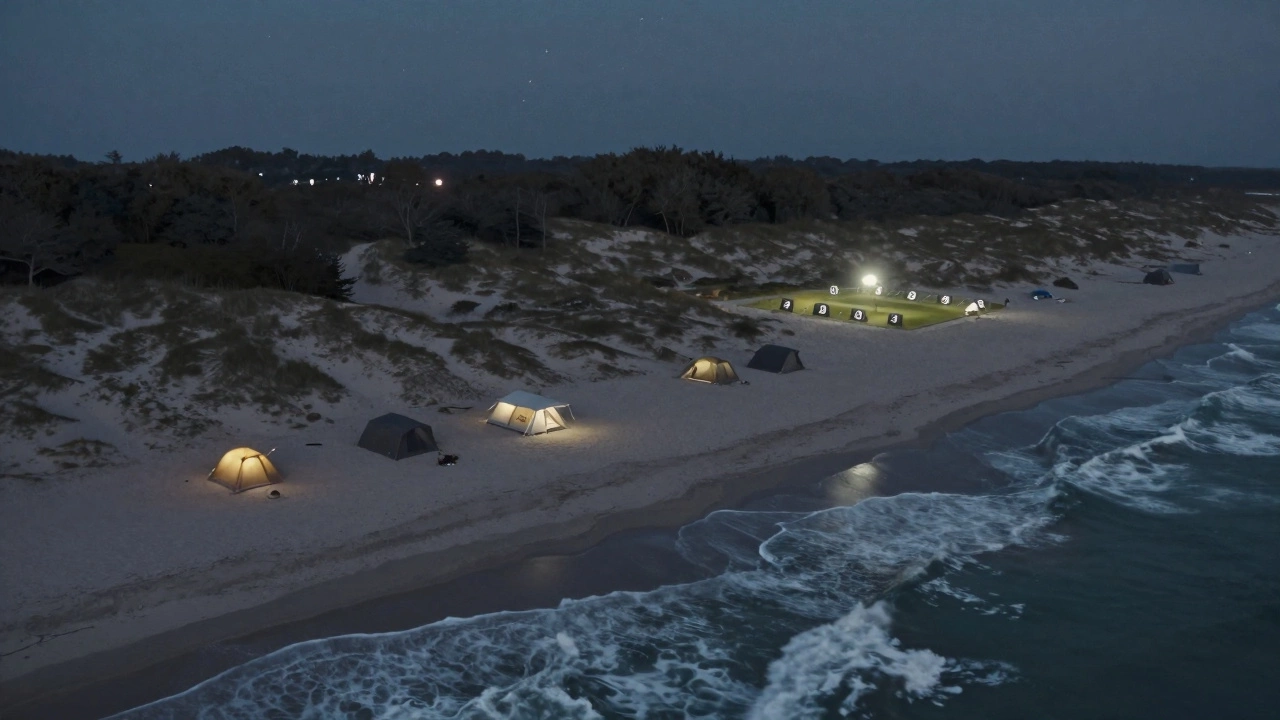
What Happens When You Cross the Line?
Let’s say you’ve got your tent up on a quiet beach, miles from any signs. You’re not bothering anyone. You’ve got your coffee, your book, your dog snoozing beside you. Everything feels fine. Then a ranger shows up. In most places, the first offense is a warning. But if you’re caught a second time, or if you’ve damaged vegetation, left trash, or lit a fire where it’s banned-you’re looking at fines. In Australia, fines for illegal beach camping range from $200 to $1,200 depending on the state. In the U.S., it’s typically $50 to $500, but in protected areas like national parks, it can hit $5,000. And it’s not just about money. Some councils have started using drones to monitor popular beaches. Others have installed motion-sensor cameras near dunes. You don’t need to be caught red-handed. If your tent shows up on a drone photo taken at 3 a.m., you’ll get a notice in the mail.How to Know Where You Can Camp
The only way to avoid trouble is to know the rules before you go. Here’s how:- Check the official website of the local council or park authority. Search for “beach camping regulations” + the name of the area.
- Look for signs at parking lots or trailheads. They often list permitted zones and prohibited activities.
- Use apps like Recreation.gov (U.S.) or Victoria’s Parks Online (Australia) to find official camping spots.
- If you’re unsure, call the local ranger station. Most are happy to tell you where you can legally camp.
What About Private Beaches?
Some beaches are privately owned. That’s not a myth. In places like the Hamptons, parts of the Florida Keys, or even some stretches of the Tasmanian coast, entire beaches are owned by individuals or corporations. They might not have fences, but they still have legal rights. How do you know? Look for signs. Look for gates. Look for security patrols. If the beach ends at a driveway or a private resort, don’t assume it’s open. Even if it looks empty, you’re on someone’s property. In rare cases, you might find a private beach that allows public access by law-like in Maine, where the public has a right to fish, fowl, and navigate along the shore. But camping? That’s still usually off-limits unless the owner says so.What You Can Do-Legally
You don’t need to own land to enjoy the beach. Here’s what works:- Use designated beach campsites. They’re cheap, safe, and legal.
- Try inland campsites near the coast. Many parks are just a 10-minute walk from the water.
- Book a beachside cabin or glamping pod. You get the view without the risk.
- Volunteer with conservation groups. Some offer free camping in exchange for helping clean up trails or monitor wildlife.
Bottom Line: You Don’t Own It. But You Can Still Use It
Owning land along an ocean lake isn’t just unrealistic-it’s illegal in nearly every case. The sand beneath your tent isn’t yours. The tide that rolls in won’t respect your tent pegs. The dunes that shelter you? They’re protected ecosystems, not backyards. But here’s the good news: you don’t need ownership to have access. You just need to respect the rules. Camp where it’s allowed. Leave no trace. Ask before you assume. And if you’re ever in doubt-walk a little farther, find the official sign, and set up where the law says you can. The ocean doesn’t care who owns the land. But the rangers do. And you don’t want to be the one explaining why you thought a beach was yours.Can I legally camp right on the beach if no one is around?
No. Just because a beach looks empty doesn’t mean it’s legal to camp there. Most coastal areas have strict rules about where you can set up a tent, even at night. Rangers use drones, cameras, and patrols to enforce these rules. You can still get fined-even if you think you’re alone.
Is the beach public property in Australia?
The intertidal zone-the area between high and low tide-is public land under the Crown Land Act. But the land above the high-tide mark, including dunes and back areas, is often privately owned or managed by local councils. You can walk on the beach, but camping there without permission is usually illegal.
Do I need a permit to camp on a beach?
It depends. In designated beach camping areas, you usually need to pay a fee and follow posted rules. In protected or national park areas, you may need a formal permit. In most cases, you can’t just show up and pitch a tent anywhere along the shore. Always check with the local council or park authority before you go.
What if I’m camping on a private beach with the owner’s permission?
If the owner legally owns the land and gives you written permission, you’re generally fine. But be careful-some private beaches are still subject to environmental protections or zoning laws that restrict camping, even with permission. Always confirm with local authorities if the land has any legal restrictions.
Are there any beaches where camping is completely free and legal?
Yes-but they’re rare. Some remote areas in Australia, like parts of the Nullarbor or the Kimberley coast, allow free dispersed camping on public land, but only if you’re far from towns and follow strict leave-no-trace rules. In the U.S., some national forests near the coast allow it too. Always verify with official sources. Don’t assume.