RV Ownership & Depreciation Calculator
Calculate when it is financially smartest to sell or upgrade your motorhome based on current market trends.
| Year | Resale Value | Value Retention | Maintenance Trend | Risk Level |
|---|---|---|---|---|
| Enter details and click Analyze to see projections. | ||||
Most people assume that buying an RV is like buying a house-you keep it for decades. But the data tells a different story. The average motorhome owner holds onto their vehicle for roughly five to seven years before selling or upgrading. This isn't just a guess; it's a pattern driven by maintenance costs, lifestyle changes, and the rapid depreciation of these large vehicles. If you are considering buying one, or if you are a renter wondering when to make the jump to ownership, understanding this timeline is crucial for your financial planning.
The "five-year rule" isn't a hard law, but it’s the sweet spot where most owners feel they’ve extracted maximum value from their investment. After year five, repair costs often start to outpace the drop in market value. Let’s break down why this happens and what it means for you.
Why Five Years Is the Magic Number
When you buy a new Class A or Class C motorhome, you are paying a premium for features, warranty coverage, and reliability. For the first three years, the vehicle is under manufacturer warranty, which covers major systems like the engine, transmission, and sometimes even appliances. During this period, ownership feels safe. You’re not worrying about sudden $5,000 repairs to the air conditioning unit or the water heater.
However, once that warranty expires around year three or four, the dynamic shifts. Owners report that annual maintenance budgets can double or triple. Tires, brakes, and exterior seals need regular attention. If you live in a coastal area, salt air accelerates corrosion on metal parts, shortening the lifespan of certain components. By year five, many owners realize that spending thousands on preventative maintenance might be better spent saving up for a newer model with updated technology and lower mileage.
- Years 1-3: High confidence, low unexpected costs, full warranty protection.
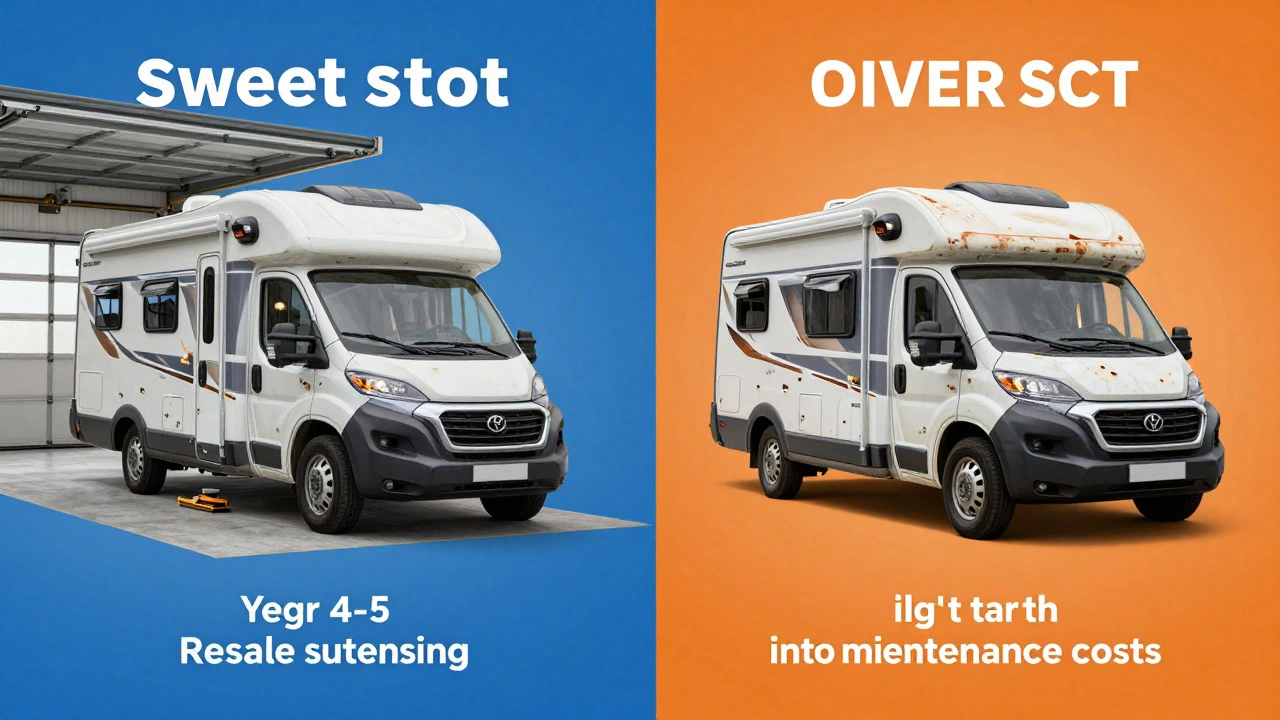
- Years 4-5: Warranty gaps appear, minor repairs become frequent, resale value stabilizes.
- Year 6+: Major component failures (roof leaks, electrical issues) become more common, resale value drops sharply.
Factors That Change the Timeline
Not every RV owner follows the same path. Several variables can extend or shorten how long you keep your rig.
Usage Frequency is the biggest factor. If you use your motorhome only twice a year for two weeks each trip, it will last much longer than if you live in it full-time. Full-time living puts constant wear on the plumbing, sewage system, and interior flooring. A part-time user might easily keep their RV for ten to fifteen years because the mechanical stress is significantly lower.
Storage Conditions also play a huge role. An RV stored outdoors in a humid climate will suffer from mold, mildew, and rust far faster than one kept in a dry, indoor garage. Proper storage can add several years to the life of your vehicle. Conversely, neglecting winterization procedures in colder regions can freeze pipes and ruin pumps, leading to early replacement.
Type of Vehicle matters too. A heavy-duty diesel pusher Class A motorhome is built to last longer than a lightweight camper van conversion. Diesel engines typically have higher torque and longevity, meaning the powertrain might outlast the body. In contrast, gasoline-powered Class B vans are simpler but may face earlier transmission issues due to the weight distribution challenges.
Resale Value and the Depreciation Curve
If you plan to sell your RV eventually, timing is everything. The steepest drop in value happens in the first year, losing about 10-15% of its original price. From years two to five, depreciation slows down to roughly 5-8% per year. After year seven, the value curve flattens, but so does buyer interest. Fewer buyers want to deal with potential hidden issues in older units.
| Ownership Period | Estimated Value Retention | Typical Maintenance Cost Trend |
|---|---|---|
| 1 Year | 85-90% | Low (Warranty) |
| 3 Years | 70-75% | Moderate (Warranty Expiring) |
| 5 Years | 55-60% | High (Major Repairs Possible) |
| 10 Years | 30-40% | Very High (Overhaul Needed) |
This table highlights why selling between years four and six is often the financially smartest move. You retain a significant portion of the initial investment while avoiding the steep cost increases associated with aging vehicles.
Hiring vs. Owning: When Does It Make Sense?
For many travelers, the five-year ownership cycle doesn’t justify the upfront cost. If you only travel for a month or two a year, motorhome hire is often more economical. You pay for usage, insurance, and basic maintenance without worrying about long-term storage or resale hassle.
However, if you find yourself renting the same type of vehicle every year, the cumulative rental fees can exceed the cost of buying a used unit. The crossover point usually happens after three to four years of consistent rental. At that stage, buying a slightly older, well-maintained RV might offer better value and flexibility. You get to customize the space, avoid rental restrictions, and build equity in the asset, even if that equity depreciates over time.
Extending Your RV's Lifespan
Want to keep your RV longer than the average? It’s possible, but it requires discipline. Regular professional inspections every two years can catch small issues before they become catastrophic. Investing in high-quality tires and maintaining proper tire pressure extends the life of the suspension. Keeping detailed records of all repairs and maintenance boosts resale value if you do decide to sell later.
Also, consider the emotional aspect. Some owners keep their RVs for 15 or 20 years because they love the specific layout or memories associated with the vehicle. If that’s your case, budget for ongoing repairs rather than focusing solely on resale value. The goal shifts from financial optimization to personal satisfaction.
Frequently Asked Questions
Is it worth buying a used RV instead of a new one?
Yes, buying a used RV that is 3-5 years old often offers the best value. You avoid the initial steep depreciation, and the previous owner has already paid for early wear-and-tear. Just ensure you get a thorough pre-purchase inspection to check for hidden damage.
How long does an RV last if I live in it full-time?
Full-time living reduces the lifespan compared to part-time use. Most full-time RVers replace their vehicles every 7-10 years due to accelerated wear on plumbing, electrical systems, and interiors. Part-time users can easily reach 15+ years.
What is the best time to sell my RV?
The best time is typically between years 4 and 6. This is when the vehicle is still reliable enough for buyers to trust, but the depreciation curve has flattened. Selling during spring or early summer also helps, as demand peaks before the travel season.
Does storage affect how long I should keep my RV?
Absolutely. Indoor storage protects against weather-related damage, potentially adding 3-5 years to the vehicle's life. Outdoor storage exposes the RV to UV rays, rain, and temperature fluctuations, which degrade seals and paint faster, encouraging earlier replacement.
Should I upgrade or replace my RV after 5 years?
It depends on your needs. If your current RV meets your lifestyle requirements and is mechanically sound, upgrading might not be necessary. However, if you find yourself needing larger spaces or modern amenities, replacing it at the 5-year mark allows you to trade in a vehicle that still holds decent value.