UK Woods & Camping Legal Risk Calculator
Define Your Scenario
Risk Level
Select options to see your legal standing.
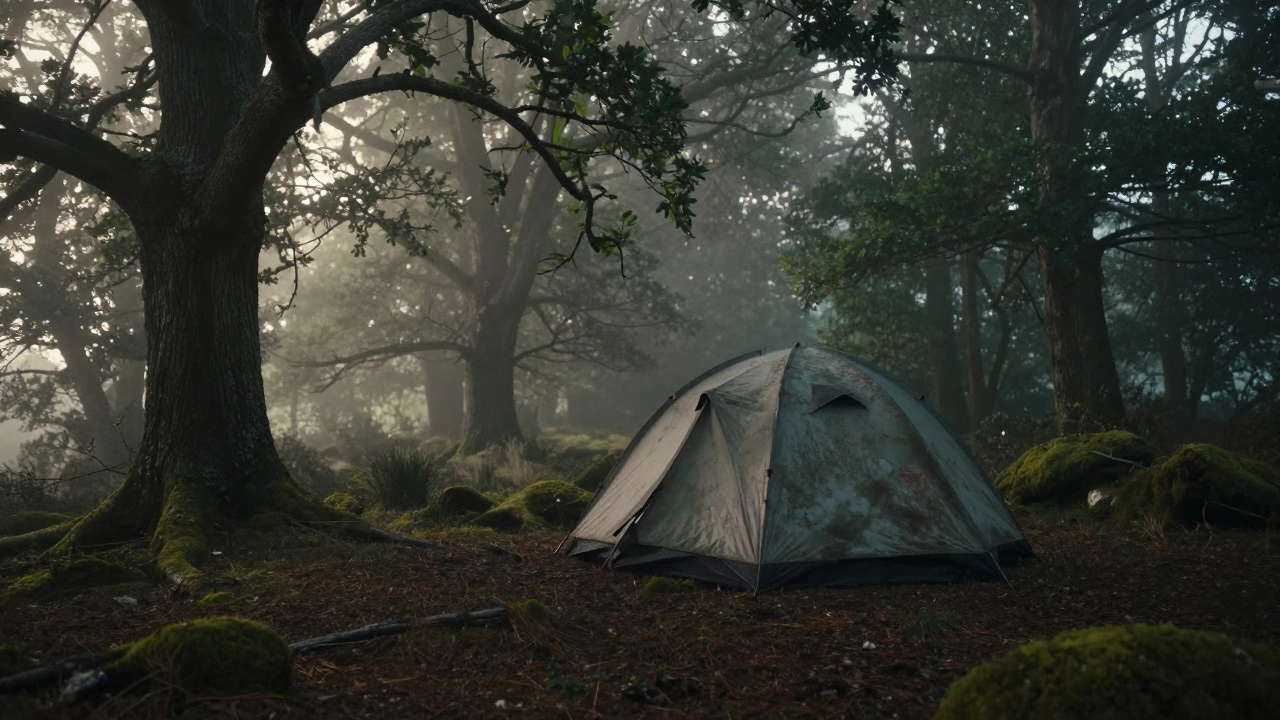
Picture this: you’ve had enough of rent hikes, city noise, and the daily grind. You pack your bags, drive to a dense forest, pitch a tent, and decide to stay. It sounds like freedom, doesn’t it? But before you trade your lease for a tree line, there’s a hard reality check waiting. In the United Kingdom, simply deciding to live in the woods is not as simple as finding a spot and staying put.
The short answer is no, you cannot legally live in the woods in the UK indefinitely without permission. While wild camping-sleeping out for a night or two-is tolerated in specific areas, permanent residence on private land constitutes trespassing. This distinction between a weekend adventure and a lifestyle change is where most people get into serious legal trouble.
Key Takeaways
- Wild camping is not living: Sleeping out for one or two nights may be tolerated in Scotland and parts of England/Wales, but long-term stays are illegal trespassing.
- Private property rules apply: Most woodland in the UK is privately owned by individuals, corporations, or the Forestry Commission. You need explicit permission to reside there.
- Criminal damage risks: Building structures, digging foundations, or leaving significant waste can lead to criminal charges under the Criminal Damage Act 1971.
- Scottish Freedom to Roam: Scotland offers more access rights under the Land Reform Act 2003, but even these do not cover permanent residential occupation.
- Legal alternatives exist: Look into permitted development rights for garden rooms, tiny home regulations, or renting remote land with owner consent.
The Difference Between Wild Camping and Living
To understand why living in the woods is problematic, we first need to separate the concept of wild camping, which is the practice of sleeping outdoors in natural environments away from designated campsites, from actual habitation. Wild camping is generally viewed as a temporary recreational activity. If you arrive in the evening, sleep, and leave before breakfast, you are likely invisible to landowners and authorities.
Living, however, implies permanence. It involves storing supplies, perhaps building a shelter, using facilities repeatedly, and establishing a routine. When you cross the line from "visitor" to "resident," you trigger different legal mechanisms. In England and Wales, land ownership is absolute regarding exclusion. If you do not own the land or have a license (lease) from the owner, you are a trespasser. While civil trespass itself isn't always a criminal offense, it becomes so when you refuse to leave after being asked, or when you bring vehicles, tents, or other equipment that suggest an intention to remain.
Consider the case of many "eco-villages" that started illegally. Groups often set up camp, believing their environmental ethos protects them. Eventually, landowners invoke the Police, Crime, Sentencing and Courts Act 2022, which legislation that increased penalties for aggravated trespass and unauthorized encampments. This law specifically targets groups who bring multiple vehicles or large groups of people onto land without permission. If you’re planning a solo retreat, you might slip under the radar longer, but you are still violating property rights.
Land Ownership in the UK: Who Owns the Woods?
A common misconception is that forests belong to the public. In reality, the vast majority of woodland in the UK is privately held. Let’s break down who actually owns the trees you see on your map.
- Private Individuals and Families: Many estates, particularly in the south and east of England, are owned by wealthy families or trusts. Access is strictly controlled.
- The Forestry Commission: This government body manages around 2.5 million hectares of land. While they encourage recreation, they do not grant residential rights. Their primary goal is timber production and conservation.
- National Trust and Woodland Trust: These charities manage significant acreage. They welcome visitors for hiking and picnics but explicitly prohibit overnight stays unless at designated sites.
- Corporate Owners: Paper companies, investment funds, and agricultural businesses own large swathes of commercial forest. Security patrols are common here.
Even if a wood looks abandoned, it has an owner. Squatting in empty buildings was decriminalized in England and Wales in 2012, but squatting in land or setting up a tent is treated differently. There is no legal right to occupy unused land just because it looks vacant. The doctrine of adverse possession requires decades of open, continuous use, and even then, it rarely applies to wooded land used for occasional recreation by the public.
Scotland vs. England and Wales: A Tale of Two Laws
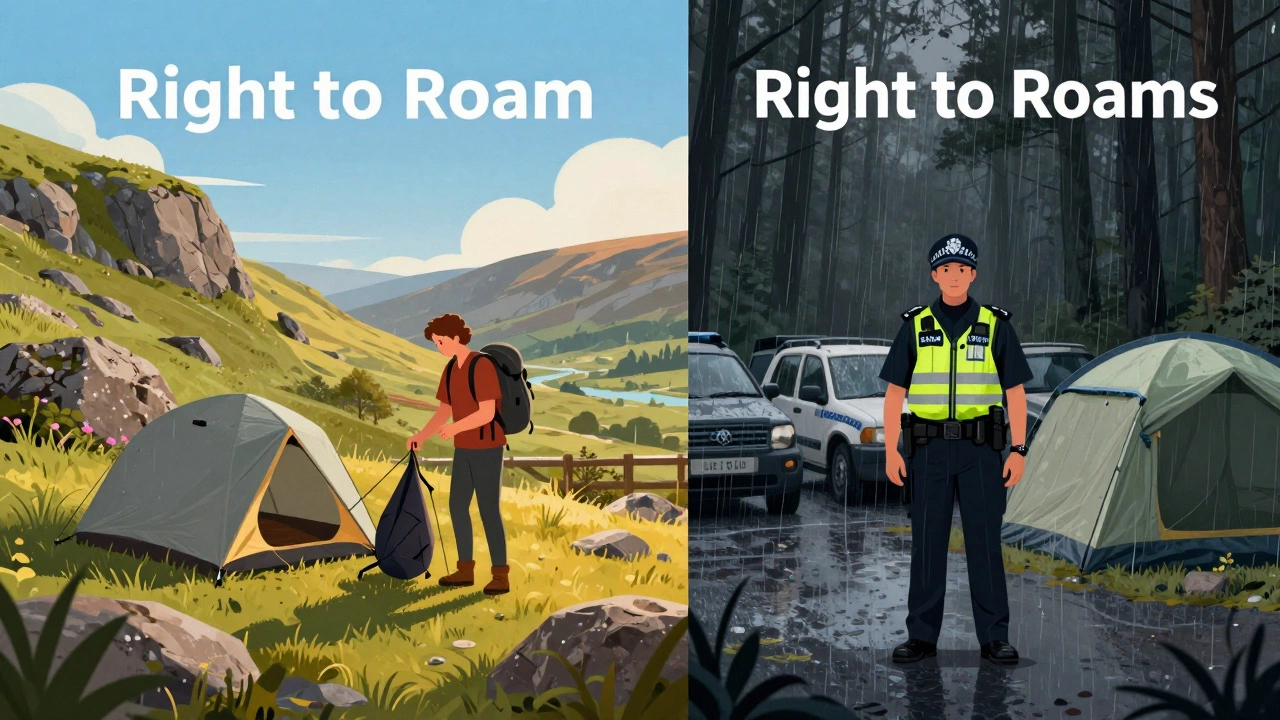
If you’re looking for more flexibility, Scotland is your best bet-but with major caveats. Scotland operates under the Land Reform (Scotland) Act 2003, which established the Right to Roam, allowing responsible access to most land and inland water for recreation. This means you can walk, climb, and camp almost anywhere, provided you follow the Scottish Outdoor Access Code.
However, the Access Code does not give you the right to live somewhere. It emphasizes responsibility. You must respect privacy, avoid damaging property, and remove all waste. Staying in one place for more than a few days begins to violate the spirit of "responsible access." Local councils in Scotland have increasingly enforced rules against long-term wild camping, especially near popular tourist spots or sensitive habitats. You might find yourself issued a dispersal order, requiring you to move on within 24 hours.
In contrast, England and Wales have no general right to roam over private land. Access is limited to mapped footpaths, bridleways, and specific open country areas like Dartmoor or Exmoor. Even in these designated zones, wild camping is technically trespassing, though often ignored if done discreetly and briefly. Permanent residence is never tolerated.
| Region | Right to Camp | Right to Reside | Enforcement Style |
|---|---|---|---|
| England & Wales | Tolerated briefly in remote areas | Illegal (Trespass) | Civil eviction, potential criminal charges for aggravated trespass |
| Scotland | Permitted under Access Code | Illegal (Violation of Access Code) | Dispersal orders, community pressure |
| Northern Ireland | Limited, mostly private | Illegal (Trespass) | Strict enforcement on private estates |
The Risks of Going Off-Grid
Beyond the legal threats, living in the woods poses practical dangers that many romanticize away. Without infrastructure, you are entirely dependent on your own skills and resources. Here’s what happens when reality sets in.
Health and Safety: Emergency services will not come to you easily. If you injure yourself, hypothermia or infection can become life-threatening quickly. Many remote woods lack mobile signal, making calls for help impossible. Additionally, untreated water sources carry parasites like giardia. Drinking from streams without proper filtration is a gamble with your health.
Environmental Impact: Human waste management is a critical issue. Digging catholes too close to water sources contaminates ecosystems. Burning wood creates ash and smoke, which violates pollution controls and harms local wildlife. The UK has strict laws regarding waste disposal; dumping trash or human waste improperly can result in fines under the Environmental Protection Act 1990.
Social Isolation: Mental health struggles are common among those attempting extreme off-grid living. The lack of social interaction, combined with the stress of constant vigilance against eviction, leads to anxiety and depression. Many who attempt this lifestyle return to society within months, not because they wanted to, but because they couldn’t cope with the psychological toll.
Legal Ways to Live Closer to Nature
You don’t have to break the law to enjoy a simpler life surrounded by trees. There are several legal pathways to achieve a similar outcome.
Renting Remote Land: Some landowners are willing to rent small plots for tiny homes or yurts. This requires negotiation and a formal agreement. Ensure the land has planning permission for residential use or falls under permitted development rights. Always get everything in writing.
Permitted Development Rights: In England, you may be allowed to build a small structure in your garden without full planning permission if it meets certain size and usage criteria. This could include a garden room or annexe. Check with your local planning authority, as rules vary by location.
Joining an Eco-Village: Communities like Findhorn in Scotland or Beddgelert in Wales offer shared living spaces focused on sustainability. These are legal, structured environments where you pay rent or contribute labor. You get the community and nature connection without the legal risk.
Volunteer Work Exchanges: Platforms like WWOOF (World Wide Opportunities on Organic Farms) allow you to stay on farms or forest projects in exchange for work. While not permanent residence, it offers extended stays in rural settings with host approval.
What Happens If You Get Caught?
If you’re found living in the woods without permission, the consequences escalate quickly. Initially, landowners may ask you to leave politely. If you refuse, they can call the police. Under the Anti-social Behaviour, Crime and Policing Act 2012, police can issue directions to leave land if they believe you’re causing harassment, alarm, or distress.
If you ignore these directions, you commit a criminal offense punishable by fines or imprisonment. Your belongings may be removed and stored at your expense. In severe cases, especially if you’ve built structures or caused damage, you could face charges under the Criminal Damage Act 1971. Repair costs for fences, gates, or vegetation can run into thousands of pounds, which you’ll be liable for.
Courts take a dim view of those who disrupt landowners’ livelihoods. Farmers and foresters rely on their land for income. Unauthorized occupation threatens their business operations and insurance coverage. Judges typically side with property owners, viewing squatters as nuisances rather than activists.
Can I live in my own car in the woods?
No, parking a vehicle on private land without permission is trespassing. Even if you own the land, local council regulations may prohibit living in a vehicle if it’s not designed for habitation or lacks proper sewage connections. Many areas have specific bans on overnight parking in cars to prevent informal settlements.
Is wild camping legal in national parks?
In England and Wales, wild camping in national parks is technically illegal but often tolerated if done responsibly and briefly. However, some parks like the Lake District or Peak District have stricter enforcement due to overcrowding. Always check specific park guidelines. In Scotland, it’s permitted under the Access Code, but you must stay no more than two or three nights in one spot.
What if I buy a plot of land in the woods?
Buying land doesn’t automatically grant you the right to live on it. You need planning permission for residential use. Agricultural or forestry land usually comes with restrictions preventing permanent dwellings. Without proper permits, any structure you build is illegal and can be demolished by the local council.
Are there any places in the UK where I can legally squat?
Squatting in residential buildings is a criminal offense in England and Wales since 2012. Commercial or industrial buildings may still be squatted in civilly, but it’s risky and complex. For land, there is no legal right to squat. Adverse possession claims require 10-12 years of uninterrupted use and are difficult to prove for wooded areas.
How do I find legal land to rent for off-grid living?
Look for listings on sites like Tiny House UK, Facebook groups dedicated to land sharing, or eco-village networks. Contact local landowners directly with a respectful proposal. Emphasize low impact, security benefits, and fair rental terms. Always verify planning permissions and zoning laws before signing any agreement.