UK Motorhome Street Parking Risk Calculator
Key Reasons:
Picture this: you’ve just finished a long day of driving your motorhome, which is a vehicle that combines transportation and living quarters. You’re tired, the sun is setting, and you spot a quiet residential street with plenty of space. It looks perfect for an overnight stay. But before you pull over, you need to know one crucial thing: is it actually legal?
The short answer is yes, but with major caveats. In the UK, there is no single national law that explicitly bans sleeping in a motorhome on public roads. However, local council bylaws, highway regulations, and specific signage can make your peaceful night’s sleep turn into a costly fine or a towed vehicle very quickly. Understanding the difference between "legal" and "allowed" is the key to stress-free travel.
The Difference Between Parking and Wild Camping
To understand the rules, you first need to separate two distinct concepts: parking and camping. This distinction is often where travelers get confused and into trouble.
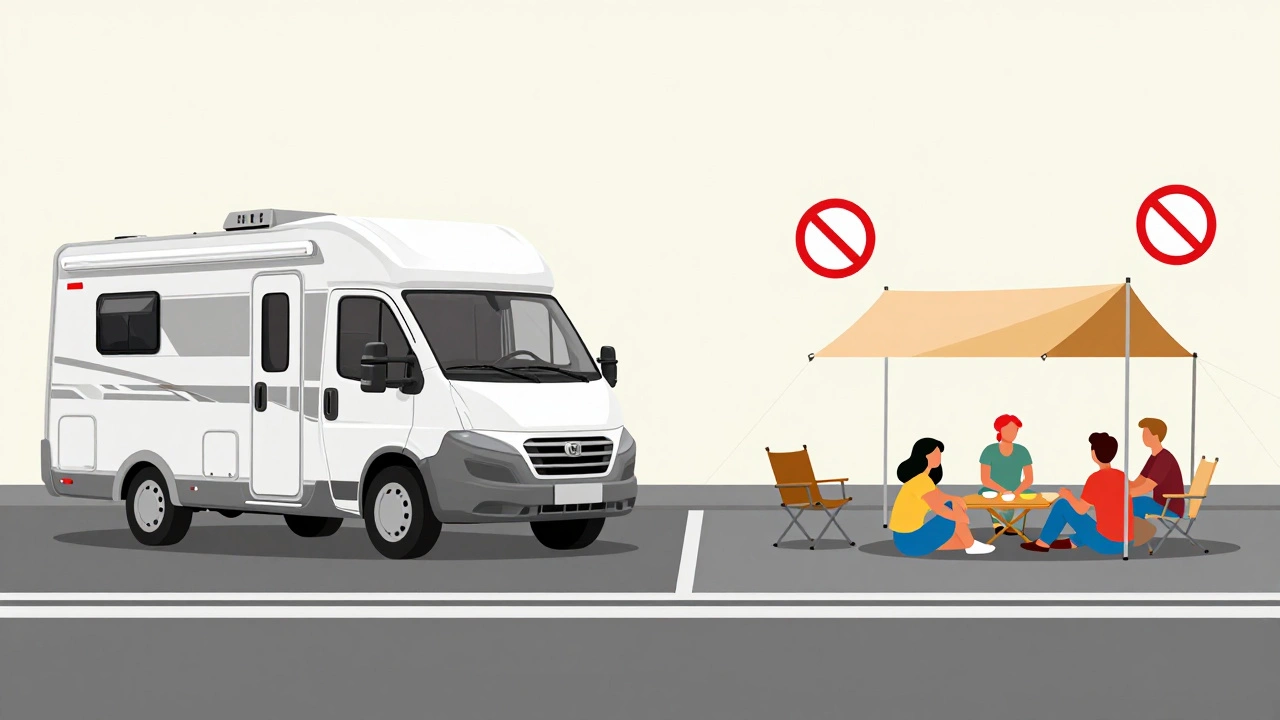
Wild camping is defined as setting up a tent or pitching a camp on land without the owner's permission. When you are inside your motorhome, you are technically not "camping" in the traditional sense if you remain inside the vehicle. You are simply parked. However, if you step out, put up an awning, set up a chair, or use a portable toilet outside, you are now camping. On most public streets, especially in urban areas, this is strictly prohibited under local authority bylaws regarding obstruction and nuisance.
Therefore, the golden rule for street parking is simple: keep everything inside. If you stay within the confines of your vehicle, you are generally engaging in parking behavior, which is governed by traffic laws rather than camping laws.
Local Council Bylaws and Residential Restrictions
This is where the complexity lies. While the national government doesn’t ban street parking for motorhomes, local councils have significant power to regulate their own highways and residential areas. Many towns and cities have introduced specific bylaws to prevent large vehicles from cluttering neighborhoods.
For example, some councils in popular tourist destinations like Cornwall, Devon, and the Lake District have implemented strict limits on how long a vehicle can be parked on a single stretch of road. These might range from 24 hours to 72 hours. Exceeding these time limits can result in a Penalty Charge Notice (PCN).
You should always look for signage. A sign stating "No Waiting" or "Controlled Zone" applies to all vehicles, including motorhomes. Ignoring these signs because you think "I’m just sleeping" is a common mistake. The camera doesn’t care about your intent; it records the violation. Always check for:
- Yellow lines: Single yellow lines mean waiting is restricted at certain times (usually displayed on nearby signs). Double yellow lines mean no waiting at any time, unless there are specific exemptions shown.
- Clearway signs: These indicate no stopping at any time, which includes dropping off passengers or parking for the night.
- Residential permit zones: Some areas require residents to have permits for parking. As a visitor, you cannot park here overnight, even if spaces appear empty.
Highway Code and Obstruction Rules
Beyond local bylaws, the Highway Code provides official guidance on road safety and parking regulations in the UK plays a critical role. Rule 248 states that you must not park on a clearway, and Rule 249 warns against parking where it would obstruct other road users.
Motorhomes are large. They take up more space than a standard car. If you park in a way that blocks visibility for pedestrians, prevents other cars from passing, or narrows the road significantly, you are committing an offense regardless of whether you intend to sleep. Police officers and highway authorities have the discretion to move vehicles that cause obstruction. This is particularly relevant on narrow country lanes, which are common in rural England and Wales.
If you are asked to move by a police officer or a highway warden, do so immediately. Arguing about your right to sleep in your vehicle will not help your case if you are deemed to be causing a hazard.
Regional Differences: Scotland vs. England and Wales
One of the biggest misconceptions among travelers is assuming that laws are uniform across the UK. They are not. Scotland has a unique legal framework regarding access rights that does not exist in England, Wales, or Northern Ireland.
In Scotland, the Land Reform (Scotland) Act 2003 grants the right to responsible access to most land and inland water for recreation and education. This means you can wild camp in many places, including near roads, provided you follow the Scottish Outdoor Access Code. You must leave no trace, avoid damaging property, and not stay in one place for more than a few nights. While this primarily applies to land off the road, the spirit of the law makes roadside stops less contentious in Scotland compared to southern England, as long as you are not obstructing traffic.
In contrast, England and Wales operate under a system where landowners and local councils have stricter control. There is no general right to roam or camp. Therefore, while you might find tolerance in a remote Scottish village, the same behavior in a rural English village could lead to complaints from locals and subsequent enforcement action.
Best Practices for Safe and Legal Overnight Stops
If you want to enjoy the freedom of street parking without the risk of fines, follow these practical tips. These strategies help you blend in, respect communities, and stay compliant with regulations.
- Move Frequently: Never stay in the same spot for more than one night. Ideally, move every 12-24 hours. This reduces the likelihood of being reported as a nuisance or violating time-limit bylaws.
- Stay Discreet: Keep blinds closed. Do not sit outside. Avoid using external lights. The goal is to be invisible. If neighbors don’t know you’re there, they won’t complain.
- Avoid Residential Streets: Try to park in industrial estates, large retail park-and-ride lots, or designated lay-bys. These areas are less likely to have strict residential bylaws and are designed for larger vehicles.
- Use Apps Wisely: Apps like Park4Night or Camperstop.info can show you user-reported safe spots. However, always verify current conditions. A spot that was free six months ago might now have new signage.
- Be Polite: If someone questions you, be calm and polite. Explain that you are just resting for the night and will move on in the morning. Hostility rarely helps resolve situations.
Alternatives to Street Parking
While street parking offers spontaneity, it comes with uncertainty. For peace of mind, consider these alternatives that are widely available across the UK:
| Option | Cost | Legal Certainty | Facilities |
|---|---|---|---|
| Street Parking | Free | Low (Varies by location) | None |
| Designated Lay-bys | Free | Medium (Check signs) | None |
| Boatyards & Farm Stays | £5 - £15 per night | High (Permission granted) | Basic (Water/Electric) |
| Campsites | £15 - £30 per night | High (Booked in advance) | Full (Showers, WiFi, etc.) |
| Supermarket Car Parks | Free (Usually) | Medium (Store policy dependent) | Shop access only |
Many supermarkets, such as Tesco Extra or Sainsbury’s Local, allow overnight stays if you shop there during the day. Always ask the manager for permission first. Policies vary by store and can change overnight due to local pressure.
Can I sleep in my motorhome in a supermarket car park in the UK?
It depends on the individual store's policy. Many larger supermarkets allow it, especially if you spend money in the store. However, some have banned it due to noise or litter issues. Always ask a staff member for explicit permission before settling in for the night.
What happens if I get fined for illegal street parking?
You will receive a Penalty Charge Notice (PCN). You usually have 14 days to pay, often at a discounted rate if paid early. If you ignore it, the fine increases, and bailiffs may eventually be involved. You can appeal if you believe the signage was unclear or if you had an emergency, but success rates vary.
Is wild camping legal in England?
Generally, no. Unlike Scotland, England does not have a right to roam for camping. Setting up a tent or living in a vehicle on private land without permission is trespassing. On public roads, it is regulated by local bylaws and highway codes, making it risky without explicit permission.
How long can I park a motorhome on a residential street?
There is no universal time limit. Some councils allow 24 hours, others 72 hours, and some have no specific limit but enforce "nuisance" laws. Always check local council websites for specific bylaws in the area you are visiting. When in doubt, move after one night.
Can I use an awning when parked on the street?
No. Using an awning, chairs, or tables on a public highway or pavement is considered camping and is almost always prohibited. It creates an obstruction and violates local bylaws. Keep all equipment inside the vehicle to remain within legal parking boundaries.