UK Camping Duration & Legal Status Checker
Recommended Actions:
You’ve found the perfect spot. It’s quiet, it’s scenic, and you’re ready to park your camper for a long stay. But then you hear whispers about the "56-day rule." Is this a hard law that will get you fined if you stay one night too long? Or is it just an urban myth spread by nervous campers?
Here is the truth: there is no single statute in the UK called the "56 Day Rule." It’s a shorthand term used by campers, landowners, and local councils to describe a specific legal threshold regarding temporary use of land. If you exceed this timeframe without planning permission, you might be crossing the line from casual recreation into residential or commercial use.
The Origin of the Myth vs. The Reality
Where did this number come from? It isn’t written in stone (or legislation) as a universal maximum. Instead, it stems from historical precedents and local council interpretations of Town and Country Planning Act 1990. This act governs how land can be used in England and Wales. Scotland has its own set of regulations under the Planning (Scotland) Act 2019, though the practical application often mirrors English rules regarding temporary uses.
The idea suggests that if you use land for camping for more than 56 days in a calendar year, it may require planning permission because it looks like a permanent residence or a business operation. However, this is rarely applied strictly to individual wild campers. It is far more relevant to those running informal campsites on private land.
Who Does This Actually Affect?
If you are a tourist pitching a tent for three nights, you have nothing to worry about. The 56-day concept primarily impacts two groups:
- Landowners: Farmers or estate owners who allow people to pitch tents or park caravans on their fields for income. If they host visitors for more than 56 days without proper licensing, the local council might deem it an unauthorized change of land use.
- Long-Stay Campers: Individuals living in motorhomes or static caravans who try to avoid paying site fees or council tax by moving around but staying in the same general area for months.
For the average holidaymaker, the risk is negligible. For someone trying to run a pop-up campsite out of their back garden, getting this wrong could lead to enforcement notices.
England and Wales vs. Scotland: Different Rules Apply
Camping laws vary significantly across the UK nations. Understanding these differences saves you from awkward conversations with locals or officials.
| Region | Primary Legal Framework | Wild Camping Status | 56-Day Relevance |
|---|---|---|---|
| England & Wales | Town and Country Planning Act 1990 | Generally requires landowner permission; not a right. | High relevance for commercial/informal sites; low for tourists. |
| Scotland | Land Reform (Scotland) Act 2003 | Right to roam allows responsible wild camping in most areas. | Low relevance due to statutory access rights. |
| Northern Ireland | Various local orders and common law | Strictly requires permission; few designated sites. | Moderate relevance; highly dependent on local council stance. |
In Scotland, the situation is much freer. The Land Reform Act gives everyone the right to cross and occupy land responsibly. While you still shouldn’t stay in one spot forever, the rigid 56-day cap doesn’t apply in the same way. You can typically stay longer provided you leave no trace and move on periodically.
In England and Wales, wild camping is technically trespassing unless you have the landowner's consent. Some national parks, like Dartmoor, have specific agreements allowing short-term wild camping, but these usually limit stays to 2-3 nights per location.
Why 56 Days? The Logic Behind the Number
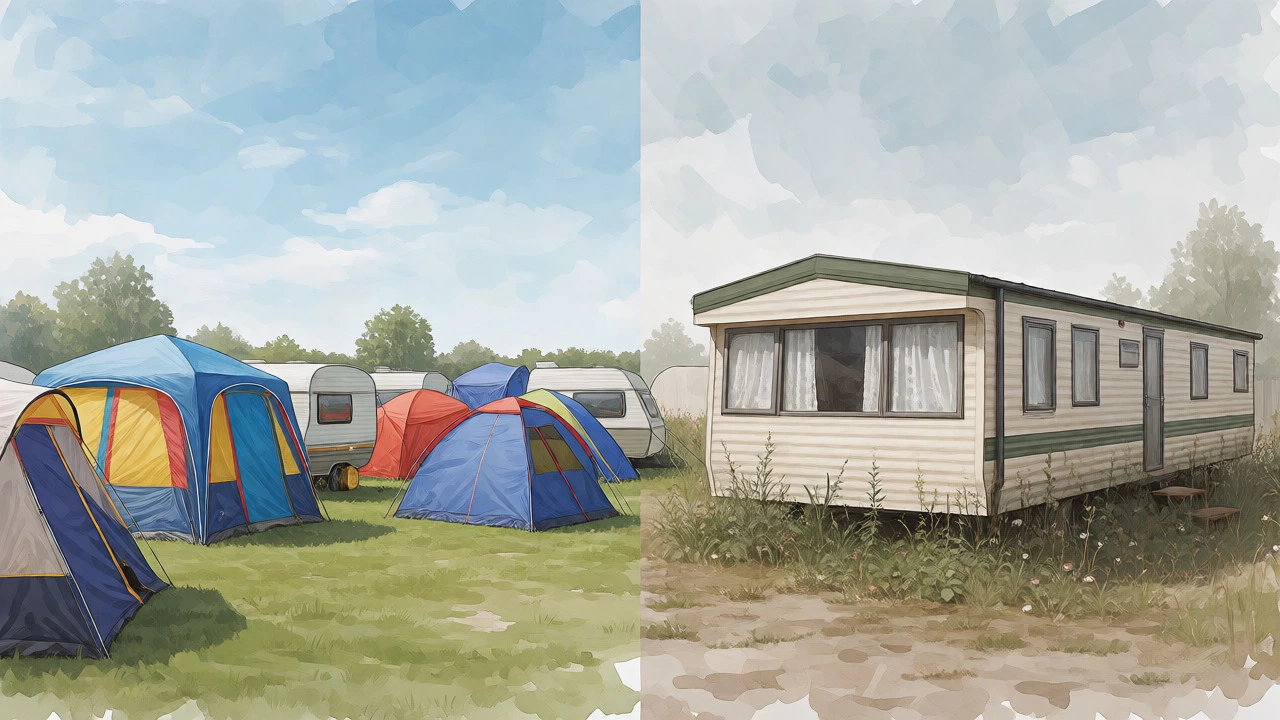
Why 56? Why not 30 or 90? There is no scientific magic to this number. It likely originated from older guidelines where councils tolerated seasonal recreational use up to approximately eight weeks (two months). Eight weeks equals roughly 56 days.
Local authorities use this as a heuristic-a rule of thumb-to distinguish between recreational use and residential use. If a field is full of caravans for six months, it looks like a housing estate. If it’s empty for ten months and busy for two, it looks like a summer camp. The 56-day marker helps planners decide when to intervene.
Keep in mind that some councils are stricter than others. In popular tourist areas like Cornwall or Devon, enforcement might kick in earlier if neighbors complain about noise, waste, or traffic. Conversely, in remote rural areas, you might stay longer without anyone batting an eye.
How to Stay on the Right Side of the Law
Don’t let the fear of the 56-day rule ruin your trip. Here is how to navigate it confidently:
- Ask Permission First: In England and Wales, always seek consent from the landowner. A quick chat with a farmer or finding a sign that says "Camping Welcome" solves most legal issues.
- Move Regularly: Even if you have permission, don’t set up base camp in the exact same square meter for two months. Rotate your pitch every week or so. This reinforces the idea that you are a transient visitor, not a resident.
- Check Local Council Guidelines: Each district council publishes its own interpretation of planning policies. Search for "[Council Name] camping policy" online. Some explicitly state a 28-day limit for temporary pitches, while others say 56.
- Avoid Residential Areas: Parking on a street for 56 days straight often triggers parking restrictions rather than planning laws. Look for designated laybys or approved overnight stops.
What Happens If You Break the "Rule"?
Suppose you ignore the guidance and stay put for four months. What happens next? Usually, nothing immediate. The process is slow.
First, a neighbor might complain. Then, the local authority investigates. If they determine the land use has changed, they issue an Enforcement Notice. This notice gives you time to rectify the situation-usually by removing the caravan or tent. Ignoring the notice leads to fines and potential prosecution, but this is rare for well-behaved individuals.
For businesses, the stakes are higher. An unlicensed campsite operating beyond the allowed period risks losing revenue and facing legal costs. That’s why many small sites apply for temporary use licenses if they want to extend their season.
Practical Tips for Long-Stayers
If you plan to spend more than eight weeks in the UK, consider these strategies:
- Use Official Sites: Paying for a pitch at a registered campground removes all ambiguity. These sites already have the necessary planning permissions.
- Document Your Moves: Take photos with timestamps showing you moved locations every few days. This proves you aren’t establishing a permanent home.
- Be Neighborly: Introduce yourself to nearby residents. Offer to help clear litter or keep noise down. Goodwill goes a long way in preventing complaints.
- Watch for Signs: "No Overnight Parking" or "Temporary Use Only" signs are direct instructions. Respect them to avoid hassle.
Remember, the spirit of the law is about balance. It protects communities from being overwhelmed by unregulated development while allowing people to enjoy the outdoors. By respecting the land and the locals, you’ll find that the "rule" is rarely enforced against respectful travelers.
Frequently Asked Questions
Is the 56-day rule a strict law in the UK?
No, it is not a strict statutory law. It is a guideline used by local councils to differentiate between temporary recreational use and permanent residential use. The actual limits depend on local planning policies and landowner permissions.
Can I wild camp in England for more than 56 days?
In England, wild camping generally requires landowner permission regardless of duration. Without permission, you are committing civil trespass. The 56-day rule mostly applies to whether a piece of land needs planning permission for hosting campers, not for individual tourists.
Does the 56-day rule apply in Scotland?
Not really. Scotland has the Right to Roam under the Land Reform (Scotland) Act 2003. You can wild camp almost anywhere responsibly, provided you follow the Scottish Outdoor Access Code. There is no rigid 56-day cap for individual campers.
What happens if I stay longer than 56 days on private land?
If you have the landowner's permission, you can stay as long as agreed. If you don't, the landowner can ask you to leave. If you are running a business (like a farm campsite), the council might require you to apply for planning permission if you exceed the temporary use threshold.
Do I need to pay council tax if I live in my motorhome?
If your motorhome is your main residence and you are parked on a site with planning permission for residential use, you may need to pay council tax. If you are traveling and only staying temporarily, you generally do not. The 56-day rule doesn't directly dictate tax status, but residency does.