RV Trip Planner Calculator
Plan Your RV Trip
2-2-2 Rule Guide
The 2-2-2 rule ensures sustainable RV travel:
Why it works: Less driving = more energy, arriving early saves sanity, longer stays cut costs and stress.
This calculator applies the rule to your specific trip to create a sustainable itinerary.
Ever been on an RV trip and felt completely drained by day three? You’re not alone. Many first-time motorhome travelers pack too much, drive too far, and end up exhausted before they even see the best views. That’s where the 2-2-2 rule comes in. It’s not a law, but it’s a simple, proven pattern used by seasoned RVers to make road trips enjoyable, safe, and actually relaxing.
What Exactly Is the 2-2-2 Rule?
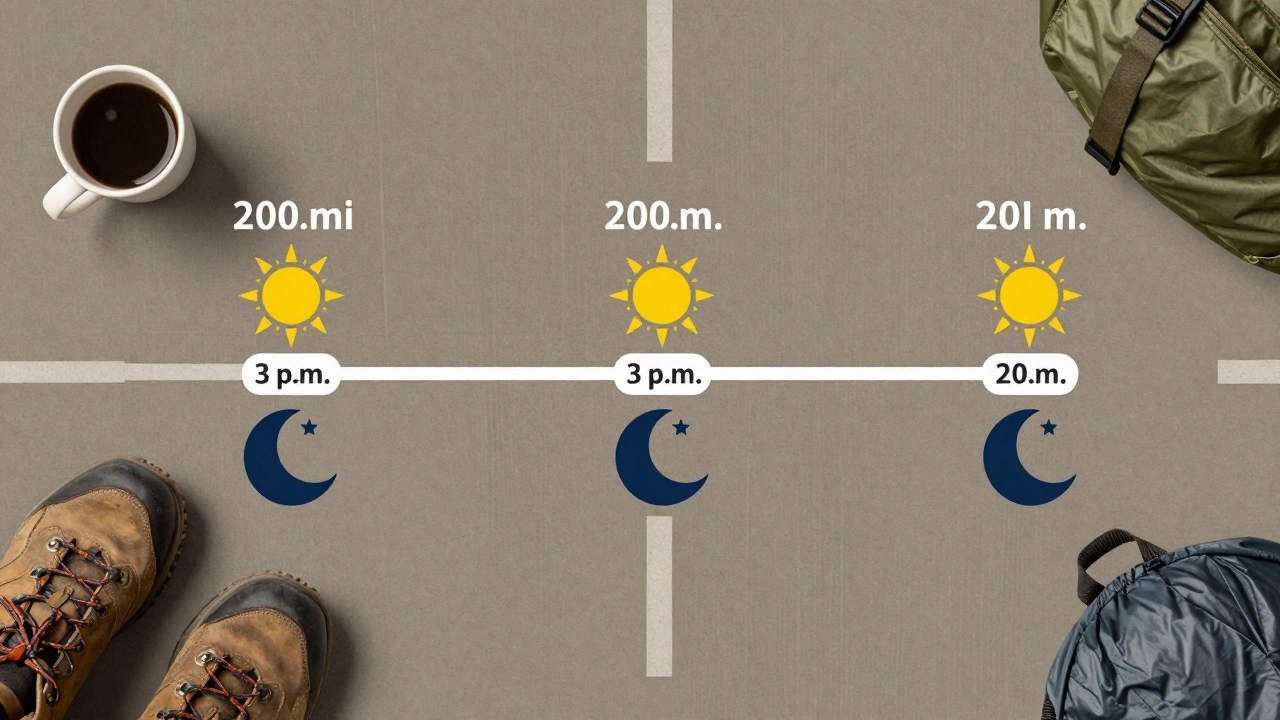
The 2-2-2 rule is a straightforward guideline for planning your daily RV travel: drive no more than 200 miles, arrive at your campsite by 2 p.m., and stay put for at least two nights. Sounds simple? It is. And that’s why it works.This rule isn’t about limiting your adventure-it’s about making it sustainable. Think of it like pacing yourself in a marathon. You don’t sprint the whole way. You don’t show up at a campsite at 8 p.m. after six hours on the road, then try to set up in the dark while your kids are cranky. That’s how bad trips start.
The rule breaks down like this:
- 200 miles per driving day - enough to see new scenery without burnout.
- 2 p.m. arrival - gives you daylight to set up, explore, and relax.
- 2 nights at each stop - lets you truly experience a place, not just pass through it.
Why This Rule Works Better Than Anything Else
Most RVers think the goal is to hit as many places as possible. But the real joy of motorhome travel isn’t ticking off landmarks-it’s the quiet moments. Sitting by a lake at sunset. Reading under a tree. Cooking dinner while the kids chase fireflies.The 2-2-2 rule protects those moments. Here’s how:
- Less driving = more energy. The average RV driver gets fatigued after 4-5 hours behind the wheel. 200 miles usually takes 3-4 hours, depending on terrain and stops. That leaves room for coffee breaks, bathroom stops, and photo ops without rushing.
- Arriving by 2 p.m. saves your sanity. Setting up an RV takes time. Unhooking slides, leveling, connecting water and power, dumping tanks-it’s not quick. If you roll in at 6 p.m., you’re doing all that in fading light. By 2 p.m., you’ve got hours to get settled, walk around, and maybe even grab groceries before the store closes.
- Staying two nights cuts costs and stress. Many campgrounds offer discounts for longer stays. Plus, you avoid the hassle of packing up every day. You start to feel like you’re living somewhere, not just passing through.
Real-world example: Last summer, a couple from Ohio followed the 2-2-2 rule on a trip from Nashville to the Smoky Mountains. They drove 180 miles on day one, arrived at a lakeside RV park by 1:30 p.m., and stayed two nights. They hiked, swam, cooked, and even met another family who invited them to a campfire. On day three, they drove 190 miles to a different park, again arriving by 1:45 p.m. They didn’t see every park in Tennessee-but they remembered every single moment.
When the Rule Doesn’t Apply
The 2-2-2 rule is a guideline, not a prison sentence. There are times you’ll break it-and that’s okay.You might drive more than 200 miles if:
- You’re moving between major regions (e.g., from Yellowstone to Grand Teton).
- You’re on a tight schedule (holiday window, work return date).
- Your RV is a Class A with a powerful engine and comfortable seating.
You might stay just one night if:
- You’re in a truly exceptional location (like a national park with limited spots).
- You’re chasing weather (e.g., moving south to avoid snow).
- You’re doing a loop trip and need to keep momentum.
But here’s the key: if you break the rule, do it intentionally. Don’t just wing it. Ask yourself: Is this detour adding value-or just more stress?

How to Plan Your Trip Around the Rule
Planning doesn’t have to be complicated. Here’s how real RVers do it:- Start with your destination. Pick your endpoint-say, the Oregon Coast.
- Work backward. How many days do you have? Divide total distance by 200 to get your number of driving days.
- Map your stops. Use apps like RV LIFE or Campendium to find campgrounds with good reviews, open by 2 p.m., and available for two nights.
- Leave buffer days. Add one extra day for rain, breakdowns, or just chilling.
- Check campground rules. Some parks require minimum stays. Others close early. Know this before you go.
Example: You’ve got 10 days to drive from Denver to Moab. Total distance: about 700 miles. That’s roughly 3-4 driving days. So you’d plan 3-4 stops, each with two nights. You’d have 2-3 buffer days for exploring, hiking, or fixing that weird squeak in the fridge.
Common Mistakes People Make (And How to Avoid Them)
Even with the 2-2-2 rule, people still mess up. Here’s what goes wrong-and how to fix it:- Mistake: Driving too early to ‘get a good spot.’ Fix: Most RV parks don’t have competitive parking. Arrive by 2 p.m. and you’ll be fine.
- Mistake: Packing too much gear. Fix: If you haven’t used it in the last three trips, leave it. Weight kills fuel efficiency and makes setup harder.
- Mistake: Not checking the weather. Fix: A sudden storm can turn a 200-mile drive into a 400-mile nightmare. Always check forecasts for your entire route.
- Mistake: Ignoring rest stops. Fix: Schedule a 15-minute break every 90 minutes. Stretch, walk, hydrate. Your back will thank you.
Tools That Help You Stick to the Rule
You don’t need fancy gear to follow the 2-2-2 rule-but a few tools make it easier:- RV LIFE App: Shows campgrounds with availability, reviews, and opening times. You can filter for spots that accept two-night stays.
- Google Maps with RV mode: Avoids low bridges, weight-restricted roads, and sharp turns. Set your RV height and weight for accurate routing. Weather app with radar: Use Windy or NOAA to track storms ahead. Don’t drive into rain.
- Portable solar charger: Keeps your devices powered so you can check maps, weather, and reservations without relying on campground hookups.
What Happens When You Ignore the Rule?
I’ve seen too many families turn their dream trip into a nightmare. One couple I met in Utah tried to do 500 miles in one day. They arrived at 7 p.m., exhausted. The campground was full. They ended up sleeping in their rig on the side of the road. Their toddler cried all night. They left early the next morning, never to return.That’s not adventure. That’s burnout.
The 2-2-2 rule isn’t about being boring. It’s about being smart. It’s about choosing comfort over cramming. It’s about remembering why you got an RV in the first place-to enjoy the journey, not race through it.
Final Thought: Slow Down to Go Further
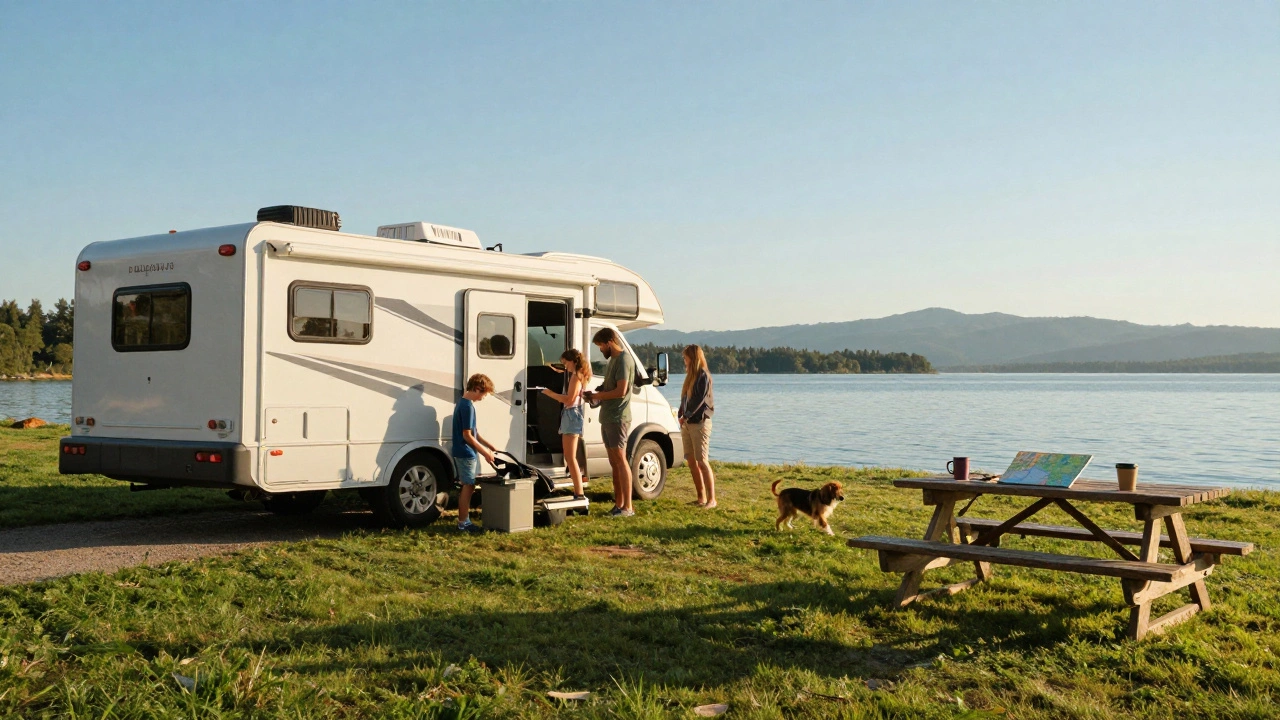
The best RV trips aren’t the ones with the most miles. They’re the ones where you remember the smell of pine trees at dawn. The sound of your coffee mug clinking on the counter. The way your dog stretched out on the grass while you watched the clouds.Stick to the 2-2-2 rule, and you’ll find yourself traveling farther-not in distance, but in experience.
Is the 2-2-2 rule only for large motorhomes?
No. The 2-2-2 rule works for any type of RV-whether you’re in a Class A motorhome, a travel trailer, or a small campervan. It’s about pacing your trip, not the size of your rig. Even if you’re towing a tiny trailer, driving 200 miles in a day and arriving by 2 p.m. gives you time to set up and relax.
Can I use the 2-2-2 rule for international RV trips?
Absolutely. The rule is based on human limits, not geography. Whether you’re in Canada, Australia, or Europe, driving too far too fast leads to fatigue. Arriving early gives you time to navigate unfamiliar campgrounds. Staying two nights helps you adjust to local rules and find hidden gems. Many European RVers follow similar patterns, sometimes called the "3-3-3" rule (3 hours driving, 3 p.m. arrival, 3 nights stay) for longer distances.
What if I can’t find a campground for two nights?
That’s common in popular parks during peak season. If you can’t book two nights, stay one night and move-but don’t break the other two parts of the rule. Keep your drive under 200 miles and aim to arrive by 2 p.m. You can always return to that spot later. Many RVers plan repeat visits to favorite parks. It’s better than rushing through five places in one week.
Does the 2-2-2 rule apply to solo travelers?
Yes-and solo travelers benefit even more. Without a partner to share setup duties, every minute counts. Arriving by 2 p.m. gives you time to set up without rushing. Staying two nights means you don’t have to pack and unpack daily. It turns a solo trip from a chore into a peaceful retreat.
Is 200 miles too short if I have a diesel pusher?
It’s not about your engine. It’s about you. Even the most powerful RV can’t eliminate driver fatigue. Two hundred miles gives you time to enjoy the scenery, take breaks, and avoid stress. Pushing 300+ miles in one day-even in a luxury rig-often leads to poor decisions, missed turns, or worse, accidents. Stick to the rule. Your body will thank you.