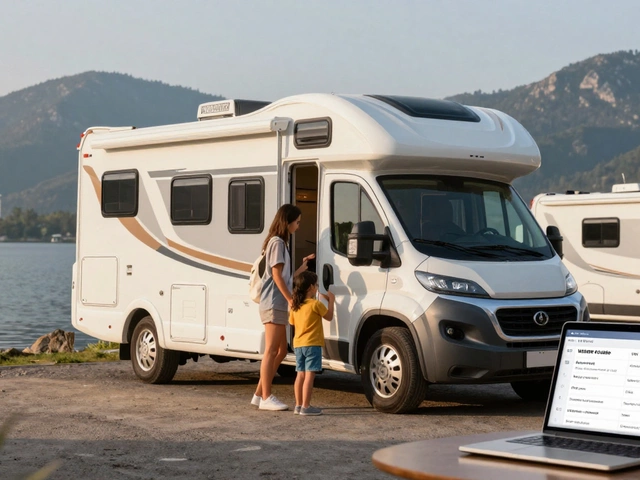
RV Lifespan Estimator
Your RV Details
Maintenance History
Estimated Lifespan
Your RV could last 0 years
Key Factors
Based on your inputs, maintenance is the biggest factor influencing your RV's lifespan.
How long does an RV actually last? If you’re thinking about buying one-whether new or used-you’re not just spending money on a vehicle. You’re investing in a lifestyle. And like any big purchase, you need to know what you’re getting into. The truth? Most people assume an RV lasts 10 to 15 years. But that’s not the whole story. Some last 30 years. Others break down after 8. It all comes down to how it was built, how it was used, and most importantly, how it was taken care of.
What Actually Determines an RV’s Lifespan?
An RV isn’t just a car with a kitchen. It’s a mobile home with plumbing, electrical systems, a roof that leaks if you blink wrong, and a chassis that gets hammered on gravel roads and mountain passes. The lifespan isn’t just about miles. It’s about hours-hours on the road, hours plugged into campsite power, hours sitting in the sun, and hours in freezing winters without proper winterization.
Most manufacturers rate their RVs for 150,000 to 200,000 miles. But that’s just the chassis. The real clock ticks on the appliances, the seals, the roof membranes, and the slide-out mechanisms. A 2018 motorhome with 80,000 miles might look pristine. But if it spent five winters in Canada without being winterized, the water lines could be cracked inside the walls. No one sees that until spring, and by then, the damage is already $5,000 deep.
Typical Lifespan by RV Type
Not all RVs are built the same. Class A motorhomes are heavy, expensive, and built on truck chassis. Class C are smaller, lighter, and often use van platforms. Class B campervans are the most compact. Each has different wear patterns.
- Class A Motorhomes: Built for long hauls. With proper care, they can hit 250,000 miles and last 20+ years. Brands like Newmar and Winnebago have owners reporting 30-year lifespans with major overhauls.
- Class C Motorhomes: Usually on Ford or Ram chassis. These are the most common on the used market. Expect 15-20 years or 150,000-180,000 miles. The biggest killers? Roof leaks and slide-out motor failures.
- Class B Campervans: Built on van platforms like Mercedes Sprinter or Ford Transit. These are the most durable if maintained. Many hit 300,000 miles. But the interior finishes-cabinets, countertops, insulation-wear out faster. A 10-year-old B-class might still drive great, but the fridge might be on its last legs.
- Travel Trailers: Not motorized, so no engine. But they’re still exposed to the elements. A well-maintained trailer can outlive its tow vehicle. The weak spots? Axles, tires, and awnings. A trailer sitting in a driveway for 5 years without being moved can have dry-rotted tires and rusted hinges.
What Kills an RV Faster Than Anything Else?
It’s not the miles. It’s not the age. It’s neglect.
Here are the top three killers:
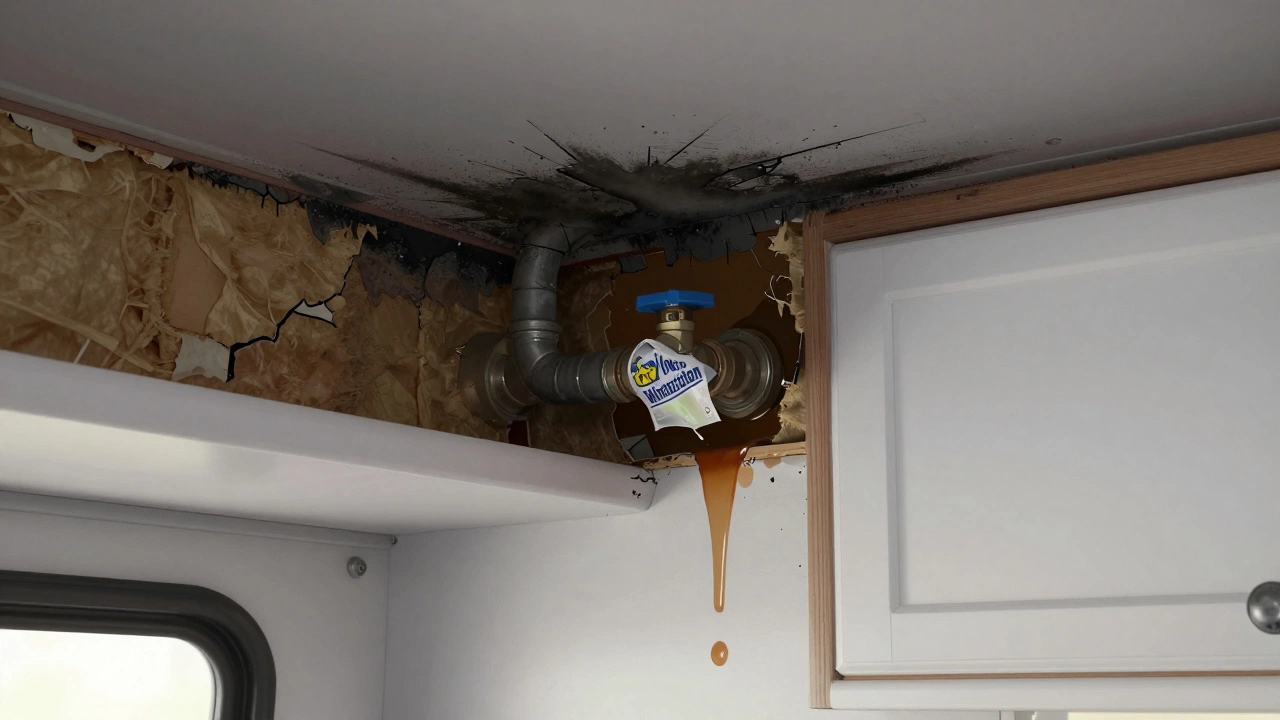
- Water damage - Roof leaks, window seals, plumbing joints. Water gets in, hides in walls, and rots wood from the inside. Mold follows. By the time you smell it, the drywall is gone. A $200 roof sealant job every 3 years saves you $10,000 in repairs.
- Not winterizing - If you live where it freezes, and you didn’t drain the water lines, you’re playing Russian roulette with your pipes. A single frozen line can crack and flood the whole interior. One owner in Alberta had to replace every pipe in his 2014 Class C after skipping winterization for two years. Cost: $7,200.
- Ignoring tires - RV tires age out. Even if they look fine, rubber degrades after 5-7 years. The weight of an RV puts extreme pressure on tires. A 2019 RV with 20,000 miles might still have 80% tread. But if those tires are 8 years old? They’re a ticking bomb. Replace them at 7 years, no exceptions.
How to Extend Your RV’s Life
There’s no magic trick. But there are simple habits that make a huge difference.
- Wash and wax every 3 months - UV rays eat paint and fiberglass. A coat of wax isn’t just for looks. It protects the surface from cracking.
- Check the roof sealant every spring - Run your finger along every seam. If it’s cracked or brittle, reseal it. Use Dicor or Eternabond. Not silicone. Silicone doesn’t stick to RV materials long-term.
- Run the generator monthly - Even if you’re not using it. Let it warm up for 20 minutes. Stale fuel and seized components are the #1 reason generators die early.
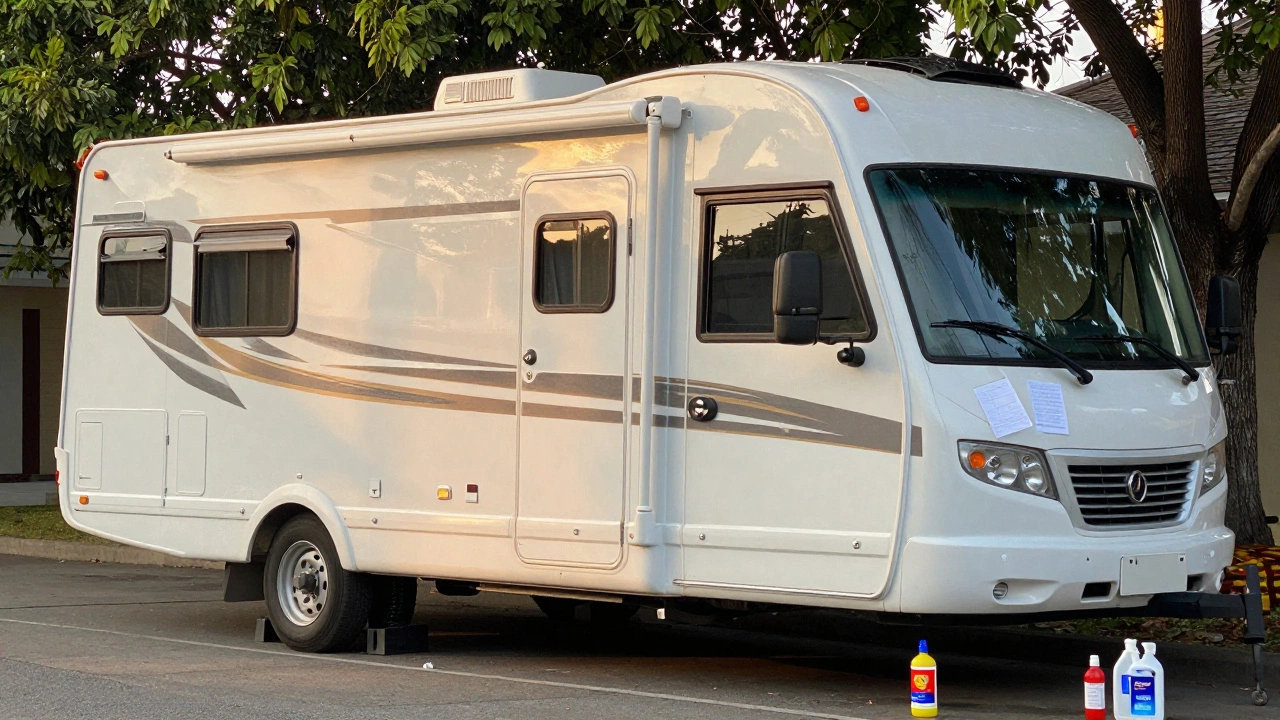
- Store it covered and elevated - Concrete drains moisture. Use blocks under tires. A breathable cover beats a plastic tarp. Plastic traps moisture and breeds mold.
- Inspect the chassis and brakes yearly - Rust on the frame? Brake pads worn? Get it checked. A $300 brake job now beats a $4,000 axle replacement later.
Buying a Used RV? What to Look For
If you’re shopping used, don’t just look at the mileage. Look at the history.
Ask for:
- Service records - Did they change the oil every 5,000 miles? Replace the water pump? Fix the fridge?
- Proof of winterization - If the seller says, “I just left it outside,” walk away.
- Water test - Turn on every faucet. Check for weak flow or discolored water. Smell the shower drain. Mold smells like wet socks and mildew.
- Roof inspection - Climb up. Look for soft spots. Press on the roof near vents and skylights. If it sags, water’s already in.
- Tire age - Check the DOT code on the sidewall. The last four digits are the week and year. 1220 = 12th week of 2020. Anything older than 7 years? Replace them before you drive it.
One buyer in Perth bought a 2016 Class C for $45,000. It had 78,000 miles. He thought he got a deal. Two months later, the slide-out motor died. The roof was leaking. The fridge wouldn’t cool. He spent $18,000 fixing it. He now says: “I didn’t buy a motorhome. I bought a repair project.”
When Should You Walk Away?
There are red flags you can’t ignore.
- Signs of major water damage - Warped cabinets, bubbling wallpaper, black mold around vents. This isn’t cosmetic. It’s structural.
- Frame rust - Especially near the axles or under the floor. If it’s eating through metal, the RV’s foundation is compromised.
- Multiple electrical issues - Flickering lights, tripped breakers, burning smells. Cheap wiring fixes don’t last. This often means the whole system needs rewiring.
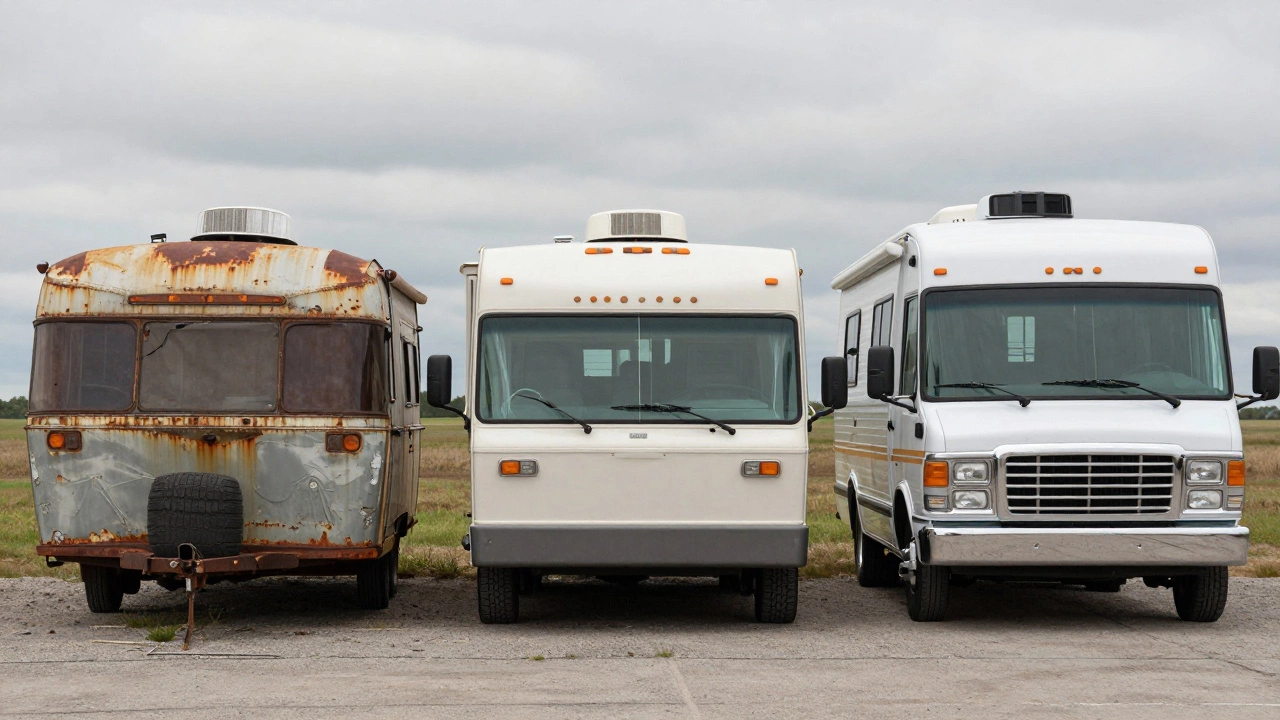
- Over 20 years old with no maintenance records - Unless it’s a classic restored by a pro, avoid it. Parts are hard to find. Labor is expensive. You’re buying a museum piece, not a vehicle.
There’s a reason some RVs last 30 years. It’s not luck. It’s discipline. The ones that fail? They were treated like a vacation rental, not a home.
Is It Worth Keeping an Old RV?
Some people hold onto their RVs for decades. Others trade every 5 years. Neither is wrong. But here’s the math:
Let’s say you buy a $60,000 RV. You use it 6 weeks a year. Over 15 years, that’s $900 per year. Add $1,500 in maintenance? Still under $2,500 a year. Compare that to renting a similar model for $200 a day. Do that 6 weeks a year? That’s $8,400. So even if you spend $5,000 fixing your own RV every few years, you’re still saving thousands.
But if your RV is costing you $8,000 a year in repairs? Then it’s time. The goal isn’t to keep it forever. It’s to keep it cost-effective.
Final Thought: It’s Not About Age. It’s About Care.
An RV’s lifespan isn’t written in stone. It’s written in the habits of its owner. A 2007 RV with a full service history, fresh tires, sealed roof, and dry interior can outperform a brand-new one that’s been abused. And a shiny 2025 model with no maintenance records? It might be a money pit waiting to happen.
If you want your RV to last, treat it like a second home. Not a toy. Not a status symbol. A home you take on the road. Clean it. Inspect it. Fix it. And it’ll carry you for decades.
What is the average lifespan of a motorhome?
The average motorhome lasts 15 to 20 years or 150,000 to 200,000 miles, but that’s just a baseline. With proper care-regular roof sealing, winterization, tire replacement, and chassis inspections-many last 25 to 30 years. Class B campervans often exceed 300,000 miles because they’re built on durable van chassis.
Do RVs lose value quickly?
Yes, but not as fast as you think. A new RV loses about 20% of its value in the first year, then 10% per year after that. But well-maintained models hold value much better. A 2018 motorhome with 80,000 miles and full service records can still sell for 50-60% of its original price. Poorly maintained ones drop to 20-30%.
Is it better to buy a new or used RV?
It depends on your budget and willingness to maintain. New RVs come with warranties and modern features but cost 2-3 times more. Used RVs offer more space and features for less money, but require careful inspection. For most people, a 3-7 year old RV with good records is the sweet spot: low depreciation, proven reliability, and room for upgrades.
How often should I service my RV?
At least once a year, even if you didn’t use it. Change the oil and filter on the engine and generator. Inspect the brakes, tires, and suspension. Check all seals, especially around windows and roof vents. Test the water system and propane lines. If you use it heavily (over 10 weeks a year), do a full check every 6 months.
Can I live full-time in an RV long-term?
Yes, but it requires more maintenance than a house. Plumbing and electrical systems get used daily, so leaks and failures happen faster. You’ll need to replace water pumps, fridge compressors, and tires more often. Full-timers who last 10+ years in one RV do so by doing their own maintenance, using quality parts, and never skipping seasonal prep like winterization or tire protection.