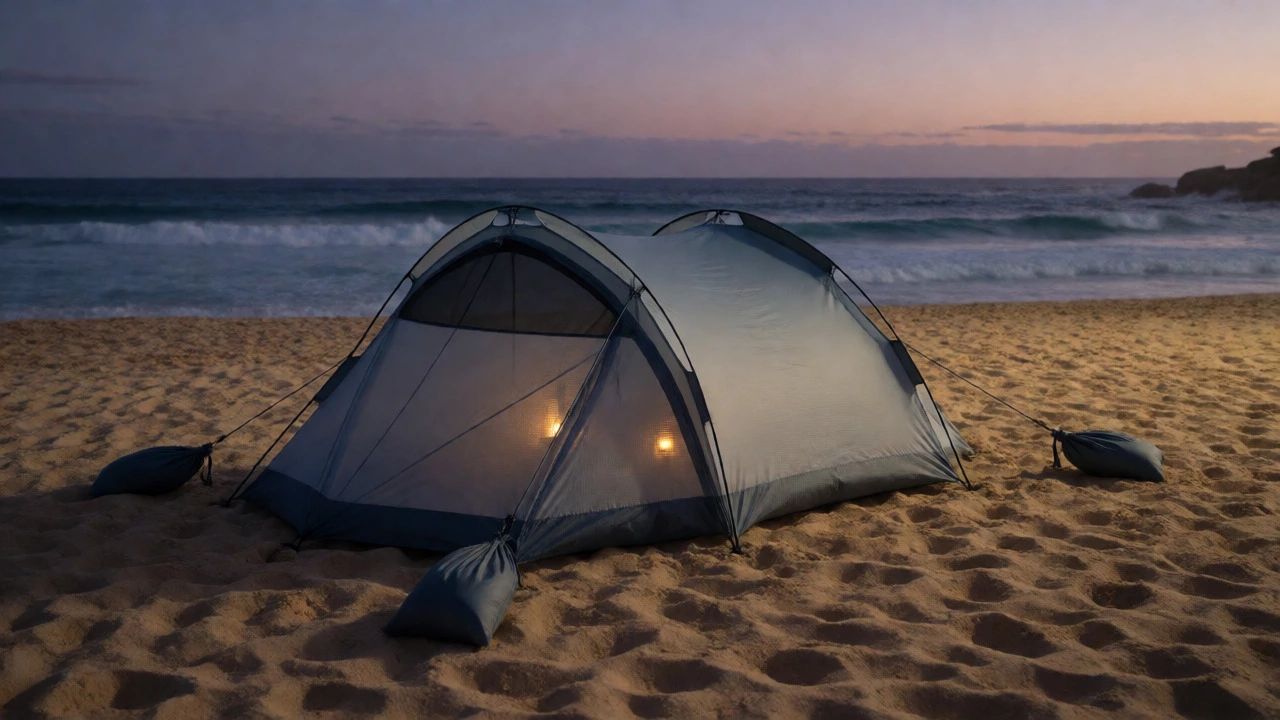
Beach Tent Sleep Comfort Calculator
Sleeping in a beach tent is different from backyard camping. Sand shifts, wind picks up at night, and humidity causes condensation. Use this tool to estimate if you'll get restful sleep or wake up miserable.
1. Environmental Conditions
2. Gear & Setup Choices
Predicted Outcome
- Adjust inputs and click Calculate to see specific advice.
You’ve seen those sleek, low-profile shelters dotting the shoreline at Bondi or Manly. They look cozy, private, and surprisingly easy to set up. But here is the burning question every first-timer asks: can you sleep in a beach tent? The short answer is yes, but with a massive asterisk. It’s not like sleeping in your backyard. The physics of sand, the unpredictability of coastal winds, and the sheer noise of the ocean change everything about your night's rest.
If you’re planning a weekend escape to a Beach Campsite a designated area for pitching tents directly on or near the sandy shore, you need to know what you’re getting into before you buy that $50 pop-up shelter from the big-box store. This isn’t just about having a roof over your head; it’s about managing moisture, securing your gear against gusts, and actually getting some shut-eye while waves crash ten meters away.
The Reality Check: Why Beach Tents Are Different
Most people assume a beach tent is just a regular camping tent with a different color scheme. Wrong. A standard three-season backpacking tent is designed for stability and weight savings. A Beach Tent a lightweight, often dome-shaped shelter designed specifically for sandy environments and sun protection is designed for speed and shade. That distinction matters when you try to sleep in one.
The biggest hurdle isn’t the tent itself-it’s the ground. Sand shifts. If you pitch a standard tent on loose sand, the stakes won’t hold. The wind will pick up at 3 AM, and your home becomes a kite. Beach tents usually come with specific anchoring systems, like long spiral anchors or sand bags, because driving a metal stake into wet sand is impossible without specialized tools. If you ignore this, you’ll wake up face-down in the dunes.
Then there’s the condensation issue. Ocean air is heavy with salt and humidity. When you zip yourself into a small, poorly ventilated pod, your body heat meets the cold night air outside. Boom-water droplets form on the inner fabric. By morning, your sleeping bag might feel damp. This isn’t a defect; it’s basic thermodynamics. Unless you have a high-quality breathable fabric, you’re fighting the elements all night.
Anatomy of a Good Night’s Sleep on the Sand
To make sleeping in a beach tent viable, you need to treat it as a system, not just a product. Let’s break down the critical components that determine whether you get restful sleep or a miserable experience.
- Fabric Quality: Look for ripstop nylon or polyester with a high denier count. Thin fabrics tear easily in abrasive sand and offer zero insulation against the chill that rolls in off the water after sunset.
- Ventilation Strategy: Mesh panels are non-negotiable. You need cross-ventilation to prevent condensation buildup. However, fine mesh keeps sand fleas out. Coarse mesh lets them in. Choose wisely.
- Anchor System: Standard pegs are useless. You need sand-specific anchors (often plastic spirals) or large stuff sacks filled with sand. Gravity is your friend here; weight holds better than friction in loose substrate.
- Floor Design: Many beach tents lack a full floor. Some have a thin "groundsheet" only. Without a proper bathtub floor, moisture wicks up from the damp sand below, soaking your sleeping pad.
Here is a quick comparison of common shelter types for beach use. This helps you decide if a dedicated beach tent is right for you, or if you should bring your trusty hiking rig.
| Feature | Dedicated Beach Tent | Standard Backpacking Tent | Cabin Style Tent |
|---|---|---|---|
| Setup Speed | Very Fast (1-5 mins) | Moderate (10-15 mins) | Slow (20+ mins) |
| Wind Resistance | Low to Moderate | High (if staked well) | Low (catches wind) |
| Sand Protection | Poor (often no floor) | Good (bathtub floor) | Excellent (full wall/floor) |
| Condensation Risk | High (small volume) | Moderate (better vents) | Low (large volume) |
| Best For | Day trips & calm nights | Overnight stays & wind | Family basecamps |
Mastering the Setup: Anchors, Orientation, and Moisture
So, you’ve bought the tent. Now how do you keep it standing? The secret lies in understanding the local microclimate. In Sydney, for example, sea breezes can shift rapidly. Always orient the entrance of your tent away from the prevailing wind. If the breeze comes from the east, put the door on the west side. This prevents sand from blasting inside every time you unzip.
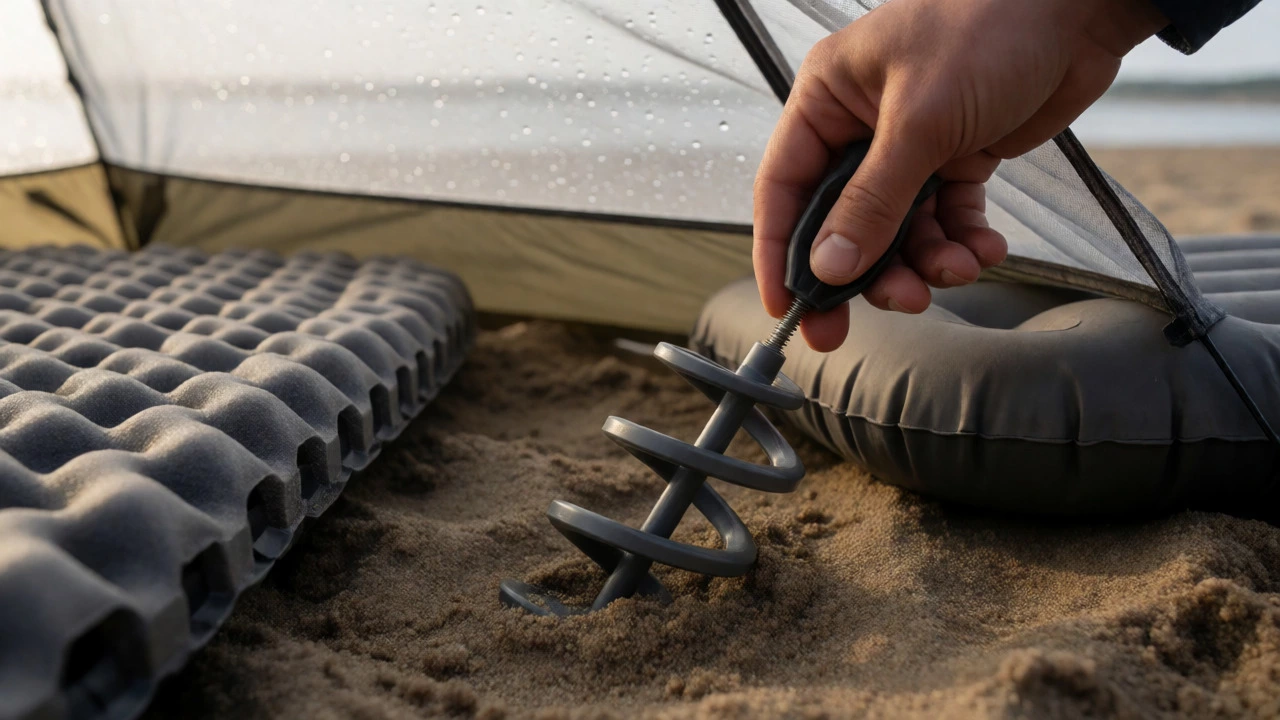
When it comes to anchoring, forget the metal pegs that came in the box. Buy Sand Anchors long, spiral-shaped plastic stakes designed to grip loose soil and sand. Screw them deep into the sand at a 45-degree angle pointing away from the tent. If you don’t have these, fill empty water bottles or stuff sacks with sand and tie them to the guy lines. This adds deadweight, which is far more effective than trying to fight the pull-out force of a shallow stake.
Another pro tip: dig a trench. Yes, really. Dig a shallow moat around the perimeter of your tent footprint. This diverts any sudden rain or rising tide away from your sleeping area. It also helps define your space so other beachgoers don’t accidentally step on your guy lines. Just remember to fill it back in when you leave-respect the environment.
Moisture management starts before you sleep. Do not pitch your tent on fresh morning dew if you plan to stay overnight. Wait until the sun has dried the sand. Wet sand radiates cold all night. If you must camp on damp sand, place a tarp underneath your tent. This creates a barrier between the wet ground and your tent floor, keeping your gear dry and your body warmer.
Comfort Hacks: Sleeping Bags, Pads, and Noise
Let’s talk about the actual sleep experience. The ocean is loud. For some, white noise is soothing. For others, the constant crashing is maddening. If you’re a light sleeper, earplugs aren’t optional-they’re essential. I recommend foam plugs rather than silicone ones, as they block low-frequency rumble better.
Your sleeping pad choice matters more than you think. Inflatable pads are great for comfort but risky on the beach. One sharp shell fragment or a stray piece of driftwood can puncture them instantly. Closed-cell foam pads are indestructible and provide excellent insulation from the cold sand. If you want the best of both worlds, use a foam pad under an inflatable one. The foam protects the bottom, and the air provides cushioning.
Temperature drops significantly after sunset near the coast. Even in summer, a warm breeze can turn chilly by 2 AM. Use a synthetic sleeping bag rather than down. Down loses its loft when exposed to the high humidity of coastal air. Synthetic insulation stays warm even if it gets slightly damp from condensation. Pair it with a thermal liner if you run cold.
What about privacy? Beach tents are often semi-transparent or have large mesh windows. If you’re camping in a busy spot, consider bringing a dark-colored bedsheet or a reflective emergency blanket to drape over the outside during the day. This blocks prying eyes and reflects sunlight, keeping the interior cooler. At night, remove it to allow starlight and ventilation.
When Not to Use a Beach Tent
Despite their appeal, beach tents have limits. Avoid using them in exposed headlands where wind speeds exceed 30 km/h. These structures are aerodynamic liabilities. In strong gales, they flap violently, creating noise that disrupts sleep and stressing the seams until they tear.
Also, check local regulations. Some beaches prohibit camping altogether, while others restrict it to designated zones. In Australia, many popular spots require permits. Ignoring this can lead to fines or being asked to pack up mid-sleep. Always verify the rules for your specific location before heading out.
Finally, consider the wildlife. Seagulls are notorious for investigating unzipped tents. Raccoons (in North America) or possums (in Australia) might raid your food stores. Keep all edibles in sealed containers, preferably inside your car or a locked cooler, not inside the tent. Food smells attract animals, and nothing ruins a night’s rest like a possum trying to chew through your tent pole sleeve.
Final Verdict: Is It Worth It?
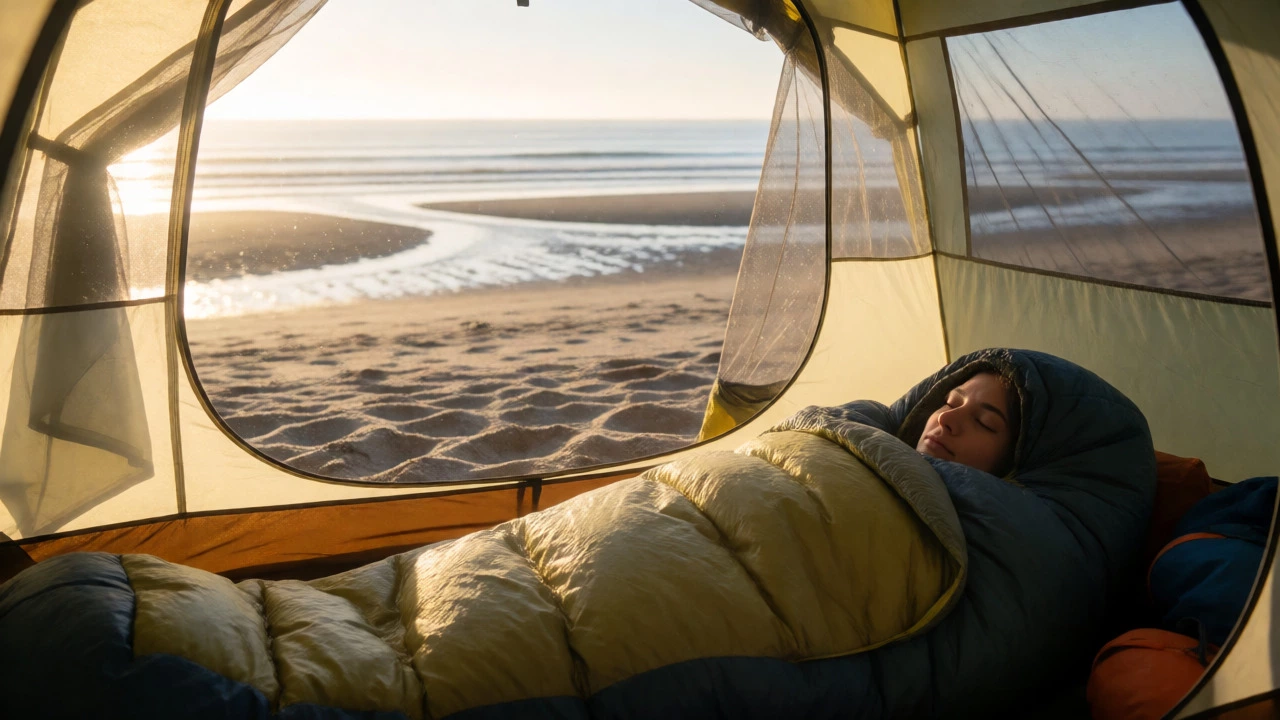
Can you sleep in a beach tent? Absolutely. But treat it as a temporary shelter for mild conditions, not a fortress for stormy seas. If you’re looking for a quick overnighter on a calm, warm night, a quality beach tent offers unmatched convenience and charm. You’ll fall asleep to the sound of waves and wake up with sand in your hair-a classic coastal ritual.
However, if you crave deep, uninterrupted sleep or expect variable weather, upgrade to a robust four-season tent with a solid floor and superior ventilation. Bring the right anchors, manage your moisture, and respect the power of the ocean. Do that, and you’ll find that sleeping on the sand isn’t just possible-it’s unforgettable.
Is it safe to sleep in a beach tent during high tide?
It depends on the location. Always check tide tables before setting up. Pitch your tent above the high-tide line, ideally marked by vegetation or debris. If you're unsure, err on the side of caution and move further inland. Rising tides can surprise you, especially during spring tides or storms.
How do I stop sand from getting inside my beach tent?
Use a vestibule or create a transition zone. Remove shoes immediately upon entry. Consider using a boot tray or a large towel at the entrance. Some beach tents have a double-door design; always close the outer door when entering or exiting to trap sand outside.
Do beach tents keep you warm enough?
Not really. Most beach tents are single-wall and designed for sun protection, not insulation. Coastal nights can be cold due to evaporative cooling. You need a good sleeping bag rated for lower temperatures than the forecast suggests. Layering clothes inside the tent also helps retain body heat.
Can I cook inside a beach tent?
Never cook inside a standard beach tent. The risk of carbon monoxide poisoning and fire is too high. Cook outside, at least a few meters away from the tent, and ensure the flame is stable. Ventilate the tent thoroughly after cooking nearby to avoid lingering smoke odors.
What is the best way to anchor a tent in soft sand?
Use deadman anchors. Bury a sturdy object like a branch, rock, or a dedicated sand anchor horizontally in the sand, then tie your guy line to it. Alternatively, fill bags with sand and attach them to the corners. Spiral stakes work in firmer, packed sand but fail in loose powder.