Motorhome Overnight Stay Checker
Select your scenario below to see if your planned stop is likely legal and what risks are involved.
Results will appear here after you click the button.
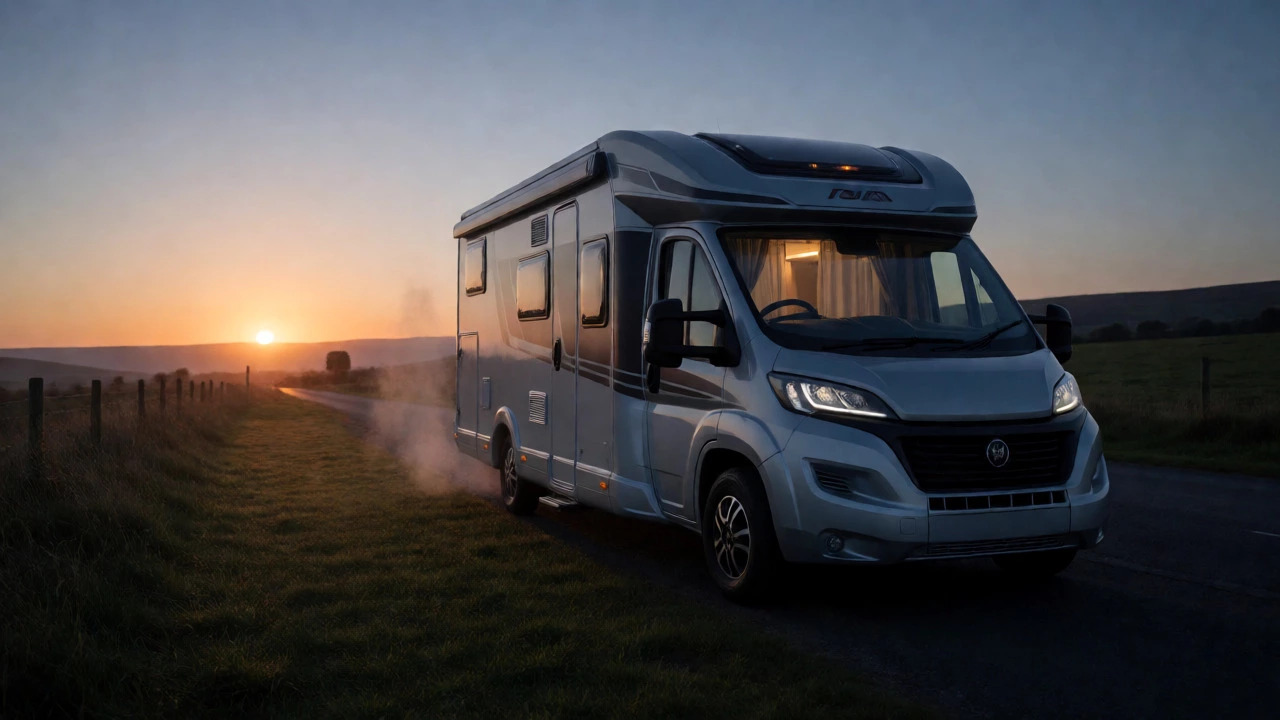
You pull into a quiet layby as the sun dips below the horizon. The engine ticks as it cools. You’re tired, the next town is twenty miles away, and your bed is right there behind the driver’s seat. It feels perfect. But then that nagging question hits you: can you stay overnight in a motorhome without getting a ticket or being chased off by a grumpy local?
The short answer is yes-but with a massive "it depends." Depending on where you are, staying overnight in a vehicle can range from totally legal to strictly prohibited. This isn’t just about avoiding fines; it’s about respecting communities and understanding the difference between "parking" and "camping." If you’re planning a trip, knowing these rules saves you stress, money, and awkward conversations.
Parking vs. Camping: The Critical Distinction
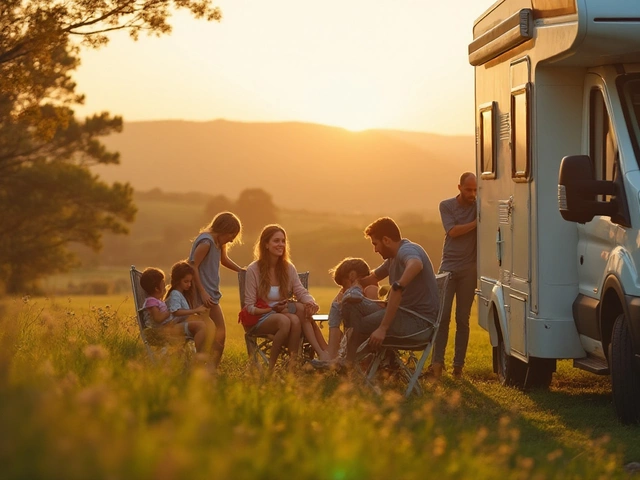
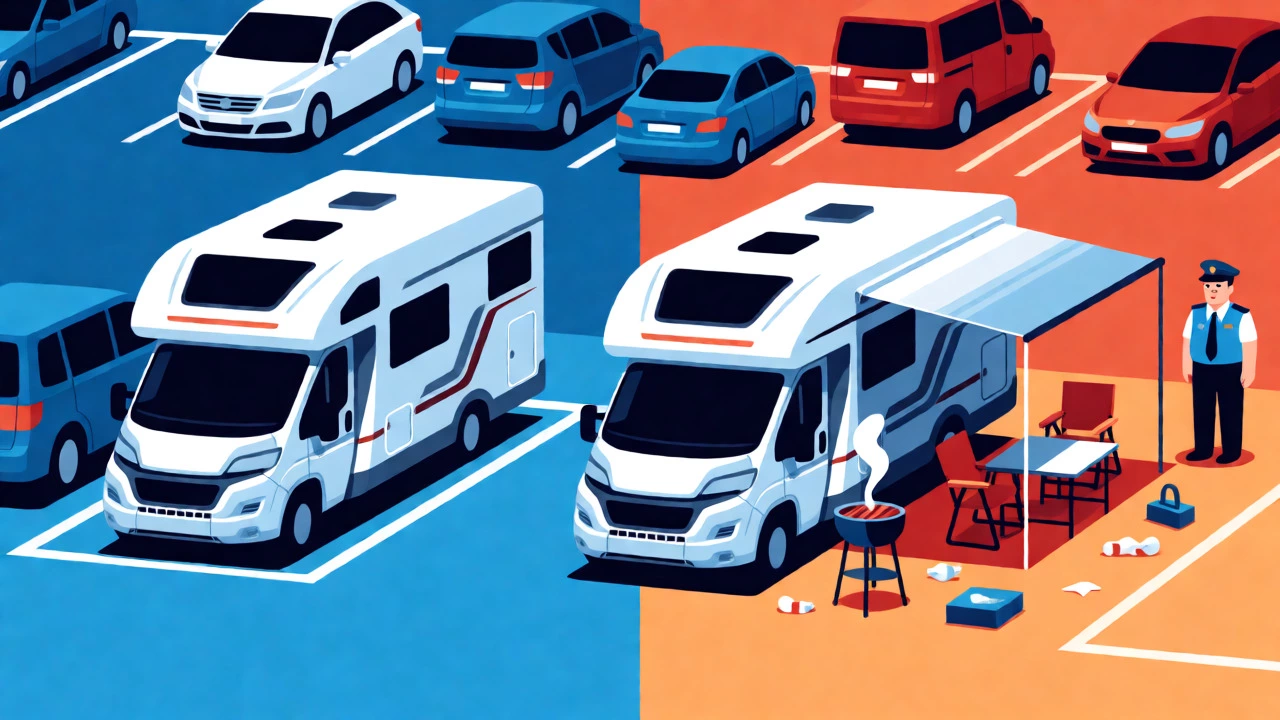
Most confusion stems from how authorities define what you’re doing. In many jurisdictions, including large parts of the UK and Europe, there is a legal distinction between simply parking your vehicle and setting up camp. If you park in a designated area, turn off your engine, draw your curtains, and sleep inside without deploying any external equipment, you are often considered to be "parking." However, if you put out an awning, set up chairs, open windows for ventilation, or use a generator, you have likely crossed the line into "camping."
This distinction matters because many places allow parking but ban camping. For example, a supermarket car park might let you sleep in your van for one night while traveling, but they will kick you out if you try to stay three nights and grill burgers outside. Always check local signage. If signs say "No Camping," sleeping inside might still be okay, but setting up an awning is not. If signs say "No Parking at Night," you cannot stay at all.
| Location Type | Typical Rule | Risk Level | Key Condition |
|---|---|---|---|
| Public Laybys/Roadside | Often Legal (Discretionary) | Medium | No external gear deployed |
| Supermarket Car Parks | Manager Discretion | Low-Medium | Ask staff first; limit to 1 night |
| Private Land | Permission Required | High | Must have owner consent |
| Designated Motorhome Sites | Always Legal | None | Fees apply; book ahead |
| National Parks | Varies Strictly | High | Check specific park bylaws |
Understanding Local Laws and Restrictions
Laws vary wildly by country and even by county or municipality. In the United States, Bureau of Land Management (BLM) land allows free dispersed camping for up to 14 days within a 28-day period. This is a paradise for motorhomers who want solitude. Conversely, cities like San Francisco or New York City have strict ordinances banning street parking for recreational vehicles over certain lengths, regardless of whether you’re camping or just parked.
In the UK, the situation is nuanced. While there is no explicit law against sleeping in a vehicle on public roads, many councils have introduced Public Spaces Protection Orders (PSPOs). These orders specifically target "camping" in areas prone to abuse. A PSPO might ban leaving your awning out or dumping waste water in residential streets. Ignoring these can lead to fixed penalty notices ranging from £50 to £100. Always look for local council websites before heading to a new region.
Europe presents a patchwork of regulations. In France, sleeping in a vehicle is generally tolerated on public roads unless signposted otherwise, but "camping" (using external amenities) is restricted to designated areas. In Spain, laws changed recently to restrict wild camping more tightly, especially in coastal regions and national parks, pushing travelers toward official campsites. Knowing the specific rules of the country you are driving through prevents nasty surprises at dawn.
Finding Safe and Legal Spots
How do you find a place to stop without breaking the law? Technology has made this easier. Apps like Park4Night or iOverlander rely on user reviews to pinpoint spots where others have successfully stayed. Look for recent comments-rules change fast. A spot that was fine last month might now have a "No Overnight Parking" sign installed after complaints.
Consider using certified networks like Aire services in Europe or private farm stops in the UK. These locations charge a small fee, but you get peace of mind, fresh water, and waste disposal facilities. They are also less likely to result in conflict with locals. If you prefer free spots, aim for industrial estates, retail parks, or quiet rural lanes rather than residential neighborhoods. Industrial areas are usually empty at night and less sensitive to noise or lights.
- Look for signage: Always read every sign upon arrival. "No Waiting" often implies no overnight stays.
- Talk to locals: If you see someone walking their dog or working nearby, ask them if it’s common to sleep here. Their advice is often more accurate than online forums.
- Arrive late, leave early: Minimizing your presence reduces the chance of being noticed or causing disruption.
- Avoid sensitive zones: Stay away from schools, hospitals, and narrow residential streets where emergency access is critical.
Ethical Considerations and Etiquette
Legality is only half the battle. Even if you are legally allowed to stay, behaving badly can ruin the reputation of motorhomers everywhere. This leads to stricter bans for everyone. The golden rule is to leave no trace. Do not dump grey water (sink water) or black water (toilet waste) on the ground unless explicitly permitted. Use proper disposal points.
Noise discipline is crucial. Running a generator at 2 AM in a quiet village is a quick way to get knocked on. Use battery power for lights and fans instead. Keep doors closed to minimize sound leakage. If you have pets, ensure they don’t bark excessively or run loose. Pick up any litter around your spot, even if it wasn’t yours. Being a polite guest encourages locals to tolerate the growing number of motorhomes on the road.
Another key aspect is privacy. Don’t block driveways or sightlines. Ensure you aren’t blocking fire hydrants or emergency exits. If you’re in a shared space, keep your setup compact. Avoid spreading picnic tables across multiple parking bays. Respect the space you occupy as if you were in someone’s backyard, because in many ways, you are.
Practical Tips for Comfortable Sleepovers
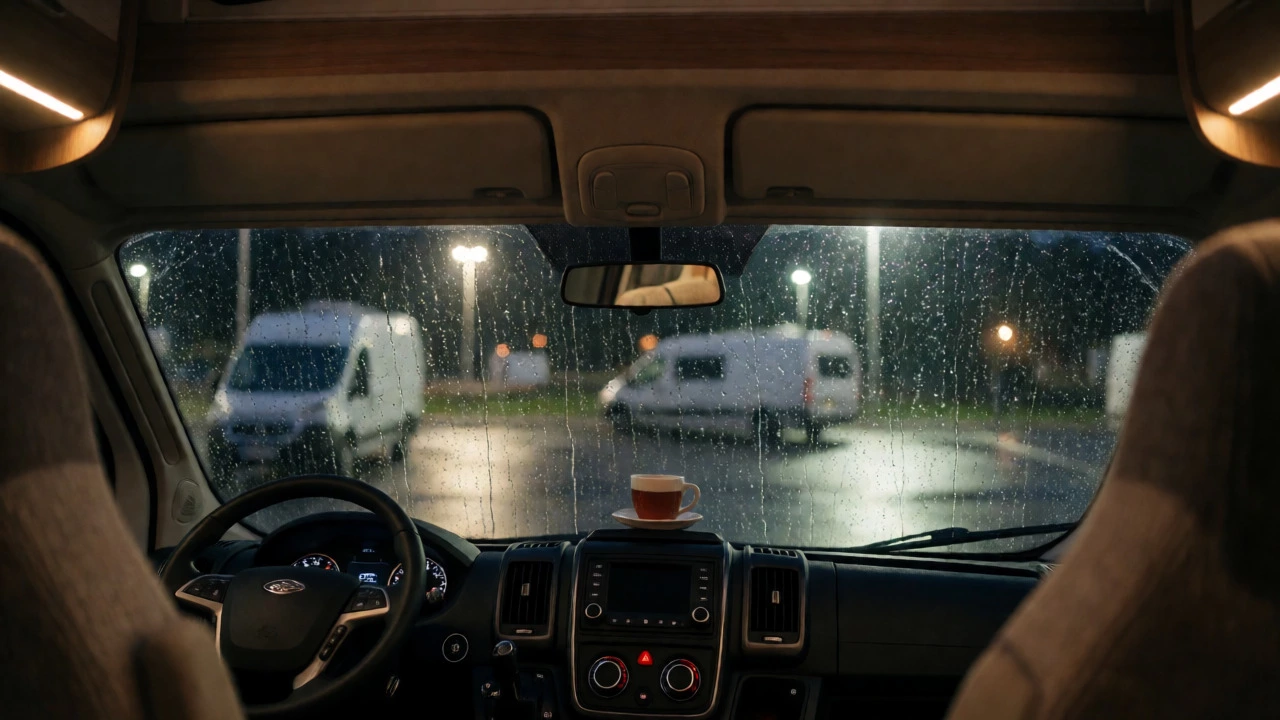
Staying in a motorhome requires some preparation to ensure safety and comfort. Security is a top concern for solo travelers or families. Choose well-lit areas or places with other vehicles nearby. Using blackout blinds helps maintain privacy and keeps the interior dark for better sleep. Ventilation is equally important to prevent condensation buildup, which can damage interiors and cause health issues. Crack a window slightly or use a vent fan if weather permits.
Temperature control varies by season. In summer, heat builds up quickly inside metal shells. Use reflective windshields and roof vents to keep things cool. In winter, heating systems need careful monitoring to avoid carbon monoxide risks. Always use a CO detector when running gas heaters. Power management is another factor. If you’re relying on batteries, plan your energy usage. Turn off unnecessary appliances and consider solar panels for longer trips without hookups.
Finally, have a backup plan. What if you wake up to a note asking you to move? Have a map ready with alternative spots within a few miles. Flexibility is key in motorhome travel. Sometimes the best spot isn’t available, and you need to adapt quickly. Keeping a list of nearby campsites or service stations ensures you always have somewhere to go.
FAQs About Overnight Motorhome Stays
Is it illegal to sleep in a parked motorhome?
Generally, no. Sleeping in a parked vehicle is not illegal in most countries. However, "camping" (setting up awnings, chairs, etc.) may be prohibited in certain areas. Always check local signage and municipal bylaws.
Can I stay overnight in a supermarket car park?
It depends on the store's policy. Many stores allow it, especially for one night, but some explicitly forbid it. Always ask a manager or security guard before settling in. Leave early in the morning to avoid interfering with deliveries.
What is the difference between parking and camping?
Parking means your vehicle remains stationary and self-contained. Camping involves using the vehicle as a base for outdoor activities, such as deploying an awning, setting up furniture, or cooking outside. Regulations often treat these differently.
Are there time limits for free overnight stays?
Yes, many public lands and municipal areas impose time limits. For example, BLM land in the US allows 14 days, while some city streets limit stays to 12 or 24 hours. Check local regulations to avoid fines.
Do I need permission to stay on private land?
Absolutely. Trespassing laws apply to motorhomes just like any other vehicle. Unless there is a clear sign indicating public access or a dedicated stopping area, you must obtain permission from the landowner before staying overnight.