UK Campsite Stay Calculator
Calculate Your Maximum Stay
Select your campsite type and season to see maximum allowed stay duration
Results
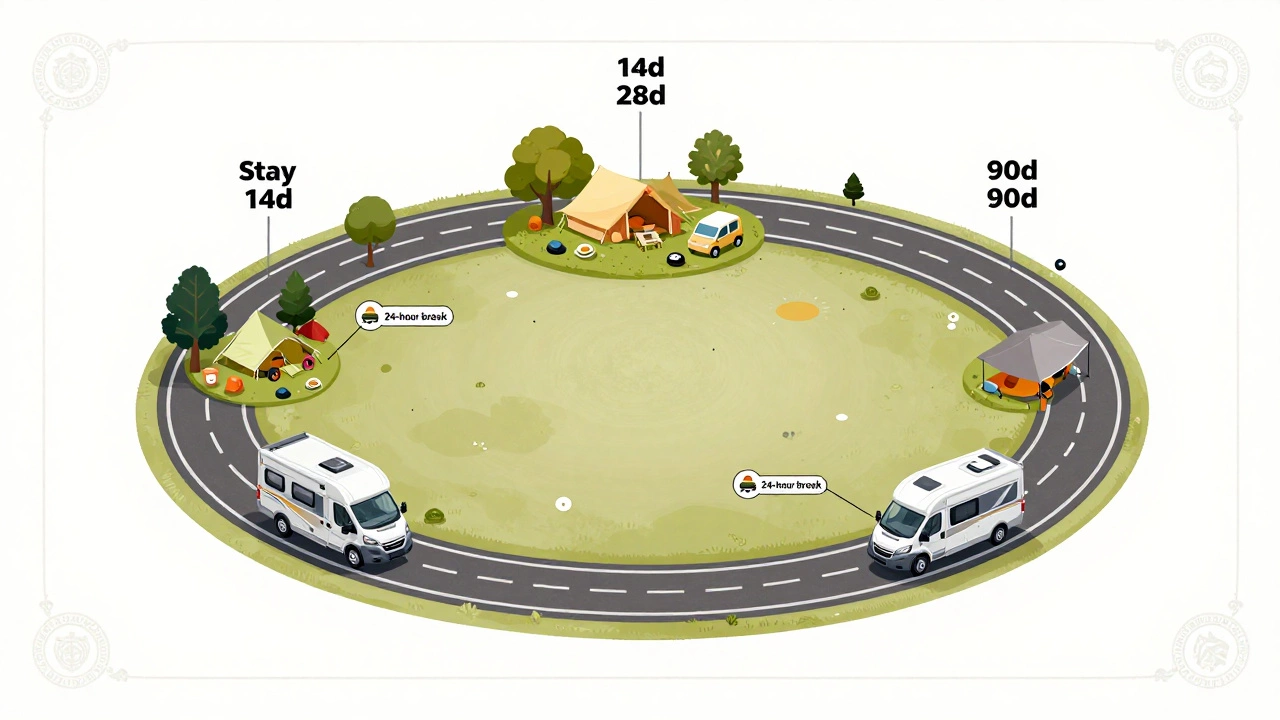
You can’t just show up at a campsite in the UK and set up camp for months. The rules vary depending on where you are, what kind of site you’re on, and whether you’re in a tent, motorhome, or caravan. But here’s the straight answer: most paid campsites in the UK allow stays of 14 to 28 days in a single visit. After that, you’ll usually need to leave and come back later - often after a gap of at least 24 to 48 hours. Some sites, especially those catering to long-term campers or motorhomers, may let you stay up to 3 months, but these are exceptions, not the norm.
Why Are There Stay Limits?
It’s not about being picky. Campsites in the UK are often on private land, and local councils have strict rules about how long people can live on them. The law doesn’t treat campsites like homes. Even if you’ve got a comfy motorhome with a kitchen and shower, the council still sees it as temporary accommodation. If you stayed too long, it could be seen as creating a permanent residence without planning permission - which is illegal.
Also, campsites need space for new visitors. If one person stayed for six weeks, that’s six other families who couldn’t book. Most sites run on a rotation system. They want turnover. That’s why you’ll often see signs saying “Maximum 28 days per visit” right next to the reception.
What’s the Rule for Different Types of Sites?
Not all campsites are the same. Your stay length depends heavily on the type of site you’re using.
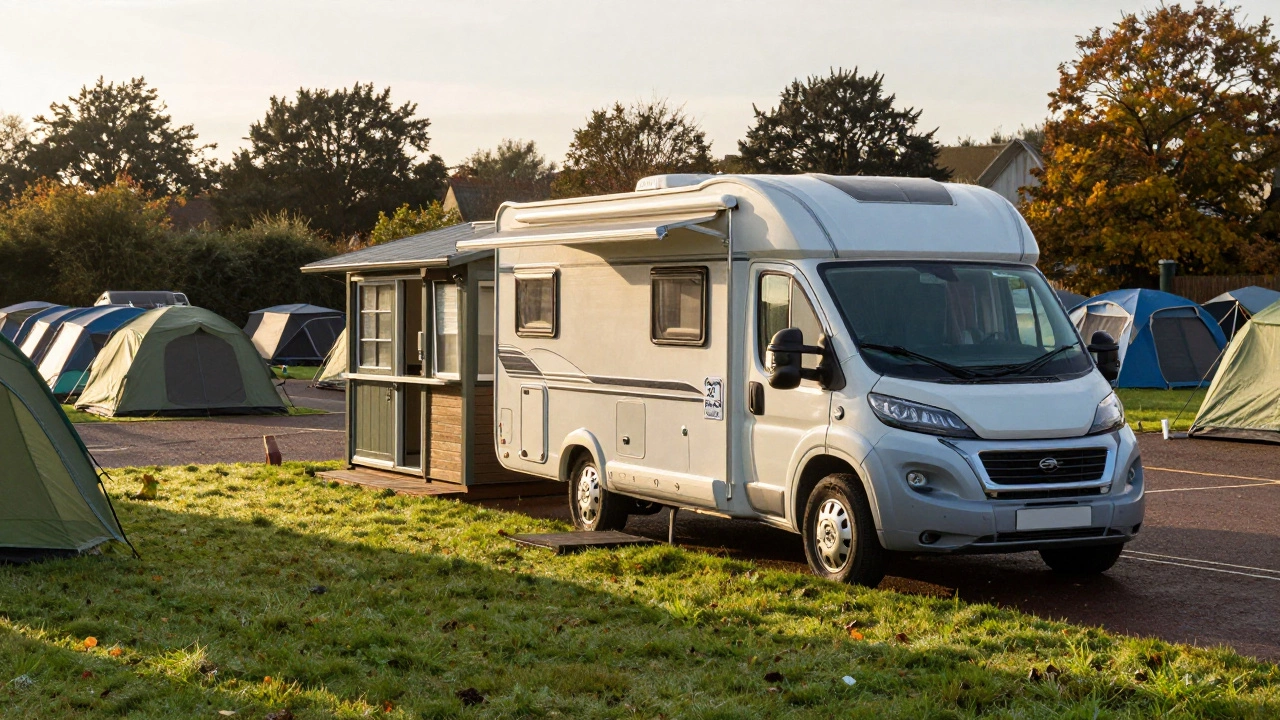
- Standard Touring Campsites (the kind you find on Pitchup or The AA): Usually 14 to 28 days max. Some may allow 30 days if you book early, but don’t count on it.
- Motorhome and Caravan Sites: These are more flexible. Sites like Stowaway or Driftwood often allow 2 to 3 months for long-term stays, especially in quieter seasons. You’ll pay a monthly rate, and some even offer discounts.
- Private Land Sites (like small family-run spots): These can be unpredictable. Some let you stay 6 weeks if you’re quiet and pay upfront. Others kick you out after 10 days. Always ask before you book.
- Club Sites (CAMC, Caravan Club): These are stricter. Most club sites cap stays at 14 days, with a 7-day break before you can return.
There’s also a big difference between touring and long-term camping. Touring means you move around. Long-term means you’re using the site like a home. If you’re planning to stay 45 days straight, you’re not touring - you’re trying to live there. And that’s not what most sites are designed for.
What About Wild Camping?
Wild camping in England and Wales is mostly illegal without landowner permission. Scotland is the exception - you can camp almost anywhere under the Scottish Outdoor Access Code, as long as you’re discreet, leave no trace, and don’t stay more than 2 or 3 nights in one spot. That’s the unofficial rule. Even in Scotland, if you stay longer than a week in the same valley or loch, rangers or landowners might ask you to move on.
Don’t assume wild camping means unlimited stays. It’s about freedom, not permanence. If you’re sleeping in the same field for 10 days straight, you’re no longer wild camping - you’re trespassing.

Can You Extend Your Stay?
It’s possible - but only if you ask nicely and have a good reason. Some sites will let you extend if:
- You’re booking during the off-season (November to February)
- The site is nearly empty
- You’re a repeat customer who’s always tidy
- You’re a digital nomad working remotely (some sites now offer Wi-Fi and workspaces)
Don’t just show up on day 27 and ask to stay another week. Call ahead. Talk to the site manager. Offer to pay extra. Some sites charge a daily rate for extensions - often £5 to £10 extra per night. Others will just say no. It’s not personal. It’s policy.
What Happens If You Overstay?
If you ignore the rules and stay past your limit, you’re risking more than just a stern look. You could get:
- A warning notice
- Being asked to leave immediately
- Being banned from that site - or even the whole network
- A fine if the local council gets involved
There have been cases where people who stayed too long on a site were reported for “unauthorized occupation.” Even if you’re not causing trouble, the site owner could be fined for letting someone live there illegally. So they’re not being mean - they’re protecting themselves.
Are There Sites That Allow Longer Stays?
Yes. A growing number of sites now cater specifically to long-term campers - especially motorhomers and digital nomads. These are often called “long-stay sites” or “residential parks.”
Examples:
- Stowaway Long-Stay Park (Devon): Allows stays up to 6 months. Monthly rates from £350. Includes laundry, showers, and Wi-Fi.
- Driftwood Motorhome Club (Cornwall): Lets you stay 3 months at a time. No minimum stay. Ideal for wintering over.
- Greenfield Long-Stay (Wales): Designed for people working remotely. Offers hot desking and co-working spaces.
These sites are usually more expensive than regular campsites, but they’re designed for people who need stability. You’ll often need to sign a short-term agreement and provide proof of income or insurance. They’re not for weekenders.
What About Winter Camping?
Winter is the best time to stretch your stay. Many sites reduce their rules between November and February. Some even offer “winter rates” that let you stay 8-12 weeks straight. Why? Because there’s less demand. The site isn’t full. The staff are less busy. And the council is less likely to check.
But don’t assume it’s automatic. You still need to ask. And you’ll likely need to pay for utilities like water and electricity separately. Some sites turn off heating in the toilets at night in winter. So prepare for cold showers.
How to Plan a Long Stay
If you’re thinking about staying longer than 28 days in the UK, here’s how to do it right:
- Find a site that allows long stays - don’t guess. Look for “long-term camping” or “residential” on booking sites.
- Call ahead. Ask: “Do you allow stays longer than 28 days? Is there a break required between visits?”
- Book monthly. Pay upfront. Get a receipt. Ask for a written agreement.
- Be respectful. Keep noise down. Don’t leave bins out. Don’t use extension leads for fridges.
- Have backup plans. If you get asked to leave, know where your next site is.
Some people manage to stay 4 or 5 months by rotating between 3 or 4 sites. They’ll stay 28 days at one, take a 2-day break at a free layby, then move to another. It’s legal. It’s smart. And it’s how a lot of full-time motorhomers do it.
Bottom Line
You can’t stay forever on a UK campsite. But you can stay long - if you know the rules. Stick to 14-28 days on most sites. Look for long-stay sites if you need more. Ask before you assume. And never, ever ignore the signs. The UK isn’t like parts of Europe or North America, where you can camp for months on end. Here, it’s about balance - between freedom and responsibility. And if you respect that, you’ll find plenty of places to call home, even if it’s just for a month.