Beach Gazebo Safety & Setup Calculator
Configuration
Wind Risk Level
Required Anchoring Weight
Total Weight Needed
0 kg
Per Leg (4 legs)
0 kg
Recommended Anchor Type
Setup Checklist
Configure your gazebo settings and click "Calculate Requirements" to see how much weight you need to keep it safe.
Imagine this: you’ve got your cooler packed, your sunscreen applied, and that perfect spot of flat sand near the water’s edge. You pull out your beach gazebo, eager to set up some shade. But then the wind picks up. The sand shifts. And suddenly, you’re wondering if bringing a heavy-duty structure to the shore was a mistake.
The short answer is yes, you can use a gazebo on the beach. But doing it right requires more than just popping it open. Beach environments are harsher than backyards or campgrounds. The combination of salt air, shifting sand, and unpredictable gusts means standard setups often fail. If you want to enjoy that ocean breeze without watching your shelter fly away, you need to adapt your gear and technique.
Why Beach Gazebos Are Different from Backyard Ones
You might be tempted to grab the same canopy you use for backyard BBQs. Don’t. A typical garden gazebo relies on concrete weights or heavy steel stakes that sink into hard soil. On a beach, those stakes do nothing but bend, and the weights become impossible to carry over dunes.
A proper beach tent or pop-up shelter needs specific features:
- Lightweight frames: Aluminum or fiberglass poles that resist rust from salt spray.
- UV-resistant fabric: Standard polyester fades quickly under direct sun. Look for fabrics with a UPF (Ultraviolet Protection Factor) rating of 50+.
- Wide bases: Structures with wider footprints handle crosswinds better than tall, narrow ones.
- Mesh sides: Essential for airflow so you don’t cook inside your own shelter.
If your current gazebo has wooden joints or iron legs, leave it at home. Salt corrodes metal fast, and wood rots when exposed to constant moisture. Investing in a dedicated beach shelter saves you money in the long run because it lasts longer in these conditions.
The Anchor Problem: How to Keep It Down in Sand
This is where most people fail. You cannot drive a standard tent peg into loose sand. It will slip out the moment the wind hits. You need specialized anchoring methods designed for granular surfaces.
| Anchoring Type | Effectiveness in Sand | Pros | Cons |
|---|---|---|---|
| Sand Weights | High | No digging required; reusable | Heavy to transport; expensive |
| Sandbags | Medium-High | Cheap; easy to fill on-site | Bulky; can leak fine sand |
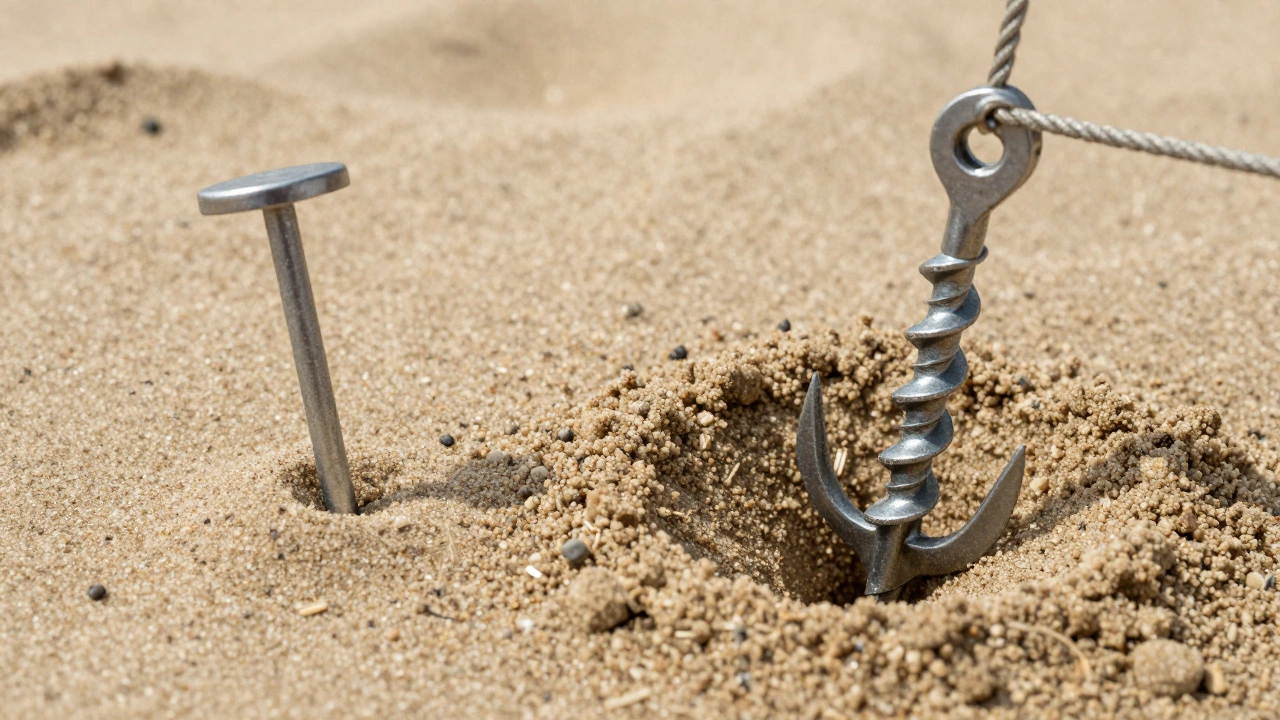
| Long Spiral Stakes | High | Compact; screws deep into compacted sand | Hard to remove if stuck; limited depth |
| Standard Tent Pegs | Low | Lightweight | Fails in loose/wet sand; bends easily |
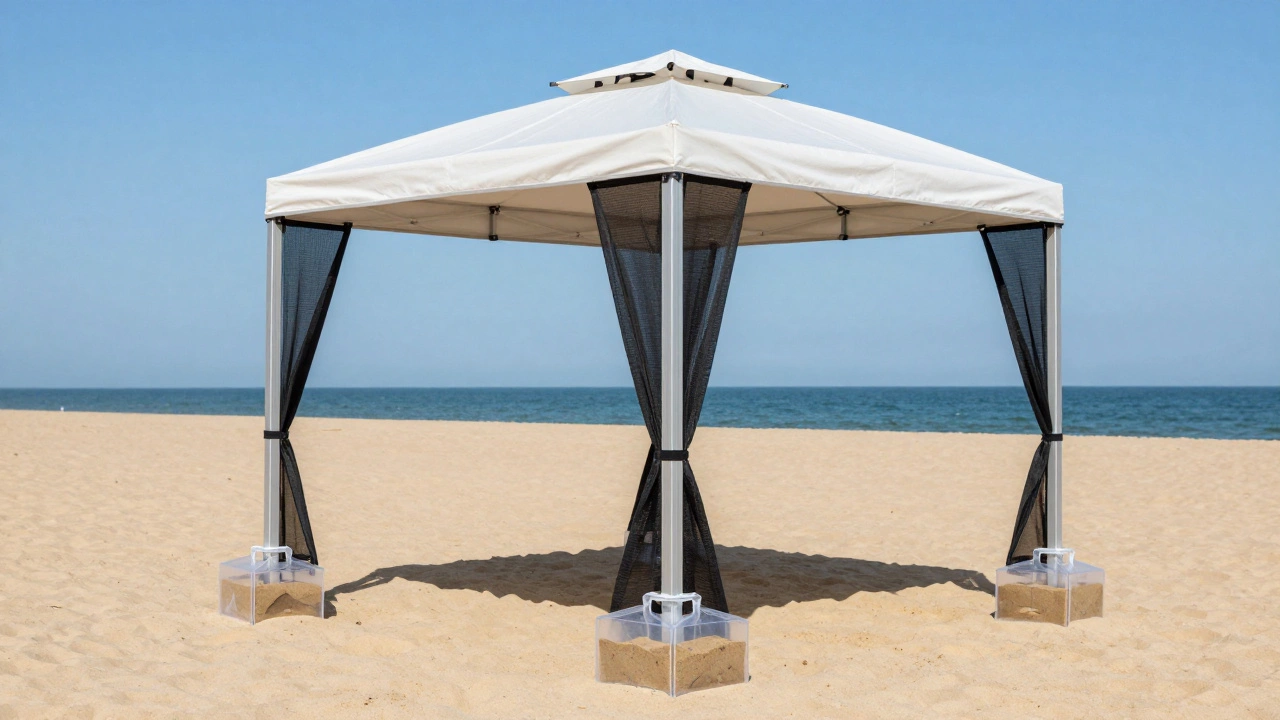
Sand weights are the gold standard. These are plastic containers you fill with sand or water. They attach directly to the gazebo legs via straps. Because they sit low to the ground, they lower the center of gravity, making the structure much harder to tip over. Aim for at least 10-15kg per leg for windy days.
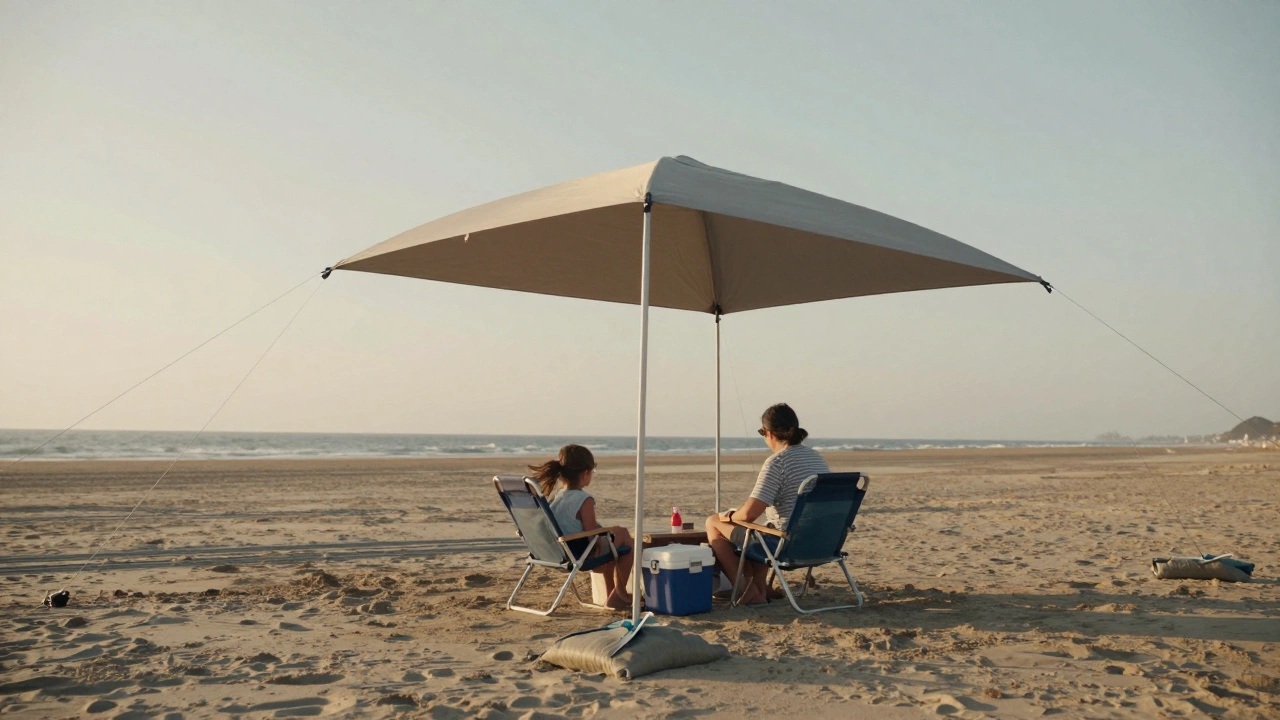
If you don’t have commercial weights, DIY sandbags work well. Use sturdy canvas sacks or even old pillowcases. Fill them partially-overfilling makes them rigid and less effective at absorbing shock. Place them under the corners of the gazebo frame, not just tied to the legs, to distribute weight evenly.
For those who prefer stakes, buy spiral sand anchors. Unlike flat pegs, these screw into the ground like a corkscrew. They provide significant holding power in wet, packed sand near the tide line. However, avoid using them in dry, powdery sand further up the beach, as they won’t grip anything.
Checking Local Regulations Before You Go
Just because you *can* set up a gazebo doesn’t mean you *should* everywhere. Beach rules vary wildly depending on location. In many popular coastal areas, local councils enforce strict regulations to protect wildlife and maintain public access.
Here’s what to look for before packing your gear:
- Prohibited Zones: Many beaches ban structures within 50 meters of the high-tide mark to allow nesting birds (like terns or plovers) space. Check signage at entry points.
- Size Limits: Some parks restrict shelters to a maximum footprint (e.g., 3m x 3m). Large party gazebos may be confiscated.
- Time Restrictions: Certain beaches only allow tents/gazebos during daylight hours. Overnight camping usually requires a designated beach campsite with a permit.
- Permit Requirements: If you plan to stay longer than a few hours, especially for events, you might need a temporary event permit from the local council.
In Australia, for example, many NSW beaches prohibit fixed structures entirely unless you are in a designated camping area. Always check the specific council website for the beach you plan to visit. Ignoring these rules can lead to fines and having your gear removed by rangers.
Setting Up in Windy Conditions
Wind is the enemy of any beach shelter. Even a light breeze can turn a lightweight gazebo into a sail. Setting up correctly minimizes this risk.
- Face the wind: Position the front opening away from the prevailing wind direction. This reduces the surface area catching the gusts.
- Tension the guylines: Never skip the guy ropes. Attach them to separate anchor points (stakes or weights) pulled tight. This stabilizes the frame against lateral movement.
- Lower the height: If possible, choose a gazebo with adjustable pole heights. Lowering the roof reduces leverage on the base, making it harder to flip.
- Secure the floor: If your gazebo has a floor, stake it down first. A floating floor acts like a parachute, lifting the entire structure off the ground.
If the wind exceeds 40km/h, consider taking the roof panels off. Using the frame as a simple awning with mesh sides allows wind to pass through rather than pushing against a solid wall. It’s better to have partial shade than no shelter at all.
Maintenance: Cleaning Salt and Sand Off Your Gear
Salt is corrosive. Sand is abrasive. If you neglect your gazebo after a beach trip, it will degrade quickly.
When you get home, rinse the entire structure with fresh water. Pay special attention to zippers, seams, and metal connectors where salt crystals accumulate. Do not let the fabric dry while salty; this draws moisture out of the fibers and causes brittleness.
Shake out all sand before folding. Grains trapped in the fabric weave act like sandpaper every time you fold or unfold the shelter, eventually tearing the material. Store your gazebo in a cool, dry place-not in the boot of your car where heat and humidity promote mold growth.
Alternatives to Traditional Gazebos
If a full gazebo feels too cumbersome, consider lighter alternatives that still offer protection:
- Beach Cabanas: Soft-sided, freestanding structures that pop open instantly. They are lighter but less wind-resistant.
- Umbrellas with Sand Bases: Good for single-person shade, but offer no side protection from wind-blown sand.
- Tarp Shelters: The ultimate minimalist option. Lightweight, cheap, and highly customizable, though they require more setup skill.
Each option has trade-offs between convenience, durability, and cost. Choose based on how often you visit the beach and how severe the weather typically is.
Can I sleep in a gazebo on the beach?
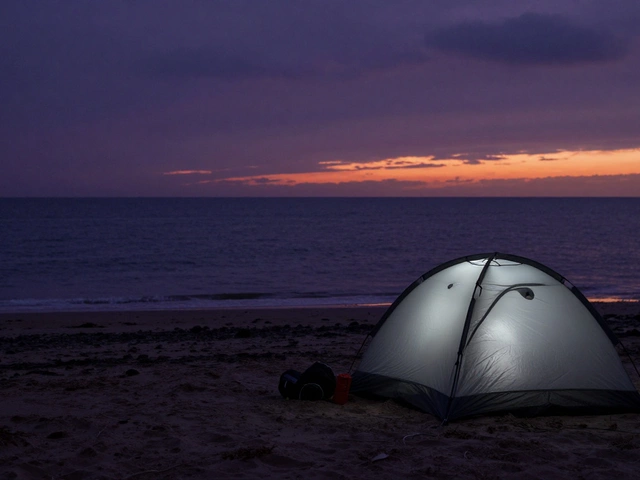
Generally, no. Most public beaches prohibit overnight stays in non-permitted areas. Additionally, gazebos lack insulation and bug protection needed for sleeping. For overnight stays, book a designated beach campsite with proper facilities and permissions.
What is the best size gazebo for a family beach day?
A 3m x 3m (10x10 ft) gazebo is ideal for most families. It provides enough room for chairs, a table, and kids to play, while remaining manageable to carry and anchor. Larger sizes become difficult to secure in wind.
Do I need a permit to set up a gazebo?
It depends on the location. For casual daytime use, most beaches do not require permits. However, if you are staying overnight, hosting an event, or setting up in a national park, you likely need a permit. Always check local council regulations.
How do I clean salt off my gazebo fabric?
Rinse the entire structure with fresh water immediately after use. Use a mild soap solution for stubborn stains, then rinse again thoroughly. Allow it to dry completely in a shaded area before storing to prevent mold and mildew.
Are pop-up gazebos safe in strong winds?
No. Pop-up gazebos are designed for convenience, not extreme weather. In winds above 30km/h, they are prone to flipping or collapsing. Always use heavy sand weights and guylines, and take the roof off if gusts increase.