RV 444 Safety Calculator
The "RV 444 Rule" is an industry mnemonic for safe motorhome operation. Enter your vehicle details and trip plans below to see if you are adhering to these best practices.
You’ve booked your dream motorhome for a weekend getaway. You’re packed, fueled up, and ready to hit the open road. Then you see it: a small sticker or a line in the contract mentioning the "RV 444 rule." Your stomach drops. Is this a new law? Did you just get caught by some obscure regulation that could void your insurance?
Here’s the good news: The RV 444 rule isn’t a government law passed by parliament. It’s not a police checkpoint waiting to fine you at the border. In fact, if you search for it on official transport authority websites, you might come up empty-handed. So why do so many rental companies mention it? And more importantly, does it actually apply to your trip?
The term "RV 444" is largely an industry shorthand-a myth mixed with practical advice-that has evolved within the world of motorhome hire. It typically refers to a set of informal guidelines regarding weight, speed, and driver behavior designed to keep larger recreational vehicles safe. While the name itself is catchy, the principles behind it are very real. If you ignore them, you risk damaging the vehicle, blowing your fuel budget, or worse, causing an accident.
Decoding the Myth vs. Reality
Let’s clear the air first. There is no single global statute called the "RV 444 Rule." You won’t find it in the Australian Road Rules or the UK Highway Code under that specific heading. Instead, it’s a mnemonic device used by experienced RVers and some rental agencies to remember three critical safety thresholds.
Think of it as a survival kit for new drivers. The numbers usually stand for:
- 40 km/h (or mph) caution zone: Speed limits when navigating tight spaces or residential areas.
- 4-hour driving limit: Maximum continuous driving time before a mandatory break.
- 4-meter height awareness: Constant vigilance regarding overhead clearance.
Some variations swap these numbers, focusing instead on weight distribution or following distances. But the core idea remains: drive smarter, not faster. When you hire a motorhome, you aren’t just renting a car; you’re taking responsibility for a heavy, high-center-of-gravity machine that behaves nothing like a sedan. The "444" concept helps bridge the gap between casual driving habits and the physical realities of a large RV.
The Weight Factor: Why Mass Matters More Than You Think
If there is one entity that defines the danger level of your rental, it’s mass. A standard family SUV weighs around 1.5 to 2 tonnes. A mid-size camper van can weigh 3.5 tonnes. A large Class A motorhome? That’s easily 10 to 12 tonnes loaded.
This difference changes everything about how you drive. Physics doesn’t care about your rental agreement. If you’re towing a boat or carrying extra water tanks, your stopping distance increases dramatically. This is where the "444" mindset kicks in. It reminds you that you need four times the space to stop compared to a regular car in certain conditions.
When picking up your hire vehicle, check the Gross Vehicle Mass (GVM). This is the maximum total weight allowed for the vehicle, including passengers, luggage, fuel, and water. Exceeding this limit isn’t just a rule-breaker; it’s a safety hazard. Overloaded brakes fade quickly, and tires overheat. Always ask the rental agent for the exact GVM and compare it against your packing list. If you’re close to the limit, leave the extra chairs at home.
| Vehicle Type | Approx. Weight | Stopping Distance Increase | Braking Effort Required |
|---|---|---|---|
| Compact Car | 1.2 Tonnes | Baseline | Low |
| Campervan (VW Transporter style) | 3.0 - 3.5 Tonnes | +20-30% | Moderate |
| Large Motorhome | 7.0 - 12.0 Tonnes | +50-80% | High |
The 4-Hour Rule: Combating Driver Fatigue
Driving a motorhome is mentally exhausting. You’re constantly checking mirrors, monitoring blind spots, and worrying about height restrictions. This cognitive load leads to fatigue much faster than driving a passenger car. The "4-hour" component of the RV 444 concept suggests taking a proper break every four hours.
This isn’t just about stretching your legs. It’s about resetting your focus. Studies from the Australian Transport Safety Bureau indicate that fatigue-related crashes increase significantly after prolonged periods of concentration without rest. For RV drivers, the risk is amplified because errors are often fatal due to the vehicle’s size.
So, what does a "proper break" look like? Pulling into a service station for five minutes while scrolling through your phone doesn’t count. You need to step out of the cab. Walk around the vehicle. Check your tire pressure visually. Drink water. Dehydration worsens fatigue. If you’re traveling with passengers, take turns driving. If you’re solo, consider staying overnight rather than pushing through to reach a distant destination. The view is better when you’re not too tired to enjoy it.
Height Awareness: The 4-Meter Mindset
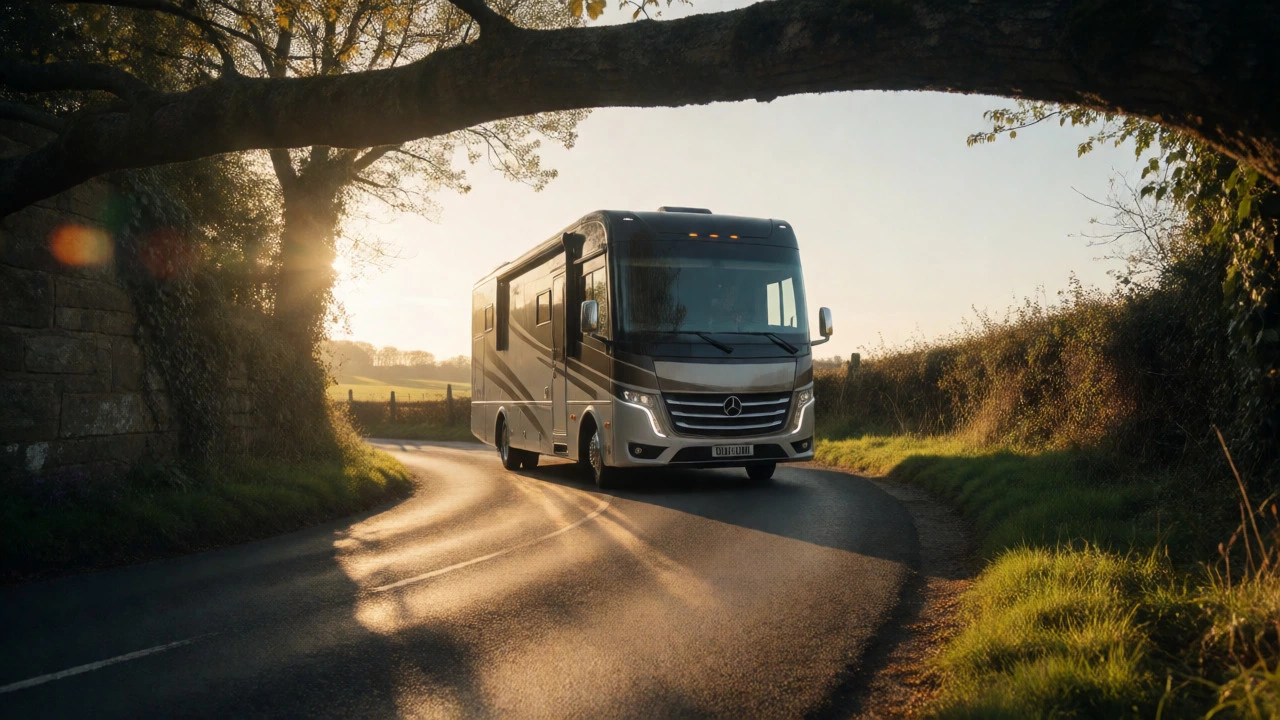
Hitting a low bridge is the classic rookie mistake. It’s embarrassing, expensive, and dangerous. Most modern motorhomes range from 2.5 meters to 3.5 meters in height. Some luxury models touch 4 meters. The "4-meter" part of the rule serves as a mental alert system: assume anything above you is lower than you think.
Before you start your engine, measure your vehicle. Not all RVs are the same. A pop-top roof adds height when raised but saves fuel when down. Know your exact dimensions. Write them on a sticky note and put it on the dashboard. When approaching tunnels, car parks, or tree-lined roads, slow down. Use your GPS settings correctly-ensure you’ve entered the correct vehicle profile (height, width, weight) into your navigation app. Standard car GPS routes will send you straight into trouble.
In Australia, many regional roads have unmarked low branches. In Europe, historic city centers have strict height limits. The RV 444 mindset keeps you paranoid enough to be prepared. If a sign says 3.5m, don’t squeeze through if you’re 3.4m. Leave room for error. Suspension compresses, roofs flex, and mud flaps hang low.
Speed and Following Distance: The Invisible Buffer
While the number "4" appears in the mnemonic, the actual speed advice varies. However, the principle is consistent: drive slower than the traffic flow allows, especially in adverse conditions. Large RVs are susceptible to crosswinds. A gusty day on an open highway can make steering difficult. Reducing speed gives you more control.
Furthermore, maintain a greater following distance. The general rule for cars is two seconds. For a motorhome, aim for four to six seconds. This buffer accounts for longer braking distances and gives you time to react if the vehicle ahead stops suddenly. Remember, you’re looking over a higher hood, which means you see further ahead, but you also block the view of those behind you. Smooth acceleration and deceleration prevent jackknifing if you’re towing.

Insurance and Contract Implications
Why do rental companies push these "rules"? Liability. If you damage the vehicle by ignoring basic safety principles, they may claim negligence. While they can’t enforce a non-existent law, they can enforce their terms of service. Most contracts require you to operate the vehicle "in a careful and prudent manner." Ignoring weight limits or driving recklessly violates this clause.
Check your excess coverage. If you scratch the side mirror because you didn’t account for the vehicle’s width, who pays? Understanding the operational limits of your specific hire unit protects your wallet. Ask about unlimited mileage versus capped kilometers. Exceeding caps costs money, but exceeding safe driving parameters costs accidents.
Practical Checklist for Your Next Hire
To turn the abstract "RV 444" concept into actionable steps, use this checklist before you leave the yard:
- Verify Dimensions: Confirm height, width, and length. Note them on paper.
- Check Weight Limits: Ensure your gear doesn’t push you over the GVM.
- Plan Rest Stops: Schedule breaks every 3-4 hours. Identify safe pull-offs.
- Test Brakes: Get familiar with the brake pedal feel. It’s different from a car.
- Adjust Mirrors: Set them wide to eliminate blind spots caused by the boxy shape.
- Review Insurance: Understand what constitutes "negligent driving" in your policy.
By internalizing these habits, you’re effectively applying the spirit of the RV 444 rule. You’re prioritizing safety over speed, awareness over assumption, and comfort over cramming in miles.
Frequently Asked Questions
Is the RV 444 rule a legal requirement?
No, the "RV 444 rule" is not a codified law in most jurisdictions, including Australia and the UK. It is an informal industry guideline or mnemonic used by rental companies and experienced travelers to promote safe driving practices. However, the underlying principles-such as adhering to weight limits and maintaining safe following distances-are legally enforced under general road safety laws.
What happens if I exceed the weight limit of my hired motorhome?
Exceeding the Gross Vehicle Mass (GVM) can lead to several issues. First, it increases wear on tires and brakes, potentially leading to mechanical failure. Second, it may void your insurance coverage if the rental company deems you negligent. Finally, you could face fines from authorities if the vehicle is weighed during a roadside inspection and found to be overloaded beyond legal limits.
How should I adjust my driving style for a motorhome?
Drive smoother and slower. Accelerate gently to avoid shifting cargo. Brake earlier and more progressively than you would in a car, as stopping distances are longer. Be mindful of wind gusts, which can affect stability. Keep a larger following distance-at least 4-6 seconds-to allow for reaction time. Always check your mirrors frequently, as blind spots are larger.
Do I need a special license to drive a motorhome?
In many countries, including Australia and the UK, you can drive most motorhomes with a standard Class B (car) license, provided the vehicle’s Gross Vehicle Mass is below 3.5 tonnes. Larger vehicles may require a heavier vehicle license or a specific endorsement. Always check the specific requirements of your region and the weight class of the vehicle you intend to hire.
Why do rental companies emphasize these rules?
Rental companies emphasize these rules to minimize damage claims and ensure customer safety. Motorhomes are expensive assets. Accidents involving large vehicles are costly to repair and can result in significant downtime for the rental fleet. By educating renters on safe operation, companies reduce the likelihood of incidents and protect their investment.