Camping Power Load Calculator
Enter the wattage (W) of each appliance you plan to use simultaneously.
You’ve booked the perfect spot. It’s flat, it’s shady, and best of all, it has an electric hookup. You pull out your kettle, ready for that morning coffee, only to realize your standard household plug doesn’t fit the socket at the site. Or worse, you plug it in, and nothing happens because you forgot the fuse. Frustrating, right?
Knowing what plug and cable you need for a campsite isn't just about convenience; it's about safety. Camping electricity operates differently than home wiring. Using the wrong equipment can trip breakers, damage your appliances, or even start a fire. Whether you are towing a caravan, driving a motorhome, or just pitching a tent with a battery charger, getting this right is crucial.
Quick Summary: What do I need?
- The Cable: You need a dedicated camping power lead (IEC 60309-2), not a regular extension cord.
- The Plug Type: In Australia, look for the 'Type T' industrial plug (red, round, with earth pin). In Europe, it's usually 'Schuko' (round pins) or 'CEE Blue'.
- The Fuse: Most camping plugs require a specific fuse (usually 10A or 16A) inside the plug head.
- Safety First: Never use domestic extension leads outdoors; they lack weatherproofing and proper grounding for high-load appliances.
Why Your Home Plug Won't Work at the Campsite
It’s tempting to grab the long yellow extension lead from your garage and call it a day. But here’s why that’s a bad idea. Domestic plugs and sockets are designed for indoor use. They aren’t sealed against moisture, dust, or dirt-three things you’ll find plenty of at any campsite. When rain hits an open domestic socket, you risk short circuits.
Camping power systems use Industrial Power Connectors, specifically defined by the IEC 60309 standard. These connectors are color-coded, waterproof when closed, and have a larger earth pin that prevents you from accidentally plugging them into a non-earthed outlet. They are robust, durable, and designed to handle the vibration and movement of travel.
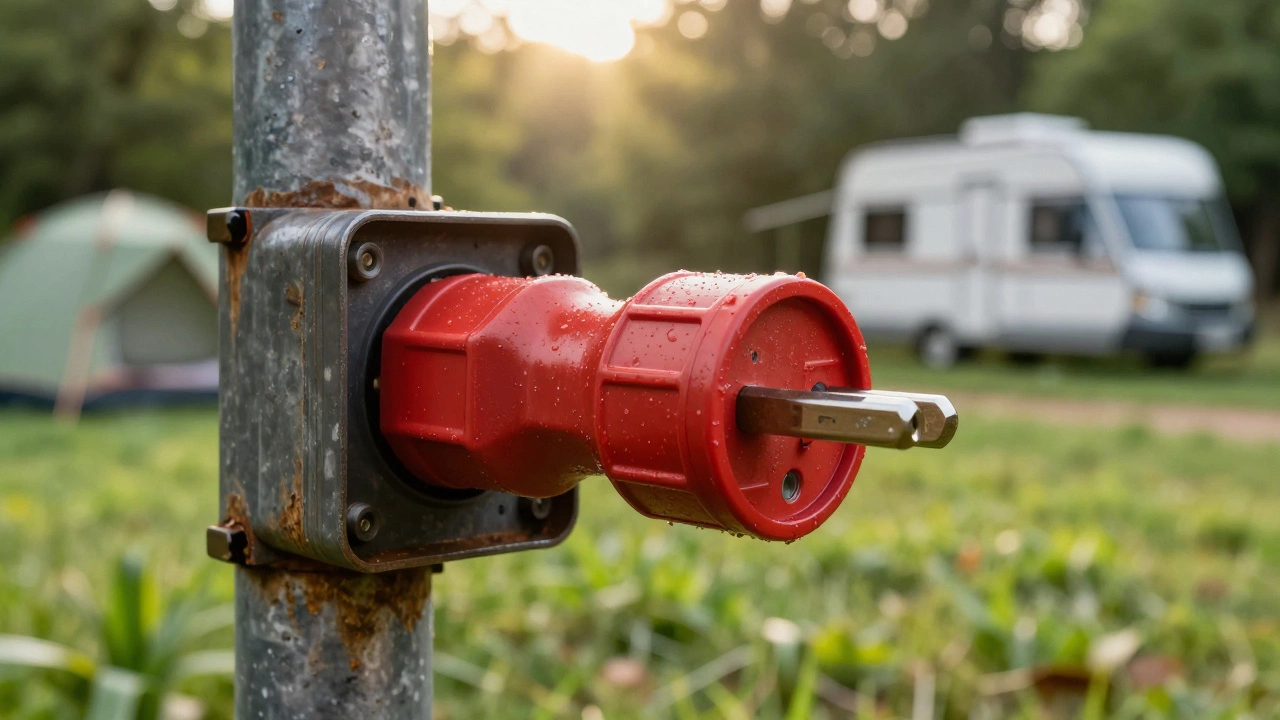
In Australia, the standard camping plug is often referred to as a Type T Plug. This is a red, circular plug with three large pins arranged in a triangle. The key feature is the "earth first" design. The long earth pin connects before the live and neutral pins, ensuring your appliance is grounded before power flows. This prevents shocks if there’s a fault in your device.
Identifying the Correct Plug for Your Region
The type of plug you need depends entirely on where you are camping. Standards vary significantly between continents. If you are traveling internationally, assuming your home plug will work is a recipe for disaster.
| Region | Plug Standard | Visual Description | Voltage/Frequency |
|---|---|---|---|
| Australia / NZ | AS/NZS 3112 (Type T) | Red, round, 3-pin (Earth up or down depending on vintage) | 230V / 50Hz |
| Europe (Most) | CEE 7/7 (Schuko) or CEE Blue | Silver/Grey round body, two round pins + side clips (Schuko) OR Blue rectangular (CEE) | 230V / 50Hz |
| UK | BS 4343 (CEE Green) | Green, round, 3-pin (similar to Type T but different pin spacing) | 230V / 50Hz |
| North America | NEMA 5-15 or TT-30 | Flat prongs (standard) or Twist-lock (RV parks) | 120V / 60Hz |
If you are camping in Australia, stick to the red Type T plug. If you’re heading to Europe, you’ll likely encounter the Schuko Plug. This is the standard European wall plug, recognizable by its round metal casing and two round pins with grounding clips on the sides. Many European campsites also use the "CEE Blue" connector, which is a blue, rectangular industrial plug. Always check the campsite description online before you go.
The Anatomy of a Camping Power Lead
A proper camping power cable consists of three main parts: the plug end, the cable itself, and the socket end. Understanding these helps you choose the right gear.
- The Plug End: This goes into the campsite pedestal. As mentioned, this must be the correct regional standard (e.g., Type T for Australia). Crucially, this end houses the Fuse. Unlike home plugs which might have fixed fuses or none at all, camping plugs almost always have a replaceable cartridge fuse. Common ratings are 10 Amps (for low-power sites) and 16 Amps (for full power). Using a 16A fuse on a 10A site will blow the site’s breaker immediately.
- The Cable: Look for cables rated for outdoor use. They should be thick enough to handle the current without heating up. A common mistake is buying a cheap, thin cable. For running a fridge, lights, and a phone charger, a standard 3mm² cable is fine. If you plan to run high-draw appliances like an electric kettle or heater, you need a thicker cable (4mm² or more) to prevent voltage drop and overheating.
- The Socket End: This is where you plug your devices in. On a simple extension lead, this is a standard domestic socket. However, many modern camping leads come with multiple sockets, USB ports, and even surge protection. Ensure the socket end is covered with a rubber cap when not in use to keep water out.
Fuses: The Unsung Hero of Camping Safety
Let’s talk about fuses again, because this is where most people get stuck. Why do camping plugs have fuses? Because they protect your equipment and the campsite’s wiring from overloads.
Imagine you plug in your microwave (high wattage) while your air conditioner is running. The total current draw exceeds what the wire can safely carry. Without a fuse, the wire would heat up, melt the insulation, and potentially catch fire. The fuse sacrifices itself-it melts and breaks the circuit-to save you from disaster.
Rule of Thumb: Always match the fuse rating to the campsite’s supply limit. Most basic tent pitches offer 10 Amps. Caravan and motorhome spots often offer 16 Amps. If you are unsure, ask the reception staff. Using a 16A fuse on a 10A supply is dangerous. Using a 10A fuse on a 16A supply is safe but may trip if you try to run too many appliances simultaneously.
Essential Gear Checklist for Electric Hookup
Before you pack, run through this list. Missing one item can ruin your comfort.
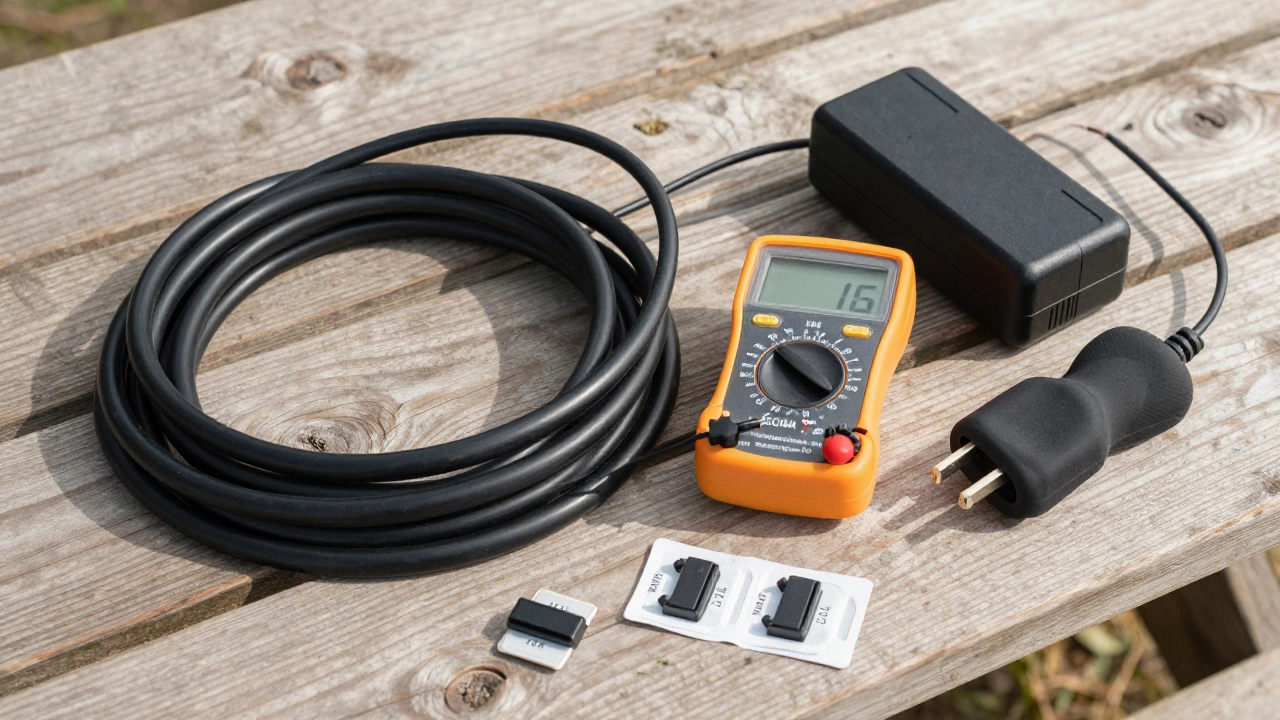
- Dedicated Camping Power Lead: At least 10 meters long. Longer is better so you don’t have to drag your heavy appliances across the ground.
- Replacement Fuses: Carry both 10A and 16A fuses. They are cheap and easy to lose.
- Voltage Meter/Multimeter: A small digital voltmeter is invaluable. It tells you if the site is actually providing power and if the voltage is stable. Fluctuating voltage can destroy sensitive electronics like laptops and phones.
- Surge Protector: Camping grids can be unstable. Lightning strikes or faulty generators can send spikes of voltage through the line. A surge protector absorbs these spikes, saving your gadgets.
- Waterproof Covers: Even if your plug is weather-resistant, adding a silicone cover over the connection point adds an extra layer of security against heavy rain.
- Adapters: If you are traveling internationally, bring the correct physical adapters (e.g., Schuko to Type T) and check voltage compatibility (110V vs 230V).
Safety Tips Every Camper Should Know
Electricity and water don’t mix. Here are some practical tips to stay safe.
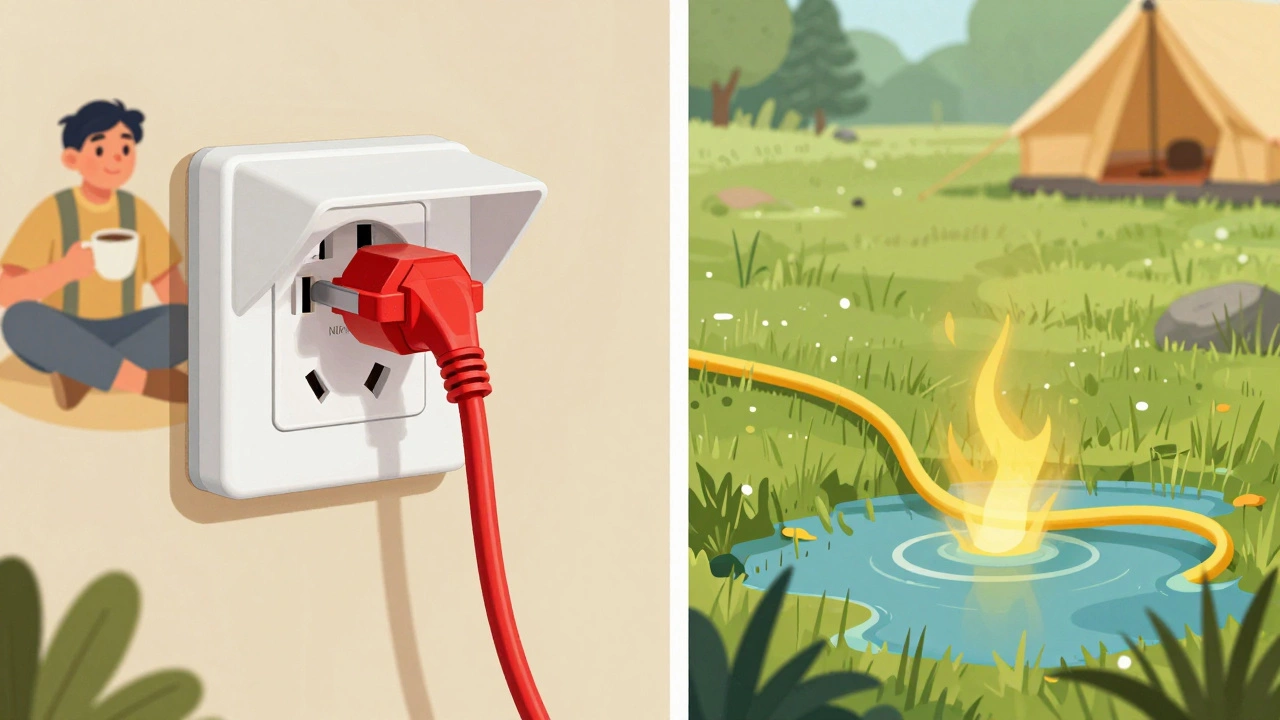
Keep Connections Dry: Always connect and disconnect plugs with dry hands. If it starts raining, ensure the plug is fully seated and locked. Water ingress is the leading cause of electrical faults at campsites.
Avoid Daisy-Chaining: Don’t plug one extension lead into another. This increases resistance and heat buildup. Use a single, long, high-quality lead instead.
Check for Damage: Before each trip, inspect your cable for cuts, cracks, or exposed wires. A damaged cable is a fire hazard. Replace it immediately if you see any signs of wear.
Don’t Overload: Be realistic about what you can run. A 1500W electric kettle draws about 6.5 Amps. If you have a 10A supply, you have only 3.5 Amps left for everything else. Running a kettle and a laptop charger might be okay, but add a hairdryer, and you’ll likely trip the fuse.
Troubleshooting Common Issues
So, you plugged it in, and nothing happened. Don’t panic. Follow these steps.
- Check the Fuse: Open the plug head and look at the fuse. Is the wire inside broken? If yes, replace it. Note: If the new fuse blows immediately, stop. There is a short circuit in your appliance or cable.
- Test the Site Socket: Ask a neighbor if their power is working. If theirs is too, the issue might be with your plug or cable. If theirs isn’t either, the site’s main breaker might have tripped. Call reception.
- Inspect the Connection: Sometimes the plug isn’t fully inserted. Push it firmly until it clicks. Ensure the locking lever (if present) is engaged.
- Use a Voltage Tester: If you have one, check if voltage is reaching the socket end of your cable. If voltage is present at the plug but not the socket, your cable is broken internally.
Final Thoughts on Camping Power
Having reliable electricity at a campsite transforms your experience. It means hot showers, charged phones, and cooked meals without burning fuel. But it requires respect for the system. Invest in good quality gear, understand the local standards, and always prioritize safety. With the right plug and a little knowledge, you’ll enjoy the comforts of home in the great outdoors.
Can I use a normal household extension lead at a campsite?
Technically, you can if the plug fits, but it is highly discouraged. Household leads are not waterproof, lack proper grounding for outdoor use, and often have thinner wires that can overheat. Dedicated camping leads are safer and more durable.
What is the difference between a 10A and 16A camping plug?
The difference is the maximum current flow allowed. A 10A plug supports up to ~2300 Watts of power, suitable for lights, fridges, and charging devices. A 16A plug supports up to ~3680 Watts, allowing for higher-draw appliances like kettles, microwaves, or air conditioners. Always use the fuse rating that matches the site's supply.
Do I need a converter if I'm camping in Europe with Australian gear?
You need a physical plug adapter (Type T to Schuko/CEE). However, both regions use 230V/50Hz, so you generally do not need a voltage transformer for most modern electronics (phones, laptops, cameras). Check your device labels; if it says "Input: 100-240V," it is dual-voltage and safe to use with just a plug adapter.
How long should my camping power cable be?
A minimum of 10 meters is recommended. This allows flexibility in positioning your tent or vehicle away from the power pedestal while keeping the cable off wet ground. Longer cables (15m or 20m) are useful for larger setups but ensure the cable gauge is thick enough to handle the distance without voltage drop.
Why did my camping fuse blow?
Fuses blow due to overloading (too many appliances), a short circuit in an appliance, or a fault in the cable. If it blows repeatedly, unplug all devices and reconnect them one by one to identify the culprit. Never replace a blown fuse with a higher-rated one, as this creates a fire risk.