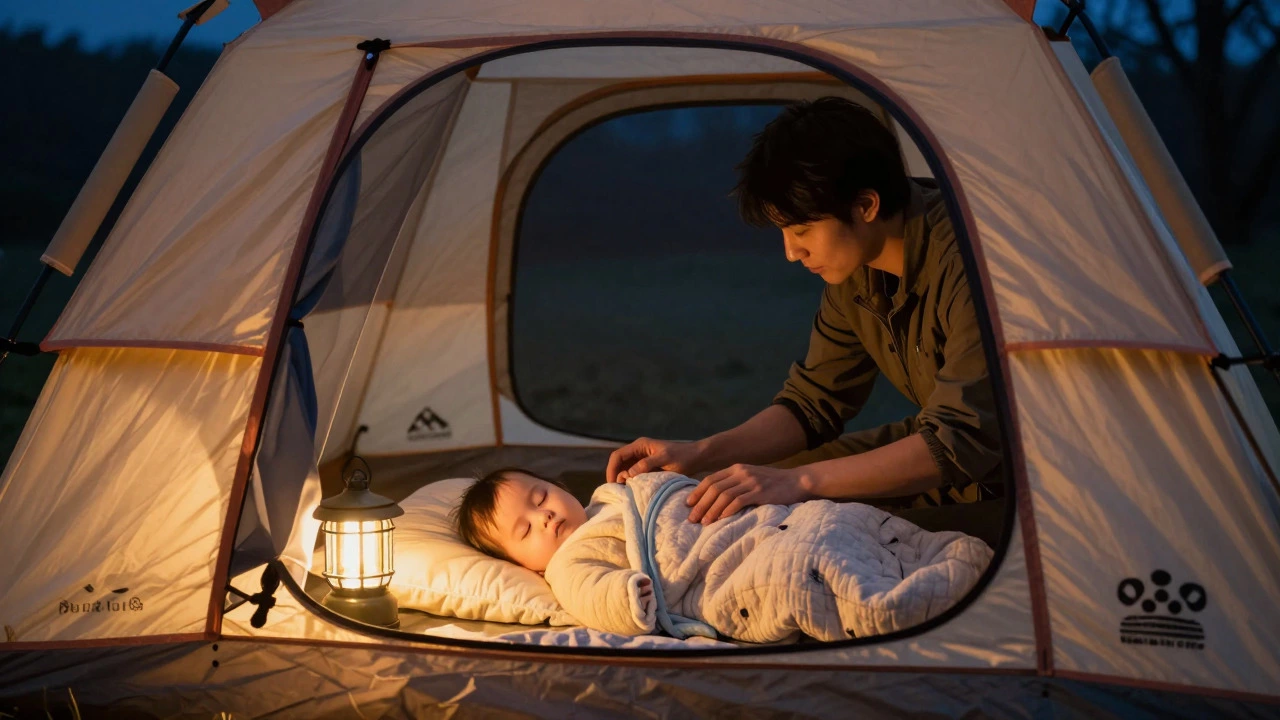
Baby Camping Safety & Gear Calculator
Trip Parameters
Results
Enter your trip details to see safety ratings and recommended gear.
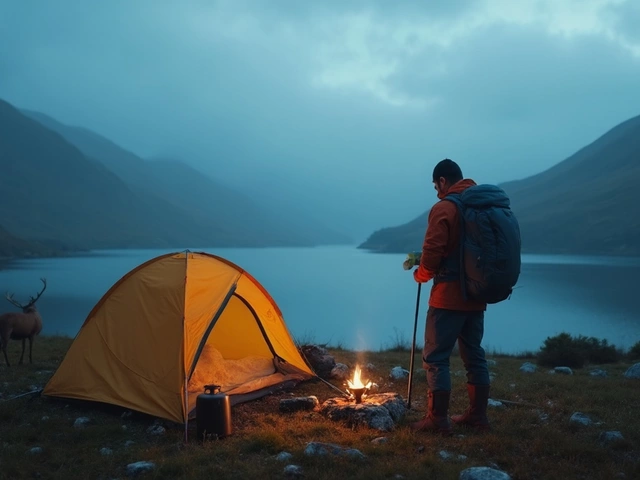
Imagine this: It’s 2 AM. The wind is howling outside your tent, and the thermometer on your phone reads 4°C (39°F). You wake up to check on your little one, and their feet feel ice-cold. Panic sets in. Is it too cold? Should you pack up and head home? Or are you overreacting?
If you’re planning a trip with an infant, this scenario is more common than you think. Babies regulate body heat differently than adults, and the outdoors adds variables like dampness and drafts that indoor heating doesn’t. So, what is the actual limit? While there isn't a single magic number that applies to every situation, most pediatric experts agree that temperatures below 5°C (41°F) pose significant risks for infants under six months old when sleeping outdoors.
The Science of Baby Thermoregulation
To understand why cold is dangerous, you first need to understand how a baby’s body works. Unlike adults, who can shiver vigorously or add layers instantly, babies have limited ability to generate internal heat. They rely heavily on external sources-like warm clothing and ambient air-to stay comfortable.
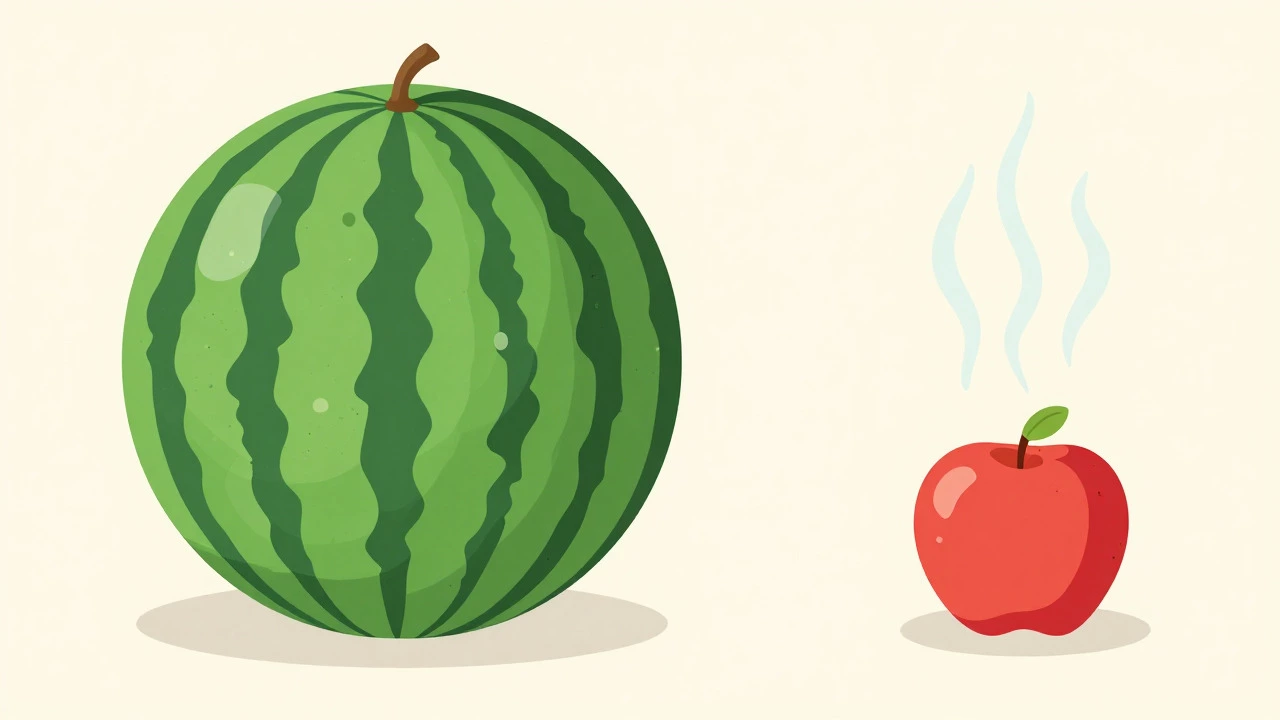
Babies also lose heat much faster than adults due to their high surface-area-to-volume ratio. Think of it like this: a small apple cools down faster than a large watermelon because it has more skin relative to its inside mass. For an infant, this means they can drop to dangerous core temperatures quickly if exposed to cold air, especially if that air is moving (wind) or wet (rain/dew).
Why do babies get cold faster than adults?
Babies have a larger surface area compared to their body weight, meaning they lose heat more rapidly. Additionally, their thermoregulatory system-their body's way of controlling temperature-is not fully developed until around six months of age.
Safe Temperature Ranges for Different Ages
Age matters immensely here. A six-month-old is biologically different from a newborn. Here is a practical breakdown of safe outdoor sleeping temperatures based on infant age:
- Newborns (0-3 months): Ideally above 10°C (50°F). Below this, the risk of hypothermia increases significantly unless you have specialized heated gear (which is rare and risky).
- Infants (3-6 months): Safe between 5°C and 10°C (41°F - 50°F) with proper layering and insulation from the ground.
- Toddlers (6+ months): Can handle temperatures down to 0°C (32°F) if dressed correctly and monitored closely.
Note that these numbers assume still air. Wind chill changes everything. A 5°C night with a strong breeze feels like -2°C to the skin, which can be lethal for a newborn. Always check the "feels like" temperature, not just the actual air temperature.
The Hidden Danger: Ground Heat Loss
Most parents focus on the air temperature, but the ground is often the bigger threat. If you lay a baby directly on a tent floor, even with a thin mat, they will lose heat through conduction at an alarming rate. The earth acts as a massive heat sink, pulling warmth out of your child’s body continuously.
This is where your choice of sleeping pad becomes critical. A standard foam pad might suffice for an adult, but for a baby, you need high R-value insulation. An R-value measures thermal resistance; for winter camping with infants, aim for an R-value of 4.0 or higher. This creates a barrier between the baby’s delicate body and the freezing ground.
| Temperature Range | Sleeping Bag Rating | Ground Insulation | Additional Layers |
|---|---|---|---|
| Above 10°C (50°F) | Summer rating (10°C+) | Standard foam pad | Cotton onesie + light sleeper |
| 5°C - 10°C (41°F - 50°F) | 3-season rating (0°C) | Inflatable pad (R-value 3+) | Wool base layer + fleece sleeper |
| Below 5°C (41°F) | Winter rating (-5°C or lower) | Double-layer insulated pad (R-value 5+) | Merino wool suit + hat + socks |
Dressing Your Baby: The Layering Strategy
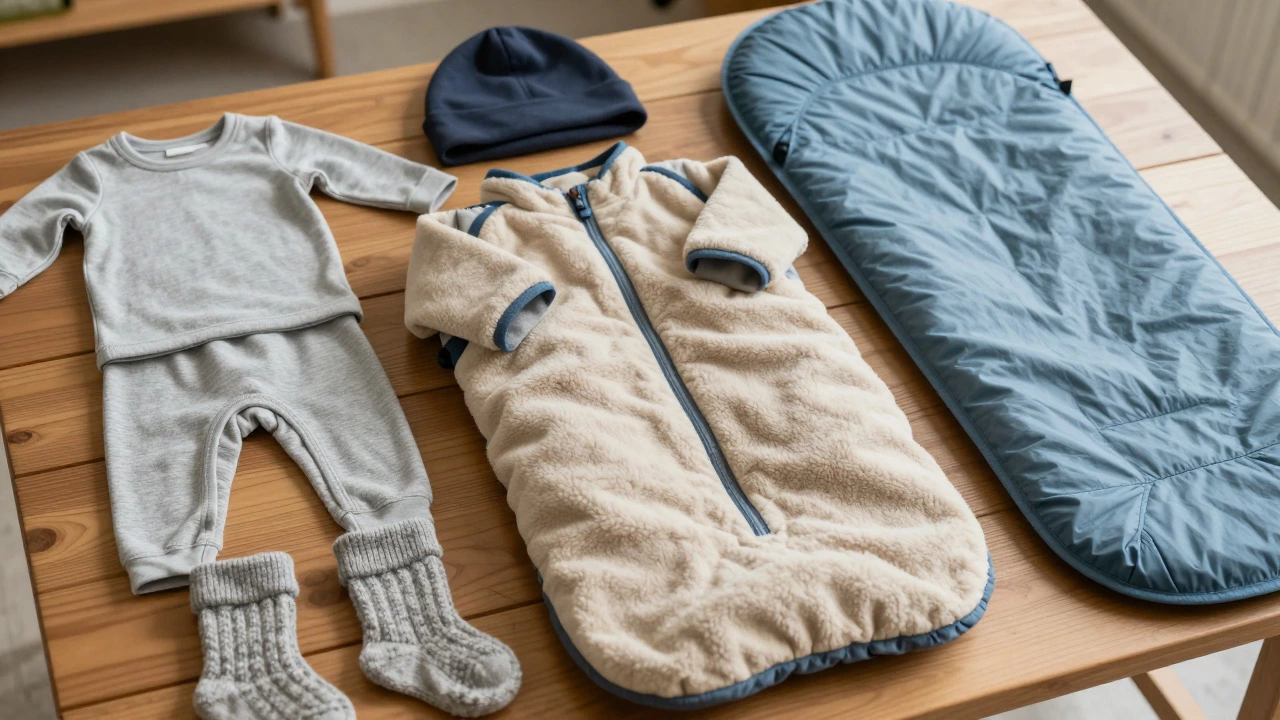
One common mistake is bundling babies in thick cotton pajamas. Cotton is terrible for cold weather because it absorbs moisture (sweat or humidity) and loses its insulating properties. Instead, use the layering method used by mountaineers:
- Base Layer: Merino wool or synthetic fabric next to the skin. This wicks moisture away and retains heat even when damp.
- Mid Layer: Fleece or wool jumper/sweater for insulation.
- Outer Layer: A waterproof and windproof shell if rain or wind is expected.
- Extremities: Hats and socks are non-negotiable. Up to 50% of body heat can be lost through the head, so a snug wool hat is essential.
Avoid loose blankets in the cot. They pose a suffocation risk and don’t provide consistent warmth. Instead, use a wearable blanket (sleep sack) rated for the temperature. These zip onto the baby’s clothes and ensure they stay covered without the risk of shifting during sleep.
Monitoring Body Temperature
You cannot rely solely on feeling their hands or feet. In cold environments, blood flow redirects to vital organs, causing extremities to become cool even if the core temperature is stable. To accurately assess if your baby is too cold, check their chest, back, or neck.
If their torso feels cool to the touch, they are losing heat. Add a layer immediately. If their skin is flushed hot and they are sweating, they are overheating-a risk equally dangerous to hypothermia. Overheating can lead to dehydration and increase the risk of SIDS (Sudden Infant Death Syndrome). Aim for "neutral thermal comfort," where the baby is neither sweating nor shivering.
Consider using a no-contact infrared thermometer to spot-check their forehead or temple periodically during the night. Normal rectal temperature for infants is around 37.5°C (99.5°F), while axillary (armpit) should be around 36.5°C (97.7°F). Anything below 36°C (96.8°F) requires immediate warming action.
Signs of Hypothermia vs. Overheating
Knowing the difference between being slightly chilly and entering hypothermic territory is crucial. Early signs of hypothermia in infants include:
- Pale or bluish skin color
- Lethargy or excessive sleepiness
- Weak cry
- Cool chest or abdomen
Conversely, signs of overheating include:
- Flushed red cheeks
- Rapid breathing
- Sweating (especially on the scalp or neck)
- Restlessness or irritability
If you suspect hypothermia, remove the baby from the cold environment immediately. Wrap them in dry blankets, offer warm feeds (breast milk or formula warmed to body temperature), and skin-to-skin contact with a parent is one of the most effective warming techniques. If symptoms persist, seek medical attention.
Tent Setup for Cold Weather
Your tent setup plays a huge role in maintaining warmth. Choose a tent with good ventilation to prevent condensation, which can make the interior damp and cold. However, ensure vents are positioned so wind doesn’t blow directly into the sleeping area.
Use a footprint or groundsheet under your tent to add an extra layer of insulation from the ground. Inside the tent, keep all wet gear (boots, wet jackets) in a separate vestibule or bag to avoid raising humidity levels. High humidity makes cold air feel colder and reduces the effectiveness of insulation.
When to Call It Quits
Sometimes, nature wins. If the temperature drops unexpectedly below your prepared range, or if severe weather hits, be willing to abort the camping portion of your trip. There is no shame in packing up and staying in a nearby cabin or hotel. The goal is a positive outdoor experience, not a survival story.
For very young infants (under 3 months), many pediatricians recommend avoiding overnight camping in temperatures below 10°C entirely. Consider day trips instead, where you can return to a heated car or home quickly if conditions change.
Can I use electric blankets for my baby in the tent?
Generally, no. Electric blankets pose burn and fire risks, especially in tents with limited airflow. They are difficult to regulate precisely for an infant's sensitive skin. Stick to passive insulation methods like wool layers and high-R-value sleeping pads.
Is it safe to camp with a newborn in winter?
It is generally not recommended for newborns under 3 months due to their immature immune systems and inability to regulate body temperature. If you must go, keep temperatures above 10°C (50°F) and monitor constantly.
What should I do if my baby gets cold in the middle of the night?
Add a dry layer immediately, such as a wool hat or sock. Use skin-to-skin contact by placing the baby against your chest under your clothes. Offer a warm feed to help raise their internal temperature.
Does humidity affect how cold it feels for a baby?
Yes. High humidity reduces the insulating ability of fabrics and makes cold air feel colder. Ensure your tent is well-ventilated to minimize condensation buildup.
Are wool clothes better than cotton for camping with babies?
Absolutely. Wool retains heat even when wet and wicks moisture away from the skin. Cotton absorbs sweat and becomes cold, increasing the risk of hypothermia.