Stealth Camping Risk & Compliance Calculator
Trip Configuration
Assessment Result
Adjust settings and click Assess to calculate your stealth camping risk profile.
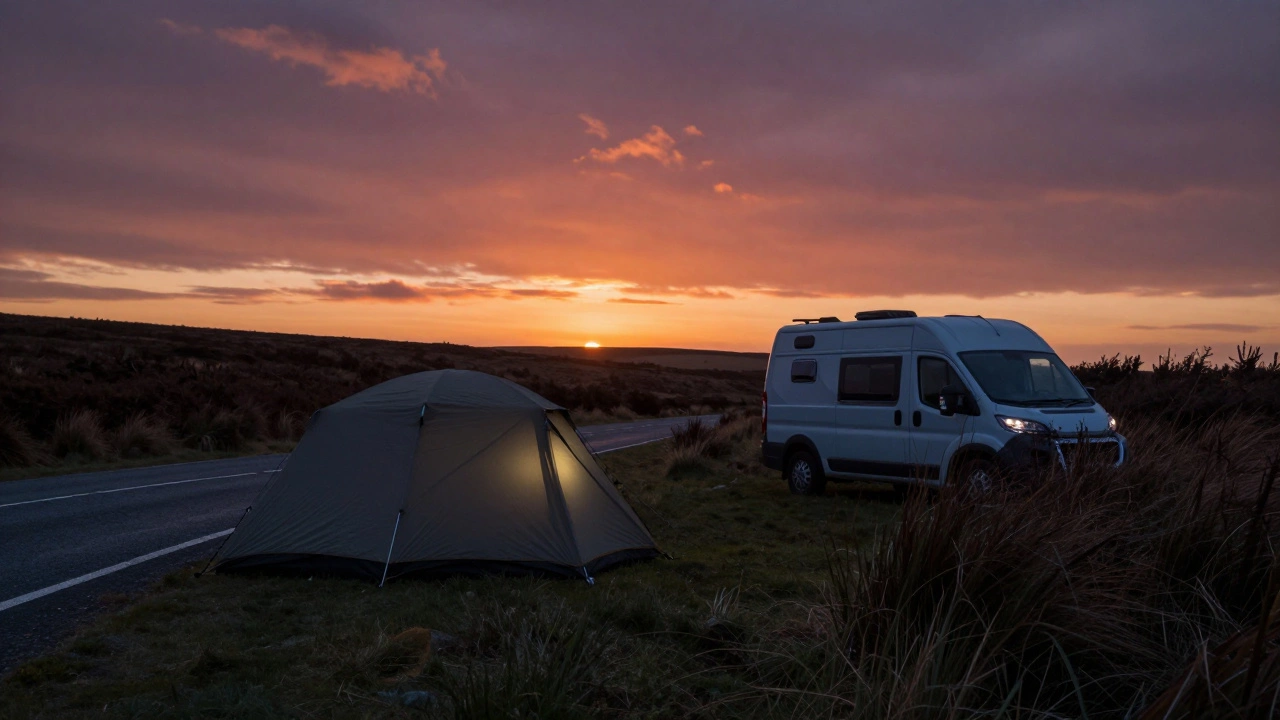
You pull into a quiet layby just off the A303. The sun is setting, painting the sky in shades of orange and purple. You’re tired, your budget is tight, and you just want a night under the stars without paying £25 for a pitch with a shower you don’t need. You unzip the tent door, check your surroundings, and settle in. But then, headlights sweep across your face. A local farmer’s truck rolls up, followed by a police cruiser an hour later. This isn’t a scene from a thriller; it’s a common reality for those attempting stealth camping in the United Kingdom.
The short answer to "Can you stealth camp in the UK?" is complicated. Legally, the right to roam doesn't automatically extend to pitching a tent on private land. However, practically speaking, thousands of travelers do it every year. The difference between a peaceful night and a fine or eviction comes down to three things: location, discretion, and timing. If you get these wrong, you risk legal trouble. Get them right, and you unlock some of the most beautiful, free nights out imaginable.
The Legal Landscape: Rights vs. Realities
To understand stealth camping, you first have to understand the land ownership structure in the UK. Unlike the US, where federal lands often allow dispersed camping, or parts of Scandinavia where "everyman's right" applies broadly, the UK is a patchwork of private estates, National Trust properties, and small pockets of public access.
Countryside and Rights of Way Act 2000 (CRoW) is legislation that grants public access to mapped areas of open land and registered common land in England and Wales. This act allows you to walk, run, or lie down on these designated maps. It does not explicitly grant the right to pitch a tent or build a fire. While authorities rarely prosecute someone for sleeping overnight in a bivvy bag on CRoW land if they are truly invisible, technically, staying overnight can be considered trespassing if the landowner objects.
In Scotland, the rules are different. The Land Reform (Scotland) Act 2003 provides a statutory right to responsible access to most land and inland water. This includes the right to camp for up to two weeks in one place, provided you follow the Scottish Outdoor Access Code. This means stealth camping is largely legal in Scotland as long as you are respectful, whereas in England and Wales, it exists in a grey area of tolerance rather than explicit permission.
In Northern Ireland, there is no general right to roam. All land is effectively private unless marked otherwise, making stealth camping significantly riskier and more likely to result in confrontation.
Where to Pitch: Safe Havens and Danger Zones
Not all laybys are created equal. Choosing the wrong spot is the fastest way to end your trip early. You need to identify locations that offer natural cover, low traffic visibility, and, crucially, a lack of immediate residential proximity.
- National Trust Land: Many National Trust properties allow wild camping, but usually only in specific designated zones during certain seasons. They often require you to register via their app. This isn't "stealth" in the traditional sense, but it is legal and free.
- Forest Districts: Forestry England manages vast tracts of woodland. While they generally prohibit camping outside of designated sites, enforcement varies. Some remote corners of forests like New Forest or Sherwood Forest see tolerant attitudes toward discreet campers who leave no trace.
- Coastal Paths: Areas along the South West Coast Path or Northumberland Coast often have informal spots where locals turn a blind eye, especially in winter. However, be wary of fenced-off grazing land near cliffs.
- Avoid Residential Gardens: Never park or pitch behind houses, even if the garden looks overgrown. This is private property, and neighbors will call the police immediately.
- Motorway Service Areas (MSAs): These are strictly prohibited for camping. Security patrols are frequent, and cameras are everywhere. Do not attempt this.
A good rule of thumb: If you can see a house within 100 meters, or if there is a sign saying "Private Property - No Trespassing," move on. Look for places where the terrain naturally hides you from roads and paths.
The Art of Discretion: How to Stay Undetected
Stealth camping is not about hiding from the law; it’s about respecting the landowner and minimizing your impact. If you are seen, you should be so unobtrusive that you become part of the landscape, not an intruder.
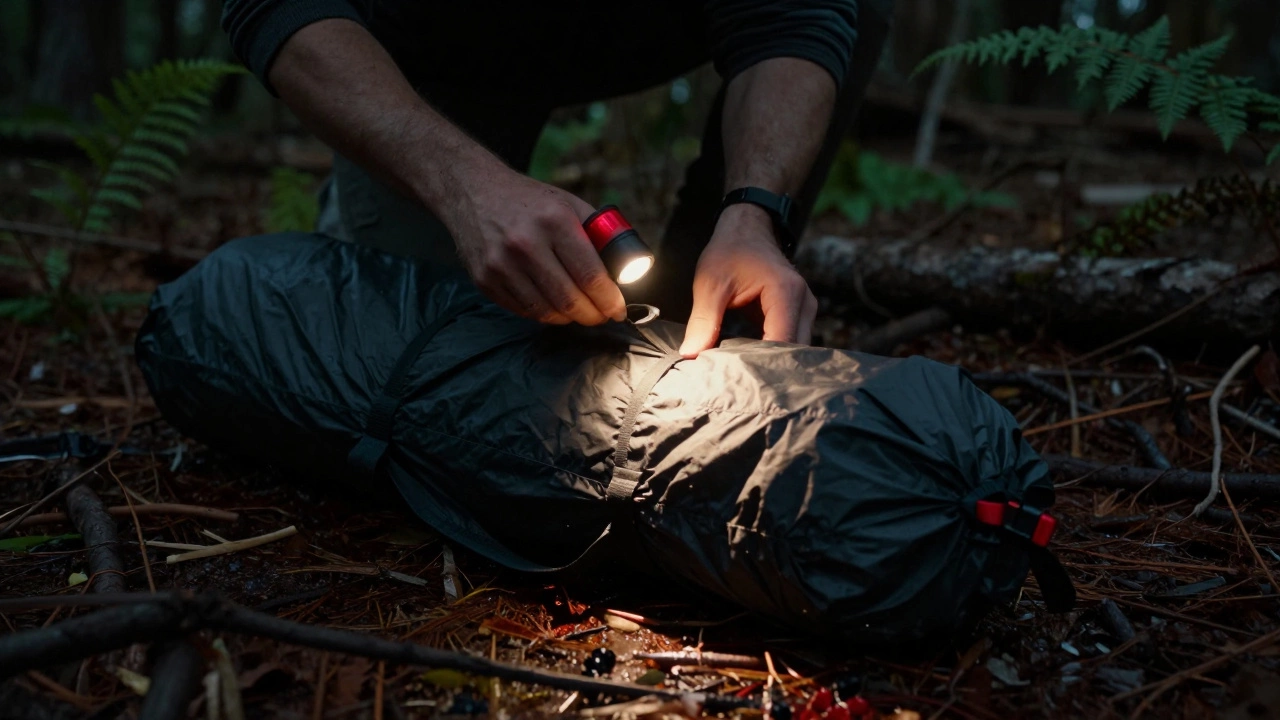
Arrive Late, Leave Early Never arrive at a potential site before dusk. Driving around during the day scouting spots draws attention. Arrive after dark, set up quickly using headlamps with red filters (which preserve night vision and are less visible from afar), and be gone before sunrise. The goal is to be absent when people start their daily routines.
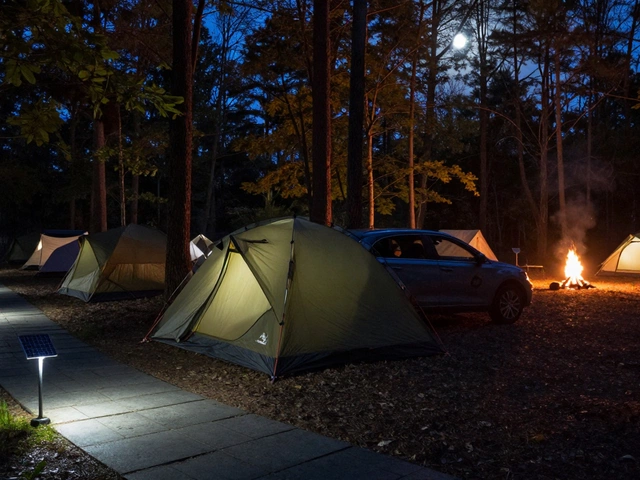
No Fires, Ever This is non-negotiable. Open fires are visible for miles, smell distinct, and leave scars on the ground. Use a portable gas stove for cooking, kept away from your sleeping area to minimize light spill. In dry summers, fire bans are strictly enforced, and starting one can lead to criminal charges.
Leave No Trace (LNT) The five principles of LNT are your bible here:
- Plan ahead and prepare: Know the weather and terrain.
- Travel and camp on durable surfaces: Avoid delicate vegetation.
- Dispose of waste properly: Pack out everything, including toilet paper. Use wag bags if necessary.
- Leave what you find: Don’t dig trenches or move stones.
- Respect wildlife: Keep distance and store food securely.
Dealing with Confrontation: Farmers and Police
Even with perfect stealth, you might get caught. The most common encounter is with a farmer or landowner. Remember, they live there. Their livelihood depends on the land. If they approach you, remain calm, polite, and apologetic. Do not argue about rights. Say something like, "I’m sorry, I didn’t realize this was private land. I’ll pack up and leave immediately." Most people will let you go if you comply instantly. Aggression or defiance guarantees a call to the police.
If the police arrive, they have the authority to remove you if you are trespassing. Under the Police Reform and Social Responsibility Act 2011, police can direct groups of six or more people to leave an area if they believe disorder has occurred or is likely. For solo campers, it’s often a matter of discretion. Cooperate fully. Provide ID if asked. Do not resist removal. Being removed once can lead to being banned from returning to that specific area for up to three months.
| Region | Legal Status | Key Legislation | Risk Level |
|---|---|---|---|
| England & Wales | Grey Area / Tolerance Based | Countryside and Rights of Way Act 2000 | Medium to High |
| Scotland | Largely Legal (with conditions) | Land Reform (Scotland) Act 2003 | Low |
| Northern Ireland | Illegal on Private Land | No General Right to Roam | High |
Gear Essentials for Stealth Campers
Your gear choices directly impact your success. Bulky, bright tents are instant giveaways. Opt for low-profile shelters.
- Bivvy Bags: The ultimate stealth tool. You sleep inside a waterproof sack, blending into the ground. No poles, no guy lines, no silhouette against the moon.
- Tarp Shelters: Lightweight and versatile. Can be rigged low to the ground among trees. Choose earth-toned colors (olive, brown, camouflage).
- Red Light Headlamps: White light is visible for hundreds of yards. Red light preserves night vision and is much harder to detect from a distance.
- Silenced Stove: A small alcohol stove or integrated canister stove that doesn’t hiss loudly. Cook quietly.
- Earplugs: Rural areas aren’t silent. Foxes, cars, and wind can keep you awake. Good earplugs ensure you rest, even if you’re slightly stressed.
Seasonal Considerations
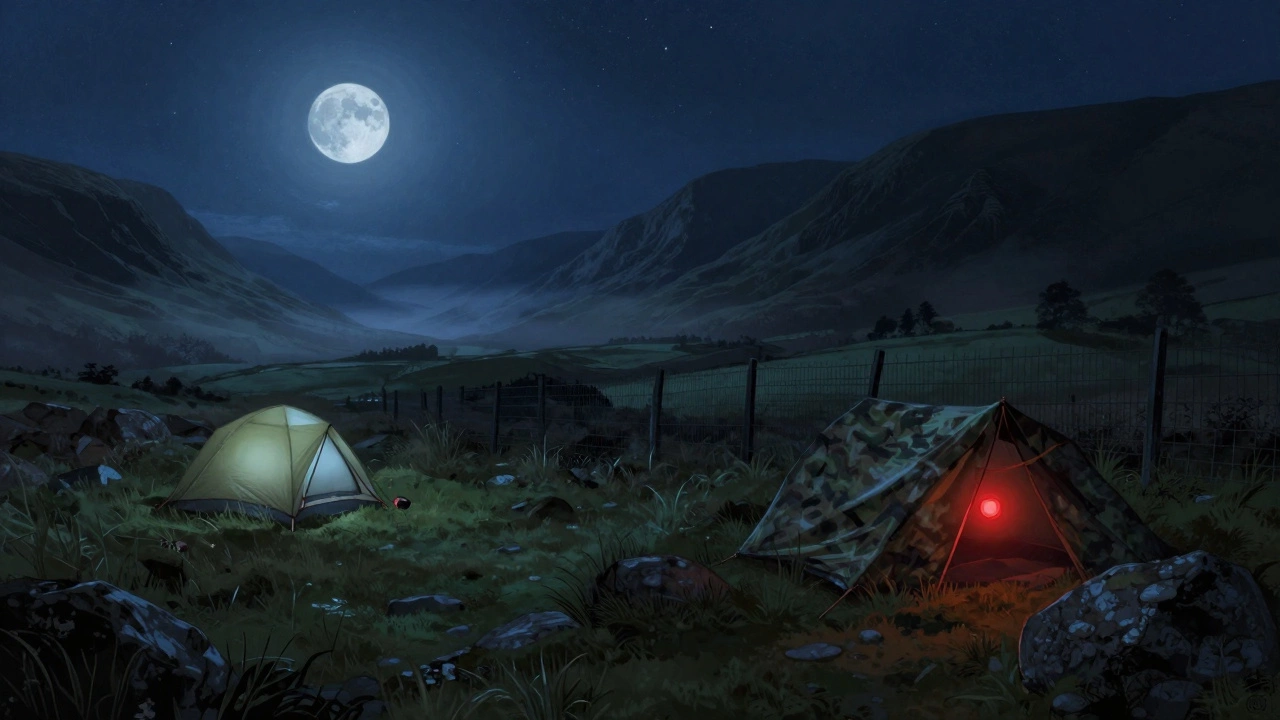
Stealth camping changes dramatically with the seasons. Summer brings longer days, more tourists, and heightened security at popular spots. Winter offers shorter nights, colder temperatures, and fewer people, but also harsher conditions.
In summer, focus on remote forest interiors or high-altitude moorlands where hikers are less likely to stumble upon you. In winter, prioritize shelter from wind and rain. Hypothermia is a real risk if you get wet and cold. Always carry extra insulation layers and a warm sleeping bag rated below the expected temperature.
Spring and autumn are transitional periods. Be aware of hunting seasons in many rural areas. Wearing high-visibility clothing while setting up or packing out is crucial for safety, even if it compromises stealth temporarily. Your life is more important than avoiding detection.
Alternatives to Pure Stealth
If the stress of potential confrontation outweighs the thrill, consider these legal alternatives that still offer solitude and low cost:
- Wild Camping Apps: Apps like WildCampUK or PitchUp sometimes list tolerated spots or paid wild camping pitches.
- Refuge Huts: Organizations like the Mountain Bothies Association maintain simple shelters in remote areas for a small donation.
- Disused Railway Stations: Some converted stations offer cheap overnight stays with basic amenities.
- Local Farm Stays: Websites like Love2Stay connect travelers with farmers willing to host campers for a fee, often lower than commercial campsites.
These options provide peace of mind while still allowing you to experience the outdoors without breaking the law.
Final Thoughts on Responsibility
Stealth camping is a privilege, not a right. It relies on the goodwill of landowners and the community. When campers abuse this trust-by leaving trash, causing noise, or damaging property-it leads to stricter enforcement and closed-off areas for everyone. The reputation of wild campers in the UK has improved in recent years due to widespread adoption of Leave No Trace principles, but it remains fragile.
If you choose to stealth camp, do so with humility and respect. Be prepared to leave at a moment’s notice. Clean up meticulously. And always remember: the goal is not to conquer the landscape, but to briefly inhabit it without leaving a mark.
Is it illegal to sleep in your car in the UK?
Sleeping in your car is not inherently illegal, but parking where you intend to sleep may violate local bylaws or private property rights. Many councils have anti-homelessness measures that prohibit sleeping in vehicles in public spaces. On private land, you need permission. Motorway service areas and many town centers strictly forbid it.
What happens if a farmer asks me to leave?
You must leave immediately. Refusing to leave private land constitutes trespassing. The landowner can call the police, who have the power to remove you. Arguing or delaying increases the likelihood of legal consequences. Always comply politely and swiftly.
Can I use a fire pit for stealth camping?
No. Open fires are highly visible, produce smoke, and damage the environment. They are easily detected from a distance and are often prohibited by local bylaws or seasonal bans. Use a portable gas stove instead, which is quieter, cleaner, and less noticeable.
Is wild camping allowed in National Parks?
It depends on the park. In Scotland, most National Parks allow wild camping under the Land Reform Act. In England and Wales, policies vary. The Lake District, for example, has strict restrictions and requires permits in certain areas. Always check the specific National Park’s website before planning your trip.
How long can I stay in one spot?
For stealth camping, limit yourself to one night per location. Staying longer increases the chance of detection and environmental impact. In Scotland, the legal limit is two weeks, but ethical guidelines suggest moving on after a few days to allow the land to recover.
What should I do with human waste?
Always pack out all waste, including toilet paper. Digging catholes is discouraged in sensitive areas. Carry a "wag bag" (waste management bag) designed to contain human waste safely. Dispose of it in proper bins at campsites or service stations. Leaving waste behind is unacceptable and harmful.