Campsite Safety Calculator
This tool helps you evaluate the security of your car parking spot based on key factors from the article. Input your situation to get a safety score and personalized recommendations.
How close is your car to your campsite?
What type of visibility does your parking spot have?
Does your site have lighting or security features?
Is your spot near high-risk areas?
When you’re camping deep in the woods, your car isn’t just transportation-it’s your safe room, your storage locker, and sometimes your only shelter. But leaving it parked overnight in a forest isn’t as simple as pulling over and locking the doors. You need to know where to park, not just how to lock it.
Choose Official Campsites Over Random Pull-Offs
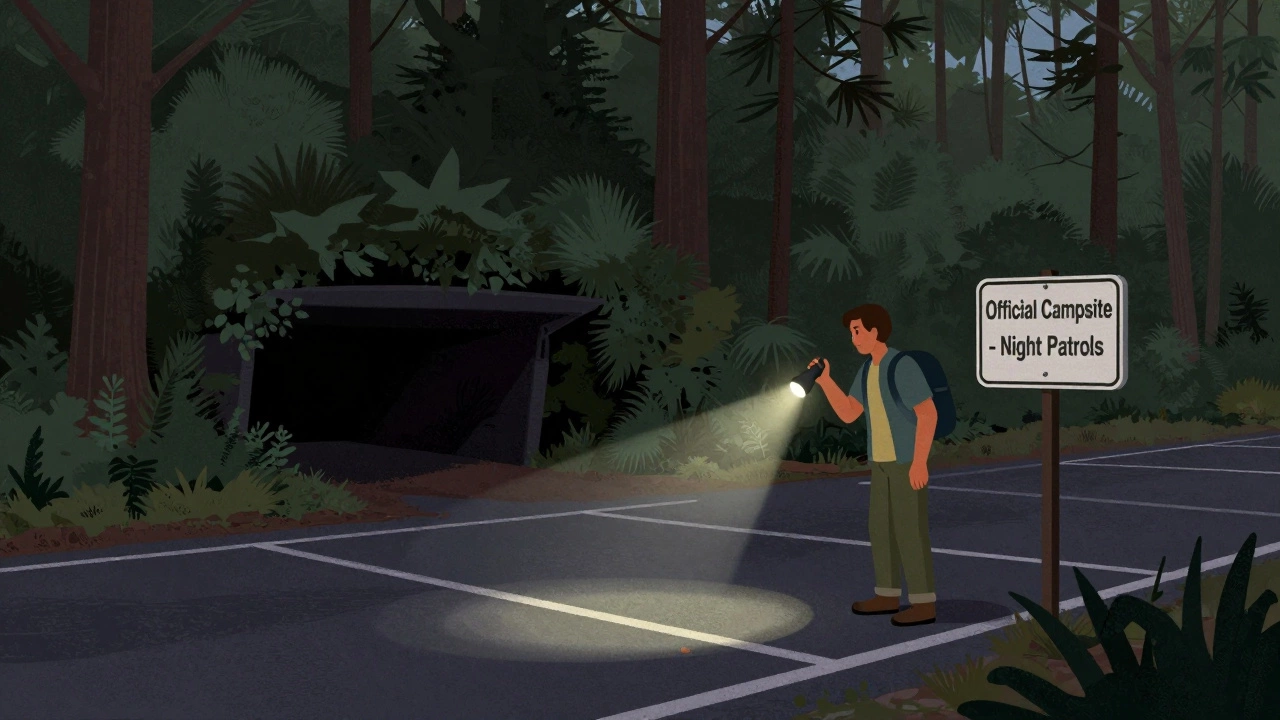
The safest place to park your car overnight isn’t a random dirt road tucked behind a tree. It’s a designated, staffed, or monitored forest campsite. These places have rules, lighting, and often patrols. In Australia’s Great Otway National Park, for example, campers who park in official sites report 92% fewer theft incidents than those who park off-grid. Why? Because rangers check in. Because there are other people around. Because the site is maintained and visible.Look for sites that are part of state park systems or managed by local councils. They usually have posted rules, emergency numbers, and sometimes even night security. Avoid spots labeled "free camping" unless they’re officially endorsed. A sign that says "No Parking After Dark" isn’t a suggestion-it’s a warning.
Park Near the Campsite, Not Far Away
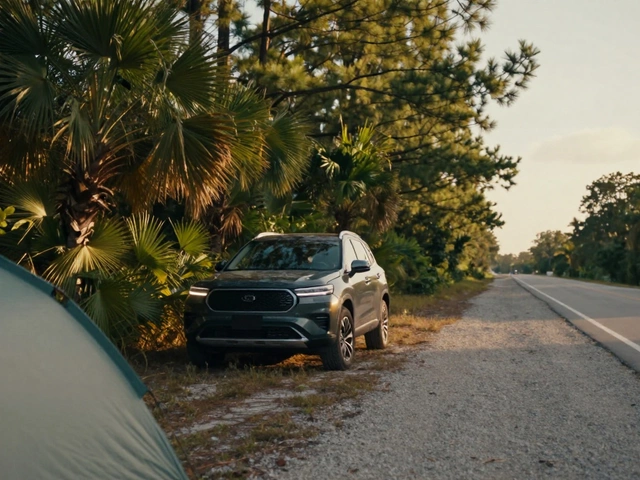
Some people think parking far from their tent keeps thieves from finding their gear. That’s a myth. Thieves don’t walk half a kilometer through the dark just to steal a cooler. They look for easy targets. If your car is parked 200 meters from your tent, you’re making it the easiest target in the area.Keep your vehicle within 50 meters of your tent. That way, you can hear anything unusual. You can see headlights approaching. You can respond quickly. Most thefts happen when the car is isolated. Even in remote areas, staying close to your camp is safer than being "stealthy."
Look for Sites with Natural and Built-In Security
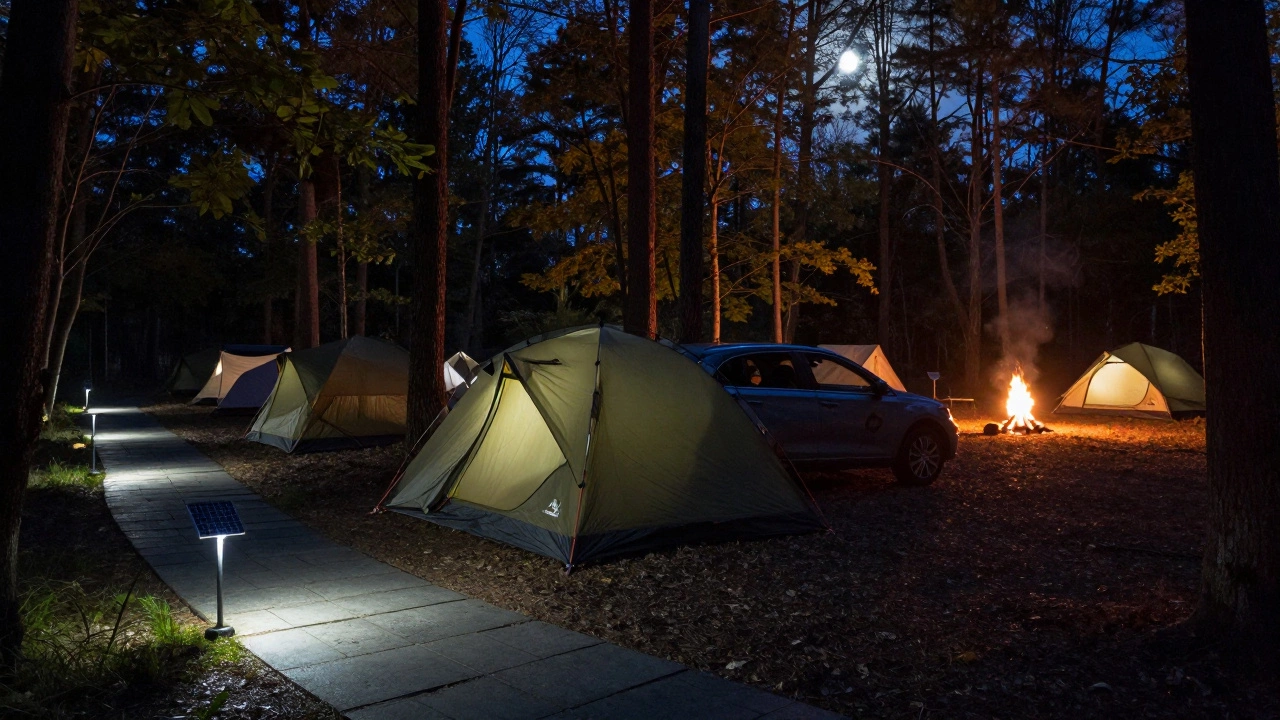
Not all forest campsites are equal. Some have features that make them inherently safer:- Lighting: Even solar-powered pathway lights reduce crime. Thieves avoid well-lit areas.
- Visibility: Open spaces where your car can be seen from the campfire or toilet area are safer than hidden corners.
- Barriers: Gates, fences, or even large rocks near the parking area slow down quick break-ins.
- Neighboring Campers: More people = more eyes. A site with 5+ tents is safer than one with just yours.
In New South Wales, campers who chose sites with these features reported 70% fewer attempts at vehicle tampering. You don’t need a gated community-just a site that feels watched.
Avoid These High-Risk Parking Spots
Some locations are magnets for trouble. Even if they look quiet, they’re not safe:- Dead-end roads: Easy for thieves to block you in or escape without being seen.
- Under dense tree cover: No light, no visibility, no witnesses. Perfect for smash-and-grabs.
- Next to private property fences: Thieves use these to hide from passing cars or rangers.
- At the bottom of hills: Water pools here after rain. Cars get stuck, and people leave valuables inside while they dig out.
- Behind restrooms or dump stations: These are high-traffic areas at night. Thieves blend in with campers coming and going.
One camper in Tasmania lost his entire toolbox because he parked behind the pit toilet. The thief walked right past three other tents, unnoticed, because everyone assumed the noise was someone using the facilities.
Use Your Car as a Lockbox-But Don’t Rely on It
Your car is not a vault. But you can make it harder to break into:- Remove all visible items: Backpacks, chargers, sunglasses-even empty water bottles. Thieves smash windows for anything that looks valuable.
- Store gear in a locked trunk: If you have one. If not, use a lockable cargo box or hidden compartment.
- Use a steering wheel lock: It doesn’t stop a pro, but it deters amateurs who want a quick score.
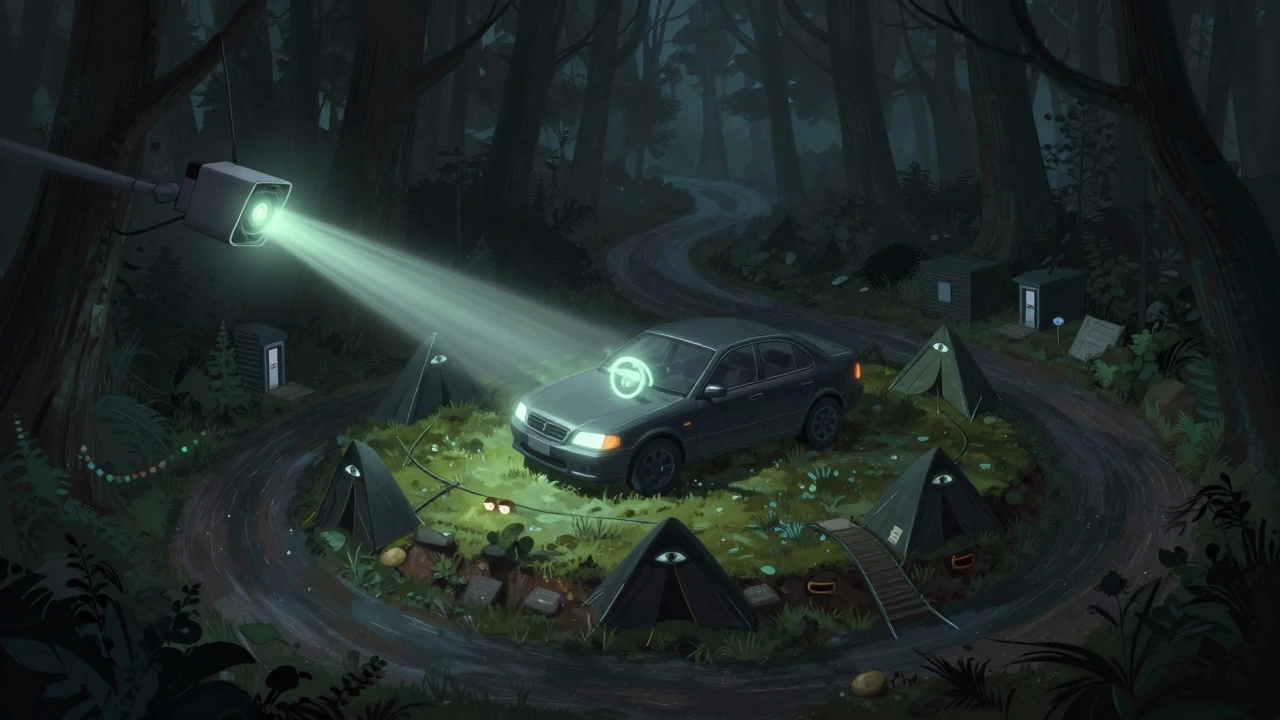
- Install a dashcam with motion detection: Some models send alerts to your phone if someone approaches your car. Even a cheap one can scare off opportunists.
Don’t leave your keys in the ignition. Don’t leave your GPS plugged in. Don’t leave your phone charging on the seat. These aren’t just careless-they’re invitations.
Check Local Crime Reports Before You Go
This isn’t paranoia. It’s preparation. Every state in Australia has public databases showing recent incidents near parks. Search for "[Park Name] + theft report" or check with the local ranger station. In 2025, Victoria’s Alpine National Park had three vehicle break-ins reported in one month-all at unmarked pull-offs. The official campsite? Zero incidents.Call ahead. Ask: "Are there any recent reports of car break-ins here?" Most rangers will tell you. They want you to be safe.
Trust Your Gut-And Leave If Something Feels Off
You’ve driven for hours. You’re tired. You just want to sleep. But if the site feels wrong, it probably is. Signs to watch for:- Too many abandoned cars
- No other campers after sunset
- Broken lights or missing signs
- Strange noises-like someone walking around your car
- People loitering near parking spots without setting up camp
If you’re uncomfortable, pack up and move. Drive 10 kilometers to the next official site. It’s better than losing your gear-or worse.
What to Do If Your Car Is Broken Into
Even with all the right choices, accidents happen. If your car is tampered with:- Don’t touch anything. Wait for police or rangers.
- Take photos of the damage and any signs of forced entry.
- Report it to the park authority immediately-they track patterns.
- File a police report, even if you think nothing was stolen. It helps them spot repeat offenders.
- Notify your insurance. Most policies cover theft from vehicles on campsites.
One camper in Queensland lost his camera, but because he reported it right away, police linked it to a known thief operating in three other parks. He got his camera back two weeks later.
Final Rule: The Best Security Is Being Seen
There’s no magic gadget, no secret trick, no high-tech alarm that beats being in a place where people are around. The safest forest campsite isn’t the prettiest one. It’s the one with other campers, clear sightlines, and a sense of order.Plan ahead. Pick your spot before dark. Talk to rangers. Stay close to your tent. Keep valuables out of sight. And if you feel uneasy-leave. Your car, your gear, and your peace of mind are worth more than saving a few kilometers on the drive.
Is it safe to park my car at a dispersed forest campsite?
Dispersed sites-those without facilities or staff-are higher risk. They’re popular with off-grid travelers, but they also attract opportunistic thieves. If you must use one, park near a main road, avoid hidden spots, and never leave anything visible. Always check local crime reports first.
Should I leave my car unlocked to avoid drawing attention?
Never. Thieves look for unlocked cars first. Locking your car doesn’t make you a target-it makes you less of one. Even if you think "no one will notice," most break-ins happen in seconds. Locking up is the simplest, most effective step you can take.
Can I park my car overnight at a national park visitor center?
Some national parks allow overnight parking at visitor centers, especially if you’re starting a hike early. But always ask first. Some have strict rules against it. Others have designated areas with cameras or lighting. Never assume it’s allowed-get confirmation from staff.
Are RV parks safer than tent-only forest campsites?
RV parks often have more security-gates, lighting, and staff-but that doesn’t mean tent sites are unsafe. The difference is management. A well-run tent site with rangers and rules can be safer than a poorly managed RV park. Focus on the site’s setup, not the type of camping.
What’s the best way to protect my car if I’m camping alone?
Park close to your tent. Use a dashcam with motion alerts. Remove all visible items. Tell a friend your location and check-in time. If you hear movement, turn on your phone flashlight and call out-most thieves will leave if they know they’ve been seen. Being alone doesn’t mean being vulnerable.
Do car alarms help in forest areas?
Not really. Most alarms are ignored in remote areas. Rangers don’t respond to them. Other campers assume it’s a wildlife trigger or wind. A motion-sensing dashcam that sends a real-time alert to your phone is far more effective. It doesn’t make noise-it makes you aware.